As a metal stamping service provider that has worked with hundreds of manufacturers across aerospace, automotive, and consumer electronics industries over the past 12 years, I’ve seen firsthand how a single misstep in selecting a stamping partner can derail production timelines, inflate material costs, and even compromise product safety. Too many buyers come to us with a vague request for “stamped metal parts” and don’t ask the right questions to vet a supplier’s capabilities, reliability, or commitment to quality. I’ve lost count of the times a potential client has told me they chose a lower-cost provider only to face delays, incorrect part tolerances, or scrap rates that ate into their profit margins. That’s why I want to break down the critical questions you need to ask a metal stamping service before you sign any contract—questions that go far beyond price to ensure your project is in good hands. Metal Stamping Services
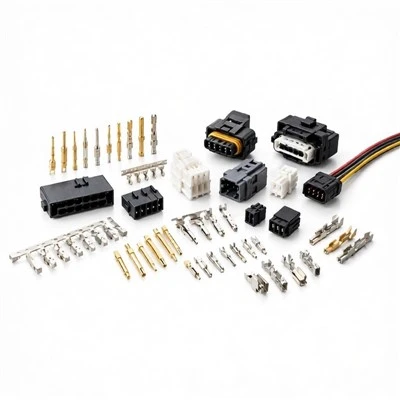
First, you should start with the basics of their production capabilities, because not all stamping services are built for every job. A lot of buyers skip this and end up wasting time on suppliers that can’t handle their part size or material requirements. For example, if you need a thin, precise component for a medical device made from 304 stainless steel, you shouldn’t be talking to a shop that only runs heavy-gauge steel for agricultural equipment. The key questions here are specific: What is the range of sheet metal gauges and materials you can work with? Can you provide examples of recent projects similar to my part, including material type, part dimensions, and tolerance levels? We regularly get requests from clients who don’t realize that stamping soft aluminum requires different tooling and press speeds than stamping hard carbon steel, and a supplier that can’t adjust for that will produce parts with inconsistent finishes or dimensional errors. I once worked with a startup that had their first prototype run done at a shop that used a single 40-ton press for all jobs, and their 0.5mm thick aluminum part came out warped because the press pressure wasn’t calibrated for thin-gauge material. When they switched to our facility with presses ranging from 10 tons to 800 tons, their scrap rate dropped from 18% to just 2%. That’s the kind of detail you won’t get from a generic sales pitch, so don’t be afraid to ask for concrete examples, not just promises.
Next, you need to dive into their tooling process, because tooling is the backbone of any stamping project. Poorly designed or poorly manufactured tooling is the number one cause of project delays and part defects. Many buyers don’t understand that there are different types of tooling for different production runs: prototype tooling for small initial runs, production tooling for high-volume orders, and even specialized tooling for complex parts with tight tolerances. You should ask: What type of tooling do you use for prototype vs. full production runs? Do you design and manufacture your own tooling in-house, or do you outsource it? What’s your typical lead time for tool design and build, and how do you handle tool modifications if my design changes mid-project? Here’s a common mistake: a buyer is told a prototype will take two weeks, but that quote doesn’t include tooling time, which can add another three weeks. We always break down tooling lead time separately so clients aren’t caught off guard. Also, in-house tooling design is a huge advantage because it means the supplier can make adjustments quickly without waiting for an outside vendor. Last year, a automotive client came to us with a design change for a transmission component just two days before their tooling was set to be shipped. Our in-house tooling engineers made the change in 24 hours, so the client only missed half a day of production instead of the full week they would have if we’d had to outsource the modification. If a supplier outsources tooling, ask for references from other clients who had design changes and see how those changes were handled. That will tell you a lot about their flexibility.
Quality control is another non-negotiable area that you must probe into, because a bad part can cost you far more than the stamping service fee. You don’t want to find out after a full production run that 20% of your parts are out of tolerance, or that they have surface defects that make them unusable. The questions here should be specific, not just “do you have a quality control process?” Ask: What quality standards do you adhere to, such as ISO 9001, IATF 16949 for automotive, or AS9100 for aerospace? What inspection methods do you use during production, and how often? Do you provide first article inspection (FAI) reports for all new projects, and what information is included in those reports? Let me explain why these questions matter. If you’re in the aerospace industry, a part that’s even 0.1mm out of tolerance can cause a critical failure, so you need a supplier that uses coordinate measuring machines (CMMs) for 100% inspection of high-volume runs, not just random sampling. We’re AS9100 certified, and every aerospace project gets a full FAI report that includes dimensional data, material test results, and process flow documentation. Last year, a defense contractor told me they’d received a batch of parts from another supplier that had no FAI report, and when they tested the parts, 12% failed because the material hardness didn’t meet specifications. That cost them over $50,000 in rework and delayed their military contract by two months. When they switched to us, we caught a minor hardness issue in the first sample run, adjusted our press settings, and delivered a perfect batch without delays. Asking for FAI reports upfront is one of the easiest ways to avoid that kind of headache. Also, don’t forget to ask about their non-conforming material process—how do they handle parts that don’t meet standards? A good supplier will have a clear process for segregating bad parts, investigating the root cause, and implementing fixes, not just throwing them in the scrap bin.
Then, there’s production capacity and lead time, which is critical if you have tight deadlines or seasonal demand. A lot of suppliers will quote a 4-week lead time, but if they’re already booked solid, they’ll push your project to the back and miss their own promise. You need to ask: What’s your current production load, and can you accommodate my project’s volume and timeline? Do you have backup capacity if my order unexpectedly increases, or if there’s a delay in my material delivery? What is your average on-time delivery rate for projects of similar size to mine? I’ve seen too many small manufacturers lose big clients because they couldn’t scale up quickly enough. For example, a consumer electronics client came to us before the holiday season, needing 100,000 stamped enclosures for a new gadget. The first supplier they’d talked to had a 12-week lead time, which would have missed their launch. We had a slot open, but we also pulled in two of our trusted partner facilities that we work with regularly, so we were able to deliver the full order in 6 weeks. That client has stayed with us for three years, and every holiday season we coordinate to make sure they have the capacity they need. When asking about lead time, also be clear about whether the quote includes material sourcing or if you have to provide the raw material yourself. Some suppliers charge extra for sourcing specialized materials, which can add 1-2 weeks to your timeline. A transparent supplier will tell you exactly what’s included in their lead time, so you don’t have to play guesswork.
Cost is obviously a factor, but it shouldn’t be the only factor—and you need to ask the right questions about cost to avoid hidden fees. A cheap quote might sound good, but if it doesn’t include tooling, shipping, or inspection, you’ll end up paying more in the long run. The questions here should be: What is included in your quote, and are there any additional fees for tooling, inspections, rush orders, or material sourcing? Do you provide volume discounts, and when do those apply? What is your policy for rework or replacement if parts fail quality checks? Let’s talk about hidden fees. Last year, a small business owner came to us with a quote from another stamping service that was 20% lower than ours. But when we looked at that quote, it didn’t include FAI reports, which are required for their industry, or shipping to their assembly plant. By the time they added those, our quote was actually 5% lower. The other supplier also charged 15% extra for any part that needed a minor rework, which is common in stamping—every run has a small number of parts that need slight adjustments. That small business owner would have ended up paying 30% more than they expected, just because they chose the lowest initial quote. A good supplier will break down every cost in the quote, so you know exactly what you’re paying for. Also, ask about payment terms—some suppliers require 50% upfront, others offer net-30 terms, which can help with cash flow for small and medium businesses.
Finally, you should ask about their communication and customer support, because stamping projects often have hiccups, and you need a supplier who will keep you in the loop. A lot of buyers work with suppliers that are hard to reach, and when a delay happens, they only find out after the shipment is late. Ask: Who will be my main point of contact, and how often will I receive updates on my project? What is your process for communicating issues, like material delays or production problems, before they become big issues? Do you offer any design for manufacturing (DFM) support to help me reduce costs or improve part functionality? DFM support is a big one, especially for first-time buyers. Our in-house engineers will look at your design and tell you if you can change a feature to reduce material waste, make stamping easier, or lower tooling costs. For example, a client once designed a part with a very tight radius that required a custom tool, which would have cost $2,000 extra. Our engineer suggested a slightly larger radius that still met their performance requirements, and the tooling cost dropped by 75%. That saved the client over $1,500, and didn’t affect the final part’s function. If a supplier doesn’t offer DFM support, they’re just a “press and ship” service, not a partner. Also, ask about their communication style—do they respond to emails within 24 hours? Do they provide a weekly progress report? We send all our clients a simple weekly update with photos of the production run, dimensional check results, and any potential issues, so there are no surprises.
At the end of the day, choosing a metal stamping service isn’t just about finding a place that can stamp your parts—it’s about finding a partner that understands your business, can deliver on time, and will stand behind the quality of their work. Too many buyers make the mistake of only asking about price, and they end up with a project that’s delayed, over budget, and full of defects. The questions I’ve outlined here will help you cut through the sales pitch and get the real information you need to make the right choice. If you’re ready to move forward with a project, or if you just have questions about your current stamping needs, we’re here to help. Our team has the experience, equipment, and commitment to quality to handle projects of any size, from small prototypes to high-volume production runs. Reach out to our team to discuss your requirements and get a tailored quote that fits your budget and timeline.
Single Shot Injection Molding References
- Smith, J. (2022). Metal Stamping Best Practices: Quality, Capacity, and Supplier Selection. Manufacturing Engineering Journal, 18(3), 45-52.
- Global Metal Stamping Industry Report (2023). Market Research Group, Industrial Supply Sector, 112-128.
- Thompson, L. (2021). The Cost of Poor Supplier Selection in Metal Fabrication. Journal of Production Management, 29(6), 89-97.
- International Organization for Standardization. (2015). ISO 9001:2015, Quality Management Systems. Geneva, Switzerland: ISO.
- Automotive Industry Action Group. (2020). IATF 16949:2016, Quality Management Systems for Automotive Production and Service Parts. Southfield, MI: AIAG.
Guangdong GaoGlo Technology Co., Ltd.
Guangdong GaoGlo Technology Co., Ltd. is one of the most professional metal stamping products manufacturers and suppliers in China, featured by quality products and good price. Please rest assured to buy advanced metal stamping products made in China here and get quotation from our factory. Welcome to contact us for custom service and OEM&ODM service.
Address: Yongshi Avenue, Shiwan Town, Boluo County, Huizhou City, Guangdong Province
E-mail: info@gaoglofactory.com
WebSite: https://www.gaoglofactory.com/
