Hey guys, let’s cut to the chase – if you’re in the market for foam materials, odds are you’ve stared at two big names: EPDM foam and polyurethane (PU) foam. As an EPDM foam supplier, I get asked this question all the time, and it’s not just a “which is cheaper” thing. It’s about matching the right foam to your actual use case, and that means diving into the nitty-gritty stuff that actually matters – like durability, weather resistance, chemical vibes, and even how easy it is to work with. Let’s break this down without the boring jargon overload, yeah? EPDM Foam
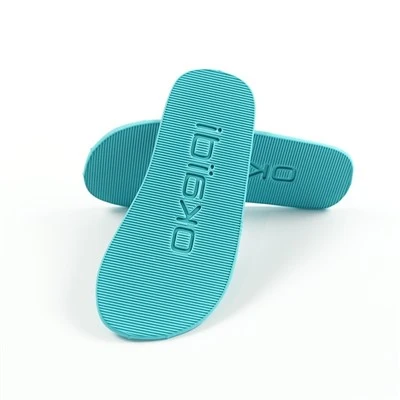
First, let’s start with what each foam even is, ‘cause I’ve seen way too many people mix these up. EPDM is short for ethylene propylene diene monomer, right? It’s a synthetic rubber-based foam, so it’s way more rubbery than squishy – think of those weatherstripping strips on your car doors that never fall apart. Polyurethane, on the other hand, is a polymer that’s often made as either a rigid or flexible foam – that’s the stuff in couch cushions, mattress toppers, and even some packaging foam. Now, let’s talk about the stuff that actually makes or breaks a foam for your project.
Weather resistance is where EPDM straight-up crushes PU foam. If you’re working on something that lives outside – like RV seals, rooftop padding, exterior window gaskets, or marine equipment that’s exposed to sun, rain, snow, and even saltwater – EPDM is your guy. I’ve had clients who tried PU foam for RV window seals, and within a year it was cracked, crumbly, and leaking. EPDM holds up to UV light way better; it doesn’t break down from sun exposure like PU does. Also, extreme temps: EPDM works from like -40°F all the way up to 230°F, no problem. PU? It starts to get brittle below like 32°F, and if you go above 150°F it starts to melt or degrade. That’s a non-starter for any outdoor or high-temp projects. And don’t even get me started on ozone – EPDM is resistant to ozone, which is a big deal for things like power equipment or agricultural machinery that’s out in the air a lot. PU doesn’t handle ozone well at all, so it’ll fade and crack fast.
Next up: chemical resistance. A lot of industries deal with oils, solvents, cleaning chemicals, or other gunk, and EPDM is way better here too. If you’re in automotive, industrial machinery, or even HVAC, you might be working with motor oils, hydraulic fluids, or common solvents. EPDM doesn’t soak up those chemicals, it resists swelling or breaking down, so it keeps its shape and function. PU foam? Most types are pretty absorbent when it comes to oils and solvents – I’ve had a client in the food processing industry try PU foam for a conveyor seal, and it soaked up the grease, started to smell weird, and had to be replaced in a couple months. EPDM is food-safe when it’s properly formulated, too – perfect for food-grade applications, whereas a lot of standard PU foams have chemicals that leach into food or drinks. That’s a huge win for anyone in food or pharmaceuticals.
Now, what about flexibility and cushioning? This is where PU has an edge, but it’s a trade-off. PU foam is way softer and more squishy – that’s why it’s used for mattresses and couch cushions. If you need something that’s super comfortable for seating, or soft packaging for fragile items, PU’s the way to go. But here’s the catch: PU’s softness means it compresses way easier. Like, if you put a heavy weight on PU foam, it’ll get flattened and won’t bounce back – that’s compression set. EPDM foam, though, is closed-cell, so it has tiny air pockets that hold their shape. It compresses under pressure, but when you take the weight off, it bounces right back. That’s a big deal for things like door seals, gaskets, or vibration damping in industrial equipment – you don’t want your seal to stay flat after a door closes, right? EPDM’s closed-cell structure also means it’s water-resistant. If you’re using it for a boat hatch seal, or a window that might get splashed, EPDM won’t absorb water – PU foam, especially open-cell types, soaks up water like a sponge, gets heavy, and can grow mold or mildew.
Wait, let’s talk about different types of PU foam, ‘cause not all PU is the same. There’s flexible PU (the soft stuff), rigid PU (the hard insulation), and even closed-cell PU, but closed-cell PU doesn’t hold a candle to EPDM when it comes to weather and chemical resistance. Rigid PU is great for insulation, but if you use it outside, it’ll fall apart fast. Flexible PU is soft, but not durable for long-term use. EPDM is mostly closed-cell, flexible, and durable – it’s a middle ground in a lot of ways, but it’s better than PU for heavy-duty, long-lifespan projects.
Cost is another thing everyone cares about. A lot of people think PU is cheaper, but that’s only upfront. If you’re using PU for an outdoor seal that needs to be replaced every year, that adds up way faster than using EPDM, which can last 10+ years. I’ve had a client who does RV parts – he was buying PU foam for window seals, it cost him $0.50 per linear foot, and he replaced 10,000 linear feet a year. Switched to EPDM foam from me, it was $1.20 per linear foot, but he only replaces 1,000 linear feet a year. So his annual cost went from $5,000 to $1,200 – that’s a huge savings in the long run. But if you’re doing a one-time indoor project, like a craft or a temporary cushion, PU is definitely the cheaper upfront pick. It’s all about lifecycle cost, not just initial price.
Workability matters too, right? How easy is it to cut, shape, install? PU foam is super light, easy to cut with a knife or scissors, and you can glue it with regular craft glue or industrial adhesive. EPDM foam is a little denser, so you might need a sharp utility knife or a foam cutter to shape it, but it’s still pretty easy to work with. It’s also easier to install with fasteners or adhesive because it doesn’t stretch or deform as much as PU. And if you’re using it for something that needs to be adhesive-backed, EPDM’s adhesive sticks way better to metal, plastic, or glass than PU does, especially after exposure to elements.
Wait, what about niche applications? Let’s think about roofing – thermoplastic roofing uses EPDM membranes, and EPDM foam is a perfect complement for padding under roofing membranes to insulate and seal. PU foam insulation for roofing can break down from UV, so it’s not recommended for exposed roofing. Marine industry: boat hull padding, hatch seals, fishing trawler equipment – EPDM resists saltwater and UV, so it’s non-negotiable. Automotive: door seals, weatherstripping, engine compartment gaskets – EPDM handles the heat from the engine, sun from the hood, and oil spills way better than PU. Even HVAC: duct seals, insulation for air handlers – EPDM is resistant to dust, cleaning chemicals used in HVAC, and temperature swings. PU would crumble in the hot, dusty duct environment.
I should also mention common myths. A lot of people say “all foam is the same” – no, dude, that’s like saying all rubber is the same. Or “PU is softer so it’s better for padding” – not if your padding is for a piece of equipment that’s in a factory, getting banged around every day. EPDM is soft enough for most padding and sealing, but way more durable. Another myth: “EPDM is only for rubber stuff” – no, our EPDM foam is flexible enough for things like gaskets, seals, even some cushioning where you don’t need super soft.
Now, let’s wrap this up with who should pick which. If your project is: outdoor, exposed to elements, needs long durability, chemical/oil resistance, water resistance – EPDM foam is your call. If it’s: indoor, temporary, soft cushioning, low cost upfront, indoor packaging/crafts – PU is fine. But if you’re on the fence, ask yourself: how long do I need this to last? What environment is it in? What chemicals will it be around? That’s the key.
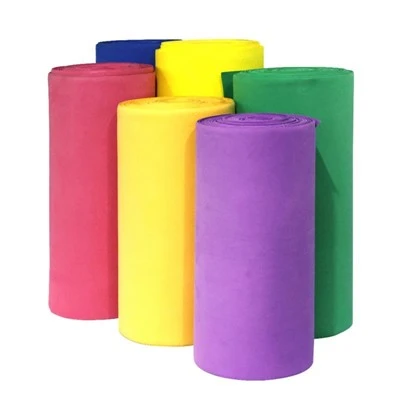
I’ve been supplying EPDM foam for over a decade, and I’ve seen every mistake clients make when they go with PU for the wrong job. The good news is, we can work with you to custom-cut EPDM foam to your exact specs – whether you need gaskets, seals, insulation, or custom padding. No one-size-fits-all here, and I’m happy to walk you through what’ll work best for your project. If you’ve got questions, or want to get a quote for your next run, just reach out to connect with our team to start talking through your needs.
EVA Sole References:
- "Ethylene Propylene Diene Monomer (EPDM) Foam Properties and Applications", Dow Chemical, 2022.
- "Polyurethane Foam: Types, Properties, and End Uses", European Polyurethane Association, 2023.
- "Weather Resistance Comparison of Elastomeric Foams", Journal of Applied Polymer Science, Vol. 139, Issue 12, 2022.
- "Chemical Resistance of Closed-Cell Foams for Industrial Sealing", Industrial Foam Technology Report, 2023.
Quanzhou Firefox New Material Co., Ltd.
As one of the most professional epdm foam suppliers in China, we have world-leading production equipment and strong manufacturing capabilities. Please rest assured to wholesale premium epdm foam at competitive price from our factory. Customized orders are welcome.
Address: Room 1901, Xiamen Bank Quanzhou Branch Building, No. 102 Binhai Street, Fengze District, Quanzhou City, Fujian Province, China
E-mail: marketing@firefoxfoam.com
WebSite: https://www.firefox-foam.com/
