If you’ve ever stood on a quarry floor, a recycling yard, or a mining site when a crusher suddenly goes quiet mid-shift, you know exactly what a crusher downtime costs. It’s not just lost production—it’s missed delivery windows, frustrated clients, and labor hours standing idle. As someone who’s been in the crusher wear parts supply business for over a decade, I’ve seen firsthand how picking the right wear parts can turn that frustration into smooth, consistent operation. But there’s more to it than just grabbing any worn-looking metal part and slapping it on. Not all crusher wear parts are the same, and understanding their main types is the first step to getting the most out of your equipment and your budget. Crusher Wear Parts
Let’s start with the basics: why crusher wear parts matter. Every crusher—whether it’s a jaw, cone, impact, or gyratory type—relies on parts that take the brunt of direct impact, abrasion, and pressure. Without these parts, the core crushing components would wear out in days, not years. The main types of crusher wear parts break down along two lines: first, by the type of crusher they work with, and second, by their specific function within that crusher. I’ve worked with all four major crusher types, and each comes with its own set of wear part demands, tailored to the material they process.
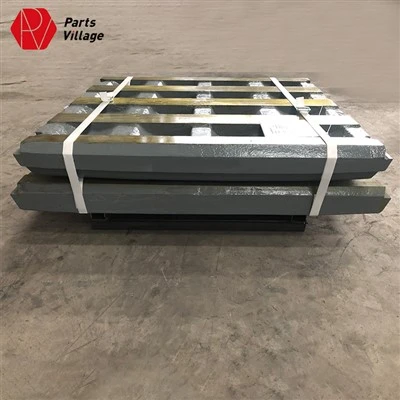
Jaw crushers, for example, are the workhorses of primary crushing. They take large, raw material—like boulders from a quarry—and reduce it to a size that’s manageable for secondary crushers. The key wear parts here are the jaw plates, and there are two main types of jaw plates I supply. The first are straight jaw plates, designed for primary crushing of very hard, abrasive material like granite or basalt. Straight plates have a smooth profile that creates a consistent crushing gap, and their design distributes impact evenly, so they wear slowly over time. The second type are ripple jaw plates, which work better for softer, stickier material like limestone or clay. The ripples create more friction between the jaw and the material, preventing the sticky stuff from clogging between the plates. I learned this the hard way early in my career when a regular client kept complaining about jaw plates wearing out fast on their limestone line—they’d been using straight plates, which couldn’t grip the material enough. Swapping to ripples cut their replacement frequency by 40%, and that’s when I realized how matching the part to the application is non-negotiable.
Next up are cone crushers, which handle secondary and tertiary crushing, turning the primary crushed material into fine, uniform aggregates for concrete, asphalt, or road base. Cone crusher wear parts are a bit more complex, because the material is already smaller but still abrasive, and it’s being crushed repeatedly as the mantle gyrates inside the concave. The two main components here are the mantle and the concave liners. The mantle is the moving part, like a large inverted cone that spins, and the concave is the fixed liner that surrounds it. There are different grades of steel for these parts too: manganese steel is standard for most hard rock applications, but for extra-abrasive material like iron ore or quartz, I supply chrome-moly steel mantles and concaves. The difference? Chrome-moly is harder and more resistant to gouging, so it lasts longer even when processing material that’s full of sharp, hard particles. I also recently started offering hybrid mantle-concave sets for clients who want a middle ground between cost and durability—they use a higher-grade steel only on the areas that take the most impact, instead of the entire part, which cuts costs without sacrificing too much lifespan.
Impact crushers are another common type, often used in recycling to crush concrete, asphalt, and metal scrap, as well as in tertiary crushing for aggregates. Unlike jaw or cone crushers, impact crushers use blow bars that spin at high speed to hurl material against impact plates, breaking it down on impact. The main wear parts here are the blow bars and the impact plates, and they wear very differently from jaw or cone parts because they’re taking high-speed impact, not continuous pressure. Blow bars, for example, are made from either high manganese steel or alloy steel. Manganese blow bars are cheaper and work well for softer material like asphalt or non-reinforced concrete, but they can bend or crack if hit with uncrushable objects like rebar or metal chunks. Alloy steel blow bars, on the other hand, are harder and more resistant to bending, which is why I recommend them for recycling yards that handle mixed construction debris with rebar. The impact plates, sometimes called apron liners, wear from the repeated beating of material flung against them—they’re usually made from the same alloy or manganese as the blow bars, just shaped to handle the impact forces at different points in the chamber.
Gyratory crushers are less common in smaller operations, mostly used in large mining sites for primary crushing of massive amounts of ore. Their wear parts are similar to cone crushers—mantle and concave—but built to take far more punishment. The mantle on a gyratory crusher is much larger, and it’s subject to constant, heavy pressure from huge boulders, so I supply them in extra-thick high-manganese steel, sometimes with a custom surface treatment that makes them even more wear-resistant. I had a mining client in Nevada a few years back who was going through a new mantle every 6 weeks, which was shutting down their entire operation. After switching to my treated manganese gyratory mantles, they extended the lifespan to 14 weeks—something they said saved them over $200,000 a year in downtime and part costs. That’s the kind of result that makes this work worth it.
Beyond these crusher-specific parts, there’s a whole category of secondary wear parts that people often overlook, but they’re just as important for keeping crushers running. Things like cheek plates on jaw crushers, which line the sides of the crushing chamber and prevent material from leaking out or wearing the crusher frame. They’re made from lighter, often lower-grade steel than the jaw plates, but they need to be replaced regularly, so I keep a steady stock of them. For cone crushers, there are also crusher liners and bowl bushings—bowl bushings are the rotating parts at the top of the cone, and they wear from friction as the cone spins. Using a high-quality bearing alloy for these parts prevents them from seizing up, which would cause the entire cone to stop. I’ve had clients skip replacing bushings during a routine repair, only to have the cone seize 2 days later, costing them thousands in emergency repairs. It’s always the small parts that cause the big problems.
Another thing I’ve learned over the years is that wear parts aren’t one-size-fits-all. Even two crushers of the same model from the same manufacturer can have different wear life based on what material they’re processing, how often they run, and even the operating settings. For example, a cone crusher set to a wider gap will wear its concave faster because the material is moving through more quickly and hitting the liner harder. A jaw crusher running at full load 24/7 will wear jaw plates twice as fast as one running 8-hour shifts. That’s why I always ask clients about their specific application, not just what model crusher they have, when recommending parts. I’ve had clients come in thinking they just need a “standard set of jaw plates” only to find out they’re crushing basalt, which is way harder than the limestone the standard plates are designed for.
There’s also a trend I’ve seen over the last few years: more clients asking for wear parts that are designed for recycling, not just mining or quarrying. Recycling material is full of uncrushables—rebar, wood, plastic, metal fragments—that don’t show up in natural rock. So I’ve developed a line of impact crusher blow bars specifically for recycling, with a harder outer layer and a more flexible inner core that can absorb the shock of hitting rebar without breaking. It’s not just about making parts last longer; it’s about making parts work for the job the client actually does, not the job they wish they did.
I’ll be honest, too: there’s a lot of cheap, low-quality wear parts out there, especially from overseas suppliers, that promise long life but end up causing more problems. Early in my business, I tried stocking a cheaper brand of jaw plates to offer a lower price, and within a month, three clients came back with worn plates that had cracked and caused damage to their crusher frames. I lost a few clients that month, but I also learned a lesson: quality isn’t a luxury, it’s a requirement. Now, every part I supply is tested in real-world applications, not just a lab, and I stand behind every single one. If a part doesn’t perform as advertised, I replace it, no questions asked.
At the end of the day, choosing the right crusher wear parts isn’t just about reducing replacement costs—it’s about maximizing uptime, which is the most valuable asset any operation has. I’ve seen too many businesses fold because they cut corners on wear parts, only to deal with constant downtime, missed deadlines, and lost revenue. Whether you’re a small landscaping company crushing concrete for your own projects or a large mining operation processing thousands of tons of ore a day, the right wear parts make all the difference.
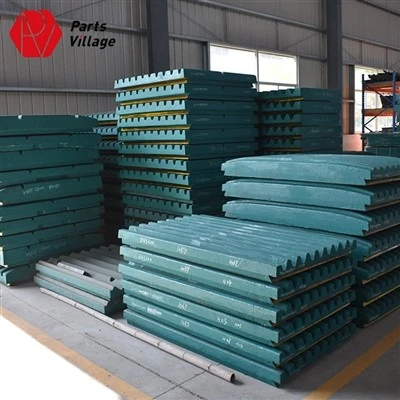
If you’re tired of parts that wear out too fast, cause unexpected downtime, or don’t match your specific application, I’m here to help. I don’t just sell wear parts—I work with clients to figure out what parts will work best for their equipment, their material, and their budget. Whether you need a set of jaw plates for your primary crusher, blow bars for an impact crusher, or mantles and concaves for a cone or gyratory crusher, I can provide high-quality, tested parts that keep your operation running smoothly. Reach out to me to discuss your needs, and let’s find the right solution for you.
Crushing Equipment References
- Crushing Equipment Wear Parts: A Guide to Selection and Maintenance, Global Mining Report, 2022
- Impact of Wear Part Selection on Crusher Uptime, Quarry Management Journal, Volume 45, Issue 3, 2021
- Wear Resistance in Crusher Components: Materials and Design Considerations, International Journal of Mining Engineering, Volume 18, Issue 2, 2020
- Recycling Crusher Wear Parts: Challenges and Innovations, Recycling World Magazine, 2023
- Manganese vs. Alloy Steel for Crusher Wear Parts: A Comparative Analysis, Construction Aggregates Association Technical Paper, 2022
Hangzhou Cohesion Technology Co., Ltd.
As one of the most experienced crusher wear parts manufacturers and suppliers in China, we also support customized service. We warmly welcome you to buy advanced crusher wear parts at competitive price from our factory. If you have any enquiry about quotation, please feel free to email us.
Address: No.182 ChaoHui Road, HangZhou, China
E-mail: sales@partsvillage.cn
WebSite: https://www.china-stonecrushers.com/
