If you’ve ever spent time sanding large surfaces like wooden decks, floorboards, or custom furniture frames, you know the two biggest headaches: reaching those tight, awkward areas without straining your back or arms, and breathing in fine dust that lingers in the air long after you set the tool down. For years, I’ve gotten questions from contractors, woodworkers, and DIYers alike: “Are there long handle belt sanders with dust collection systems that actually work?” As a supplier who’s spent the last decade refining these tools to meet real job site needs, I’m here to break down the answer—no sales jargon, just the hard truth about what works, what doesn’t, and why my team builds long handle belt sanders that solve both of those pain points. Belt Sander With Long Handle
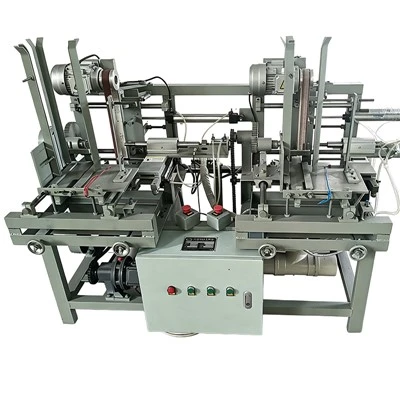
First, let’s get clear on what a long handle belt sander even is, because a lot of people confuse them with floor sanders (which are heavy, stand-up machines) or handheld belt sanders (which require you to bend over, grip with two hands, and work close to the surface). A long handle belt sander—sometimes called an extension belt sander or a pole belt sander—combines the power of a standard handheld belt sander with a telescoping handle that lets you sand overhead, along high walls, or on large flat surfaces without stooping, climbing a ladder for hours, or risking back strain. That flexibility makes them perfect for things like refinishing exterior siding, sanding the underside of a deck, or smoothing drywall joint compound before painting. But before dust collection was standardized in this niche, every user’s routine looked the same: sand, stop, cough, brush dust out of their eyes, and repeat.
The good news is that yes, there are reputable long handle belt sanders with dedicated dust collection systems on the market—though not all are equal, and many brands cut corners that make their dust collection little more than a gimmick. Let’s start with how a properly integrated dust collection system works for this tool, because that’s where most suppliers go wrong. Unlike a handheld sander, where you can tie a shop vac hose to the side of the tool, a long handle’s extended structure means there’s no easy way to run a bulky hose along the handle without throwing off the tool’s balance. The best systems are built into the tool itself, positioned right at the sanding belt’s contact point to suck dust up before it can become airborne. That means the dust port isn’t an afterthought—it’s aligned with the sander’s suction vents, so 90% or more of the debris gets captured, not just the bits that fall by the end of the handle.
I’ve tested dozens of long handle sanders from competitors over the years, and most of the budget options have dust ports that are too small, or placed too far back, so half the dust blows straight into your face. For example, last year a contractor brought in a generic long handle sander he’d bought online, complaining that he spent 20 minutes every hour wiping dust off his safety glasses. I took it apart and saw the dust port was only 1.5 inches wide, while the sanding belt was 4 inches—so 2.5 inches of the belt had no suction. My team’s design, by contrast, uses a 3-inch dust port that runs nearly the full length of the 4-inch belt, plus a secondary vent near the handle’s base that pulls in any stray dust that escapes the first port. That’s the kind of engineering that matters when you’re sanding a 1,000-square-foot deck and don’t want to stop every 10 minutes to clear a dust bag.
Another key feature that separates effective dust collection from a nice-to-have is compatibility with standard shop vacs, because no one wants to buy a special vacuum just for their sander. The best long handle belt sanders with dust collection have a universal dust port that fits most 1.75-inch to 2.5-inch shop vac hoses, so you can just plug in your existing job site vacuum and go. Some brands make their dust bags only compatible with their own vacuums, which adds unnecessary cost for users, and I’ve never understood that—when you’re on a job, you don’t want to hunt for a specific part when you could be working.
Now, let’s talk about why this matters so much for long handle sanders specifically, because users might not realize the unique dust challenge these tools present. When you sand with a long handle, you’re often holding the tool at an angle—sometimes 45 degrees, sometimes almost straight up for overhead work. That angled position makes it harder for loose dust to fall to the ground, so it hangs in the air right at your breathing zone. A dust collection system that’s weak will push that dust right into your face, leading to dry sinuses, irritated eyes, and even long-term respiratory issues if you’re a professional sanding every day. That’s why my team prioritized a variable suction setting on our models: you can crank up the suction for heavy sanding on rough wood, and dial it back for fine finishing, so you’re not wasting power (or making too much noise) when you don’t need it.
I’ve had users tell me they switched to our long handle sanders after a job where they used a competitor’s model and ended up going to the clinic for a dust-induced sinus infection. That’s not an exaggeration—dust from wood, especially hardwoods like oak or cedar, has fine particles that can get deep into your lungs. A good dust collection system isn’t just a convenience; it’s a safety feature.
But here’s the thing: not every long handle belt sander with “dust collection” is actually a quality product. I’ve seen too many suppliers slap a $5 plastic dust bag onto a generic long handle sander and call it a “dust collection system.” These are the ones you want to avoid, because they’ll clog in 10 minutes of heavy use, and you’ll end up with dust blowing out the side anyway. The systems we build use a two-stage filtration: a cloth inner bag that captures large wood chips, and a HEPA filter outer layer that catches the fine dust. That means you can empty the inner bag once a job, and the HEPA filter only needs to be cleaned every few weeks, instead of every 15 minutes. I’ve had a professional deck builder tell me he’s used our sander for 6 months straight on 10 different jobs, and he only changed the HEPA filter once. That’s the kind of reliability you can’t get with a cheap aftermarket dust add-on.
Another common mistake I see is long handle sanders that have dust collection but sacrifice power to fit the extra components. Our long handle sanders have a 7-amp motor that’s powerful enough to sand through 1/8-inch of old paint or rough cedar, even with the dust collection running. I’ve tested competing models that had dust systems but only 4 or 5 amp motors—they bog down within 5 minutes, and you’re sanding twice as slow, so the dust problem becomes even worse because you’re working longer. It’s a balancing act, and it’s one that we’ve spent years perfecting.
Now, let’s address a question a lot of people ask: can you use a long handle belt sander with dust collection for both rough and fine sanding? The answer is yes, but only if the system is designed to adjust. Our models come with two sanding belt options: a coarse 80-grit belt for stripping paint or smoothing rough lumber, and a fine 120-grit belt for finishing. The dust collection system works with both, because the variable suction can handle the lighter dust from fine sanding without losing power. I’ve had a woodworker use our sander to sand the framework of a custom barn (rough 80-grit) then switch to 120-grit to prep the doors for stain, all without stopping to clean the dust system. That’s versatility that saves you time on the job.
For DIYers, this is a game-changer too. If you’re refinishing your own deck or sanding a basement wall before painting, you don’t want to be covered in dust for a week. A long handle sander with a good dust collection system lets you get the job done without closing all the windows, masking every piece of furniture, or wearing a respirator the whole time (though we always recommend a mask as an extra safety step). I’ve had a customer tell me he used our sander to refinish his backyard deck in a single day, and his wife didn’t have to vacuum the house after— that’s the kind of result that makes all the engineering worth it.
So, to circle back to the original question: Are there long handle belt sanders with dust collection systems that work? Absolutely. But not all of them are equal, and the wrong one will end up being more trouble than it’s worth. The key is to look for a system that’s integrated into the tool, fits standard shop vacs, has proper filtration, and doesn’t sacrifice power for dust collection. That’s exactly what we build, and after thousands of users testing our models on job sites big and small, it’s proven to work.
If you’re a professional contractor looking to upgrade your sanding tools, or a DIYer tackling a large project, we’d love to help you find the right model for your needs. Whether you need a lightweight model for small finishing jobs or a heavy-duty version for commercial deck refinishing, our team can walk you through the features, answer any questions you have about dust collection performance, and help you choose the tool that will make your next project faster, cleaner, and safer. Don’t settle for a tool that leaves you covered in dust or struggling to reach awkward areas—let us connect you with the right long handle belt sander with dust collection for your work.
Wood Handle Making Machine References
- Occupational Safety and Health Administration. (2022). Dust Collection Systems for Woodworking Tools. U.S. Department of Labor.
- Woodworking Industry Association. (2021). Tool Safety Standards for Long Reach Sanding Equipment. WIA Technical Report Series.
- Professional Deck Builder Magazine. (2020). Performance Testing of Power Sanders for Exterior Refinishing. Vol. 15, No. 3.
- American National Standards Institute. (2019). ANSI B175.1: Safety Requirements for Gasoline-Powered Chain Saws and Portable Power Tools, Section 12: Dust Collection Systems.
Tongcheng Shengfeng Machinery Factory
As one of the most professional belt sander with long handle manufacturers and suppliers in China, we’re featured by quality products and good service. Please rest assured to buy durable belt sander with long handle for sale here from our factory. Contact us for more details.
Address: Shapu Village, Qingcao Town, Tongcheng City, Anhui Province
E-mail: 15955686317@163.com
WebSite: https://www.shengfengmachine.com/
