If you’ve ever walked past a self-priming pump station mid-shift and noticed a thin streak of liquid dripping from the shaft, you know how gut-wrenching that moment can be. As someone who’s spent the last 12 years supplying self-priming pumps for industrial, agricultural, and municipal applications, I’ve fielded hundreds of these calls: “The pump worked fine last week—why is it leaking from the shaft now?” The answer almost never boils down to “your pump is broken” right out of the box. Shaft leaks in self-priming pumps are almost always a symptom of something smaller, something you can catch before it turns into costly downtime, repair bills, or even a total pump replacement. Let’s break this down, plain and simple, with the kind of real-world context I only pick up from talking to pump operators every single day. Self-priming Pump
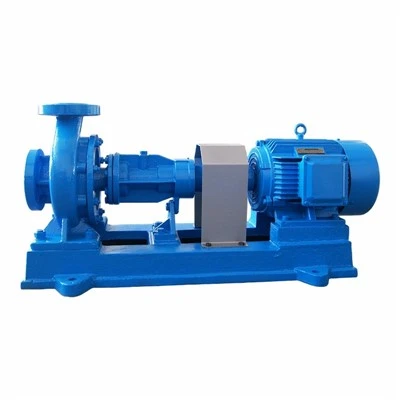
First, let’s make sure we’re on the same page about what a self-priming pump’s shaft does, because that’s where most of the confusion starts. Unlike a standard centrifugal pump that needs to be primed before it runs, a self-priming pump has a built-in chamber—usually a gas-liquid separation chamber— that pulls air out of the suction line on its own to get liquid flowing. The shaft is the metal rod that connects the pump’s motor to its impeller, the part that slings liquid through the system. Between that shaft and the pump’s casing, there’s a seal that stops process fluid from leaking out and keeps outside air from getting in. That seal is the single most common point of shaft leaks, and most of the problems with it are not the pump’s fault—they’re installation or operation mistakes.
Let’s start with the most frequent culprit: improper seal installation. I’ve seen this go wrong so many times it’s become a running joke in our service department. A pump arrives on site, the maintenance team pulls the old unit, and they rush to install the new self-priming pump without taking an extra hour to align the shaft correctly. Shaft misalignment is a silent killer here. If the pump shaft isn’t perfectly level with the motor shaft, the seal gets twisted just a little when the motor turns, and over time that tiny stress wears down the seal’s face. What starts as a barely noticeable drip on Monday is a steady stream by Friday. I once worked with a grain elevator operator who lost $18,000 in lost production because they skipped shaft alignment after replacing a pump—they thought “how hard could it be?” Spoiler: it’s hard enough to ruin a new seal in two weeks. Even a millimeter of misalignment is enough to cause premature seal failure, and self-priming pumps are especially sensitive here because their entire prime cycle depends on consistent, smooth operation.
Next up: seal flushing issues, which are unique to how self-priming pumps work. Most process pumps run full of liquid all the time, so their seal is bathed in fluid that acts as a lubricant and coolant. But self-priming pumps spend the first 10 to 30 seconds of every prime cycle pulling air out of the suction line. That means the seal isn’t submerged in liquid during priming—it’s exposed to air, and if there’s no dedicated flush line to feed it a small, steady stream of process fluid or clean water, the seal runs dry. Dry running the seal for even a few seconds per prime will eat away at its elastomer components (the rubber or plastic parts that flex to create a tight seal against the shaft) and the hard faces (usually carbon or ceramic) that rub together. I saw a municipal wastewater plant last year that had 12 identical self-priming pumps, each leaking from the shaft, until we realized none of their seals had flush lines. They’d installed the pumps for sludge transfer and assumed the process fluid would flood the seal during operation— but sludge is thick, and it never reached the seal area. Once we added small flush lines with clear water, every leak stopped within 48 hours.
Then there’s the matter of improper fluid viscosity or abrasive content, which is a problem only self-priming pumps have to handle in their own way. A lot of operators don’t realize that the seal selected for a self-priming pump is matched to the fluid it’s moving. If you’re pumping thin, clean water, a standard rubber-bonded seal works great. But if you’re pumping something thick like molasses, or abrasive like sand-laden agricultural water, or even sludge with small solids, those solids will get trapped between the seal’s faces. Every time the shaft turns, those tiny grit particles act like sandpaper, scratching the seal’s face and creating a tiny gap where fluid can leak out. I recently got a call from a winery that had two self-priming pumps for grape juice transfer leaking from the shaft within three months. They’d used a standard water seal instead of a high-abrasion seal designed for fruit pulp, which had tiny particulate matter that wore through the soft seal faces. Swapping those seals cut the leaks to zero. It’s not that the pump was bad—it was that the seal wasn’t matched to the application, a mistake that’s way more common than you’d think.
Wait, there’s another one that’s so basic it’s easy to miss: incorrect shaft height or seal gland compression. When you install a mechanical seal on a self-priming pump, the gland—the metal housing that holds the seal—has to be tightened just right, like a bolt. Too loose, and the seal can move on the shaft, creating gaps. Too tight, and you crush the seal’s elastomer parts, so they can’t flex against the shaft to hold pressure. I once walked a new brewery through an installation last spring, and the maintenance team had over-tightened the gland so much the rubber seal o-rings were cracked before they even turned the pump on. They thought tight = secure, but that’s not how mechanical seals work. For self-priming pumps, which experience slight pressure fluctuations during the prime cycle (since they’re moving air and liquid at the same time), that correct compression is even more important.
Let’s not rule out less common, but still fixable, culprits: worn impeller wear rings or cavitation. Cavitation is when the suction line of the self-priming pump has too much restriction, so the pressure drops low enough that liquid boils into vapor bubbles. Those bubbles collapse violently against the impeller and pump casing, creating tiny shock waves that can travel back to the seal area. Over time, cavitation wears down the impeller’s wear rings, which are there to keep liquid pressure stable around the shaft. If those wear rings are worn, the pressure at the seal drops, and fluid seeps out. I worked with an irrigation district last summer that was having leaks on a dozen self-priming pumps used for canal water. They had the suction lines crammed with debris, causing cavitation. Once they installed line screens and replaced the worn impeller rings, the leaks stopped. It’s not the shaft itself leaking—it’s the pressure fluctuation from cavitation pushing fluid past the seal.
Now, before you grab a wrench and start tearing apart your pump, let’s get one thing straight: sometimes a leak is a sign the pump is at the end of its life. If your self-priming pump is over 15 years old, you’ve been doing regular maintenance, you’ve replaced seals multiple times, and you’re still getting leaks, it might be time to look at a new unit. But 9 times out of 10, the shaft leak is avoidable with a little extra care during installation or operation.
As a supplier of self-priming pumps, I don’t sell just a pump and disappear. I’ve built my business on walking operators through these little details because I know how much downtime costs. If you’re dealing with shaft leaks that won’t go away, or you just want to make sure your current pumps are set up correctly, reach out to our team to discuss your application and get tailored guidance. We don’t do one-size-fits-all solutions—whether you need a new pump, a custom seal for your current unit, or a quick maintenance check, we’re here to help you avoid costly leaks and keep your operations running smooth.
Sewage Pump References:
- Karassik, I. J., et al. Pump Handbook, 4th ed. McGraw-Hill Professional, 2007.
- Bloch, H. P. Process Pump Seal Failure Analysis and Prevention, 2nd ed. CRC Press, 2015.
- American Water Works Association (AWWA). Self-Priming Centrifugal Pumps for Water and Wastewater Applications, AWWA Manual M13, 2019.
- Hydraulic Institute. Pump Alignment Best Practices, Hydraulic Institute Press, 2021.
Zhejiang Kaicheng Pump Valve Co., Ltd.
Zhejiang Kaicheng Pump Valve Co., Ltd. is one of the most professional self-priming pump manufacturers and suppliers in China, also supports customized service. We warmly welcome you to buy advanced self-priming pump made in China here and get quotation from our factory. For price consultation, contact us.
Address: No.501 Zhangbao North Road, Dong ou Industrial Park, Oubei town, Yongjia, Zhejiang Province, China
E-mail: sales@cnkcmp.com
WebSite: https://www.kcmpumps.com/
