Let’s cut to the chase: when your warehouse truck grinds to a halt mid-shift, you’re not just dealing with a broken machine—you’re dealing with missed order pickups, delayed restocks, and a whole lot of stressed teammates counting on you. As a warehouse truck supplier, I’ve worked with hundreds of teams who’ve waited until the last minute to fix their equipment, and trust me: preventive small fixes beat costly emergency replacements every time. This isn’t rocket science, but it does require knowing what to check, how to do it safely, and when to call in the pros. Let’s walk through the step-by-step breakdown I share with all my clients to keep their pallet jacks, stackers, and walkie trucks running for years. Warehouse Truck

First, a non-negotiable note: safety comes before every single step. Before you even grab a wrench, make sure the truck is off, the ignition key is removed, and the forks are fully lowered to the ground. For larger ride-on warehouse trucks, engage the emergency brake, chock the wheels, and unplug the battery if it’s electric (most of today’s models are battery-powered, so this is make-or-break to avoid accidental movement while you work). I’ve seen too many techs get scraped or pinched because they skipped this part—don’t be that person.
Start with the most common, easiest-to-fix issues that cause 70% of warehouse truck downtime: the hydraulic system. The hydraulic part is the heart of your pallet jack or walkie stacker; if it’s leaking or slow to lift, everything else doesn’t matter. Let’s take a manual pallet jack first, since that’s the most common unit my clients use. If it’s lifting unevenly or leaking fluid, stop using it immediately—driving it with low hydraulic fluid will burn out the pump. To check: lower the forks fully, then wipe down the hydraulic cylinder and hose with a clean rag to see if there’s a slow leak. If you spot a leak, the first fix is often replacing the O-ring on the cylinder’s lift piston. That’s a 10-minute job for most teams: just drain a little fluid, loosen the piston nut, swap the old O-ring for a matching one (I always keep spare O-rings in our clients’ tool kits—always a good idea), and refill with the manufacturer-approved hydraulic fluid (never use motor oil; it’s too thick and will damage seals).
For electric walkie stackers or pallet trucks, slow lifting is almost always a battery or hydraulic pump issue. First, test the battery with a multimeter: a fully charged 24-volt battery should read between 25 and 27 volts. If it’s below 22 volts, it’s time to recharge or replace cells—no amount of pump work will fix that. If the battery is good, listen for a high-pitched whine when you try to lift: that’s the hydraulic pump working too hard, which is often caused by a clogged filter. You can find the pump filter under the hydraulic reservoir; remove it, clean it with compressed air (or replace it if it’s too dirty), and that usually fixes the slow lift problem. I had a client last month who tried this and went from 30-second lift times to 8 seconds—game-changer for their order picking speed.
Next up: the wheels, which take a beating day in and day out on concrete floors, over dock plates, and around pallets. Worn wheels are the second most common issue that causes trucks to pull to one side or feel unstable. Start by lifting the truck’s frame (use a jack stand, not just your hands—wheels are heavy and can crush fingers) and inspect the load wheels and steering wheel. Look for flat spots, chunks missing, or rubber that’s worn down to the core metal. If the load wheels have debris caked in the bearings, that’s an easy fix: pry the wheel off, clean the bearings with a degreaser, re-grease them with lithium-based grease, and reattach. If the steering wheel is worn, replace it: it’s just two bolts holding it in place, takes 5 minutes, and will make turning the truck feel like new. Pro tip for my clients: I always suggest keeping a set of spare load wheels and steering wheels in the warehouse. It’s cheaper than calling a repair tech, and you can swap a wheel out in 10 minutes instead of waiting 2 hours for a service call.
For ride-on warehouse trucks, like reach trucks or order pickers, the drive motor is another key part to check regularly. If the truck won’t move forward or reverse, doesn’t reach full speed, or makes a grinding noise when you try to drive, the motor is likely the culprit. First, check the motor’s brushes—most electric motors have carbon brushes that wear down over time, usually every 1,000 hours of use. You can access the brushes by removing the motor cover; if they’re shorter than ¼ inch, replace them. It’s a simple part, but if you skip it, the motor will burn out, and a new motor costs way more than a set of brushes. Another common issue for ride-ons is the brake: if the truck rolls when it’s supposed to be stopped, adjust the brake cable tension. The adjustment point is usually near the motor or brake pedal; tighten the nut a little at a time, test the brake after each adjustment, and stop when the truck stays put on a slight incline.
Wait, let’s talk about something a lot of people overlook: the forks. Forks are not invincible. If your forklift’s forks are bent, that’s a safety hazard first, and they can throw off load balance, leading to spills and damage. If the bend is minor (a small bend from hitting a pallet or a dock), you can straighten it with a hydraulic press—just don’t try to do it with a regular shop press, it won’t have enough force. If the bend is severe (over 2 degrees) or there are cracks in the fork, replace them. I always tell my clients: don’t wait for a fork to break mid-shift. Cracked forks have a 10x higher chance of failing under load, and that can cause major injuries and thousands in damaged goods.
Now, when is it time to call a professional? A lot of small issues turn into big problems because people try to fix things they’re not qualified for. If you see damage to the hydraulic hose that’s frayed or bulging, don’t try to patch it—hydraulic hoses are pressurized, and a burst can spray fluid at high speed, that’s a serious safety risk. Also, if you’re working on an electric truck and you’re not comfortable with electrical systems (like checking wiring or replacing the battery), call a service tech. Damaging the electrical system can be a fire hazard, and it’s way cheaper to pay a tech to fix it than to replace the whole truck.
As a warehouse truck supplier, the best advice I can give is to do monthly small checks. Spend 10 minutes at the end of each week inspecting the hydraulic system, wheels, forks, and battery. Keep a log of maintenance: when you replaced the O-ring, when you changed the wheel bearings, when you recharged the battery. That log will help you spot patterns—like if wheels wear out every 6 months, you can order spares ahead of time, or if a battery is losing charge after 2 years, you can plan to replace it before it fails. I’ve seen teams that do this keep their trucks running for 10+ years, while teams that skip maintenance replace their trucks every 3 years. That’s a huge difference in cost—saving thousands of dollars over time.
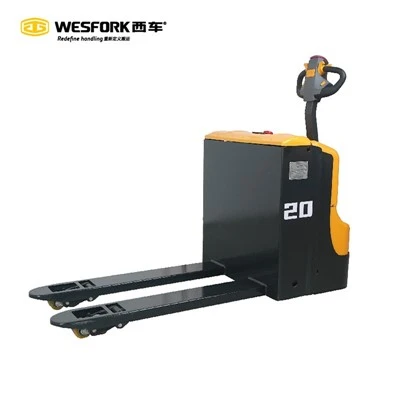
Let me wrap this up: fixing your warehouse truck doesn’t have to be complicated. Start with safety, check the hydraulic system first, then wheels, forks, and motors. Do small, regular checks, keep spare parts on hand, and don’t be afraid to call in pros when something feels out of your depth. If your team needs help troubleshooting, or you’re looking for reliable replacement parts or new trucks to add to your fleet, reach out to our team to discuss your needs. We work with warehouses of all sizes, from small 10,000 sq ft facilities to massive cross-dock centers, and we’ll help you find the right equipment and maintenance plan to keep your operations running smoothly.
Warehouse Truck References:
- Material Handling Industry of America. (2021). Preventive Maintenance Guidelines for Warehouse Lift Trucks and Pallet Jacks. MHIA Publications.
- Occupational Safety and Health Administration. (2020). Safety Standards for Powered Industrial Trucks. OSHA 29 CFR 1910.178.
- National Institute for Occupational Safety and Health. (2019). Warehouse Equipment Maintenance and Injury Prevention. NIOSH Center for Disease Control and Prevention.
- Toyota Material Handling. (2022). Guide to Electric Warehouse Truck Troubleshooting and Repair. Toyota Industrial Equipment Technical Resources.
WESFORK Industries (Zhejiang) Co., Ltd.
As one of the most professional warehouse truck manufacturers and suppliers in China, we also support customized service. Please feel free to wholesale high quality warehouse truck for sale here from our factory. For price consultation, contact us.
Address: 277#Yinhu Road,Yinhu Street,Fuyang District,Hangzhou City,Zhejiang Privince,China
E-mail: sulin@wesfork.com
WebSite: https://www.wesforkintl.com/
