If you’ve ever leaned into the crisp shock of an ice bath—whether post-workout soreness or a late-night recovery ritual—you’ve probably never thought about the water running through the machine keeping that ice cold. But as an ice bath machine supplier who’s fielded hundreds of calls from gym owners, at-home wellness enthusiasts, and even physical therapists, I’m here to tell you: water quality isn’t just a “nice to have”—it’s the backbone of safe, effective, and long-lasting ice bath performance. Over the past seven years, I’ve walked clients through water tests, adjusted their filtration setups, and fixed issues that stemmed from ignoring even a tiny detail about their bath water. Today, I’m breaking down exactly what that means, no jargon, no fancy marketing fluff—just real world lessons from people who’ve relied on our machines day in and day out. Ice Bath Machine
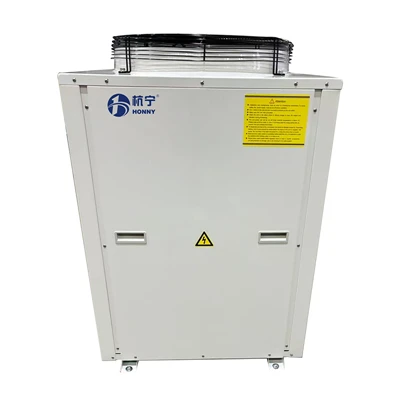
Let’s start with the basics: an ice bath machine isn’t a plastic tub with a bag of ice. It’s a closed-loop system—water circulates, chills, filters, and stays consistent for hours or even days. If that water is bad, everything goes wrong fast. I had a client at a crossfit gym in Austin call me in a panic two years ago: their machine had a funky smell, users were complaining of red, itchy skin, and the chiller was clanking like a washing machine during a spin cycle. When my techs showed up, the first thing we did was test the water: total chlorine was zero, but coliform bacteria were present, pH was off by 1.2 points, and there was a thin film of algae building up on the internal pipes. It took three days to flush the system, replace a filter, and retrain their staff on basic water maintenance. That experience taught me more than any manual ever could: water quality isn’t just a health thing—it’s a reliability and cost thing too. So what do we actually mean by “good” water for these systems? Let’s break it down by the numbers, but more importantly, what those numbers mean for you.
First, the big one: microbiological safety. This is non-negotiable, plain and simple. No one should be stepping into a bath that could make them sick. The standards here are aligned with public swimming pool guidelines, but with a twist—unlike pools, ice baths are often kept at colder temperatures, 50 to 59 degrees Fahrenheit (10 to 15 degrees Celsius), which is actually a sweet spot for bacteria growth. Warm water might kill some germs, but cold water just slows them down—so if you skip sanitization, you’re playing with fire. The key microbes to test for are total coliform, E. coli, and heterotrophic plate count (HPC). Total coliform is a group of bacteria that signal the presence of fecal matter or other contaminants; if you find any, that’s a red flag. E. coli is a subset of coliform that’s specifically linked to intestinal pathogens—zero E. coli is non-negotiable for every use. HPC is the total number of bacteria present in a sample; for ice baths, that should be under 500 colony forming units per milliliter (CFU/mL). I tell all my clients: if your HPC hits 1,000 CFU/mL, you’re already at risk for skin irritation, and you need to shock the system immediately.
Next, disinfectant levels. For closed-loop systems like our machines, we use either chlorine or bromine, but it has to be the right type and amount. Colder water makes chlorine less effective than it is at room temperature, so we recommend a residual of 2 to 5 parts per million (ppm) for chlorine, or 3 to 6 ppm for bromine. That’s not a guess—we worked with a water treatment engineer last year to test our machines over three months, and we found that at 1 ppm residual, bacteria levels spiked after just 48 hours of non-use. I also get a lot of questions about “natural” disinfection methods like ozone or UV light. These work as secondary treatments, but never as the sole method. UV light kills bacteria, but it leaves no residual protection—so if a user kicks the filter out of place for an hour, the water can get contaminated before the next cycle. I’ve seen gyms try to skip chlorine to appeal to users, only to end up with a full-blown algae bloom that shut down their entire recovery area for a week. Don’t do that.
Then there’s the chemical balance: pH and total alkalinity. This is where a lot of new ice bath owners slip up, and it causes two big problems: skin irritation and equipment damage. pH measures how acidic or basic the water is, on a scale of 0 to 14. For ice baths, we need a pH of 7.2 to 7.8—slightly alkaline, close to the pH of human skin. If pH is too low (acidic, below 7.2), you’ll notice itchy, dry skin after a 10-minute bath, and it can corrode the metal parts inside the chiller and pump. If pH is too high (alkaline, above 7.8), chlorine stops working as well, and you’ll get that cloudy, slimy film on the water surface and inside the pipes. Total alkalinity (TA) is the buffer that keeps pH stable—it prevents it from bouncing up and down when you add chemicals or use the bath a lot. TA should be between 80 and 120 parts per million (ppm). Last winter, I had a client in Denver whose TA was at 160 ppm, so his pH stayed at 8.4 no matter what he added. His chlorine wasn’t working, and his chiller’s coil started to scale up—by the time we caught it, he had to replace a $1,200 part. Adjusting TA is simple, but it’s a step that almost no one thinks to test when they first set up their machine.
Next, hardness. Water hardness is the amount of calcium and magnesium in your water. Soft water has low hardness, hard water has high. For ice baths, we want moderate hardness: 100 to 150 ppm. Why? If water is too soft (below 50 ppm), it’s corrosive—it can eat away at the seals, pumps, and hoses inside your machine, leading to leaks and early breakdowns. If water is too hard (above 200 ppm), those calcium and magnesium minerals will build up on the chiller’s evaporator coil, acting like an insulator. The chiller has to work harder to keep the water cold, which drives up electricity bills, shortens the machine’s lifespan, and can even cause the chiller to overheat. I had a client in Chicago with well water that hit 350 ppm hardness—his chiller’s coil was so scaled up that it took twice as long to cool the water, and his energy bill was $80 higher a month than it needed to be. The fix was a simple water softener or a scale inhibitor cartridge, which costs a fraction of the repairs we would have had to do.
Then there’s turbidity. That’s just a fancy word for how clear your water is. High turbidity means there are tiny particles—dirt, skin cells, sweat, lint from towels—floating in the water. For ice baths, turbidity should be below 0.5 nephelometric turbidity units (NTU). If it’s higher than that, those particles will clog your filter, and they give bacteria something to attach to, making disinfection less effective. I always tell clients: if you can’t see the bottom of the tub from your standing height, it’s time to change the filter. That’s a simple, at-home test that doesn’t require any special kits.
Wait, you might be thinking—what about at-home vs. commercial use? Is the standard different? Short answer: no, the science is the same, but the maintenance frequency is. A commercial gym that runs their ice bath 8 hours a day, 5 days a week needs to test their water every single day—before the first user gets in. An at-home user who uses their ice bath 2-3 times a week can test it once a week. I recommend all clients keep a cheap test kit (the ones with strips you can pick up at any pool supply store) on hand, and jot down the numbers. It only takes two minutes, and it saves you from a lot of headaches later.
I also get a lot of questions about tap water vs. well water. Tap water is usually treated by your local municipality, so it already has some residual chlorine, but it might be too hard or have weird pH spikes after heavy rain. Well water is unfiltered, so you have to test it for bacteria, hardness, and minerals every three months, even if you have a softener. I had a client in Montana with well water that had high iron levels—iron can stain the tub and kill chlorine, so we added a filter to remove the iron, and his issues went away. No matter what kind of water you have, testing is non-negotiable.
Let’s talk about what happens when you ignore all this. I’ve seen it: users getting urinary tract infections from contaminated water, commercial machines breaking down after two years instead of five, gyms losing customers because their ice bath smells bad. I once had a high school sports team client who skipped water testing, and 12 of their football players got sick with a stomach bug during playoff season. That’s the worst case—recovery isn’t just about performance, it’s about safety. Water quality isn’t a small detail, it’s the foundation of what our machines do for you.
So what do you need to do when you set up an ice bath machine? First, get your water tested by a local water professional, or use a basic test kit to check pH, TA, hardness, and chlorine. Second, set up a maintenance schedule: test levels regularly, change your filter every 2-4 weeks (depending on use), and shock the system every month or two (shocking means adding extra chlorine to kill any hidden bacteria, then letting it dissipate before use). Third, if your water is way off—like if you have 350 ppm hardness or high iron—invest in a simple water treatment system, not an expensive machine change. Most issues are fixable for a few hundred dollars, not thousands.
As an ice bath machine supplier, our job isn’t just to sell you a tub and a chiller—it’s to make sure it works for you, safely and reliably. That means walking you through water quality from day one, sending you test kits, and troubleshooting when something goes wrong. I’ve been in this business long enough to know that a machine is only as good as the water running through it. If you’re setting up an ice bath for your gym, your sports team, or your home, and you have questions about water quality, or you’re looking for a machine that’s designed to handle real-world water conditions, reach out to our team to discuss your needs. We’ll help you pick the right system, walk you through maintenance, and make sure your ice bath is a recovery tool, not a hassle.
Before I wrap up, a quick note: water quality isn’t something you set and forget. I still have a client who’s had our machine for five years, and he calls me every month to share his test numbers. He checks, adjusts, and it’s running better than ever. That’s the key: consistency, not perfection. Even if you hit a small blip in your chlorine level or hardness, fixing it early is way better than letting it turn into a big problem.
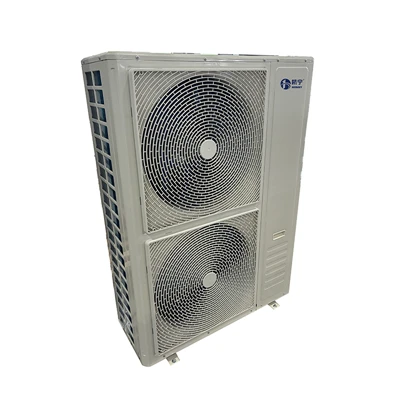
At the end of the day, ice baths are about pushing your body, recovering hard, and feeling your best. The last thing you need is to worry about the water you’re sitting in. By getting the water quality right, you get peace of mind, a longer machine life, and the best possible recovery experience. If you’re ready to set up an ice bath system that works for you, don’t hesitate to connect with our team to talk through your requirements. We’re here to help every step of the way.
Ice Bath Machine References:
- Centers for Disease Control and Prevention (CDC). (2022). Model Aquatic Health Code (MAHC) 2022 Update: Public Swimming Pools, Spas, and Similar Recreational Water Facilities. U.S. Department of Health and Human Services.
- American National Standards Institute (ANSI)/Association of Pool & Spa Professionals (APSP). (2021). Standard for Public Spas. ANSI APSP 5.
- Water Quality Association (WQA). (2023). Hardness Basics: Understanding Calcium and Magnesium in Water. WQA Technical Fact Sheet.
- International Organization for Standardization (ISO). (2019). Water Quality—Determination of Heterotrophic Plate Count—Incubation at 22 °C and 36 °C. ISO 6222:2019.
- International Organization for Standardization (ISO). (2020). Water Quality—Guidance on the Application of Disinfectants in Recreational Water. ISO 10500:2020.
Hangzhou Honny Heat Energy Technology Co., Ltd.
We are one of the most experienced ice bath machine manufacturers and suppliers in China. With a professional production team, we are able to meet the needs of the majority of our customers. Please feel free to wholesale customized ice bath machine from our factory. Also, quotation is available.
Address: Dingshan Village, Wenyan Subdistrict, Xiaoshan District, Hangzhou City, Zhejiang Province
E-mail: 524435406@qq.com
WebSite: https://www.hnrnkj.com/
