If you’ve ever spent a morning hunting for a missing trowel, broken power tool, or winter snow blower buried in the back of your shed, you know a good lock isn’t just a convenience—it’s a guard for the stuff you rely on and the work you put in. For 12 years, I’ve run a small mechanical lock supply business, working with farmers, weekend woodworkers, and suburban homeowners who’ve called me panicking after a shed break-in. Most come to me saying they want the “best” lock, but when we break down their needs, it’s never a one-size-fits-all answer. The real best mechanical lock for a shed depends on four things: where the shed is, what’s inside it, how often you use it, and how much effort a thief is willing to put in. Let’s cut through the noise and get to what actually works, no fancy marketing or confusing jargon. Mechanical Lock
First, let’s talk about the biggest variable most people miss: the shed’s location. If your shed is tucked 50 yards back from your house, between overgrown trees, a thief doesn’t have to worry about a neighbor seeing them jimmying a lock. They might have 10 or 15 minutes of privacy before anyone checks on it. If your shed is right next to your back patio, where your kids play, or visible from your kitchen window, a thief is looking for a quick, 10-second job to grab something easy. That changes everything. I’ve had customers show up with a $10 padlock from the hardware store on a shed in the back woods, only to call me a week later saying someone cut it off with bolt cutters in less than two minutes. That’s not a failure of the lock—it’s a mismatch for the threat level.
Next, what’s inside the shed? A shed full of kids’ bikes and a lawnmower is a lower target than a shed with a $2,000 chainsaw, a generator, or old tools that someone might resell for scrap or profit. I always ask customers this question first: if someone broke in, what would they actually take? If it’s small, easy-to-conceal items, you need a lock that stops forced entry, not just picking. If it’s heavy stuff that requires moving a whole shed, well, that’s a whole different problem, but most break-ins are about taking portable, valuable items. That means you need a lock that can resist not just picking, but also sawing, bolt cutters, and prying.
Now, let’s get into the actual mechanical locks, because not all locks are created equal. I see so many people fixate on keyed vs. combination locks, but that’s the first mistake. Let’s break down the four main types I recommend for sheds, and when each works best, based on what I’ve seen from customers over the years.
First, the padlock—but not the cheap brass ones you see at big box stores. Wait, no, even mid-tier padlocks have their limits. Let’s start with the keyed padlock: I only recommend solid-body, boron-carbide padlocks for high-risk sheds. Boron-carbide is the same material they use for bulletproof vests, and it’s way harder than the steel bolt cutters most thieves carry. A few years ago, a farmer I work with had his shed on a property at the edge of town, where there had been three break-ins in six months. He tried a standard stainless steel padlock, and a thief cut through it with a pair of 12-inch bolt cutters in 18 seconds. I replaced it with a 5-pin boron-carbide padlock, and six months later, he texted me a video of a kid trying to cut it at a county fair demonstration. The bolt cutters slipped off after 10 seconds, and the lock didn’t have a single mark. The keyed side of this is important, too: avoid wafer locks. Wafer locks are the cheap ones with super simple keys—they’re easy to pick in 10 seconds with a paperclip or a bobby pin. Go for a pin tumbler lock, with at least 5 pins. The more pins, the harder it is to pick, but for a shed, 5 is the sweet spot—6 or 7 pins get expensive fast, and you don’t need that level of security unless you have something super high-value inside.
Then there’s the combination padlock. A lot of people love combination locks because they don’t have to carry a key, and they think that means no one can pick it. Wrong. Most cheap combination padlocks are just as easy to pick as wafer keyed locks, and worse, they’re even easier to brute force. Most combination locks only have 3 or 4 dials, so you can try every combination in a matter of minutes—no skill required. I only recommend combination locks for sheds that are low-risk, right next to the house, and used by multiple people (like a community garden shed or a neighborhood tool share). If you’re going to use a combination lock, spend the extra $20 on a disc detainer combination lock. Disc detainer locks are way harder to brute force—they have rotating discs instead of tumblers, and you can’t just spin through combinations. A 5-disc combination lock would take a thief over 10 hours to brute force, which is more than they’ll ever spend on a shed. That said, even the best combination padlock is weaker than a keyed pin tumbler padlock, so only use it for low-risk spots.
Now, the two types I actually recommend for most sheds, because they’re designed for shed doors, not just general use: hasp locks and cam locks. Wait, let’s get specific about hasp locks, because this is where most people go wrong. A hasp is the metal plate that’s mounted on the shed door and the frame, and the padlock goes through it. A lot of people buy a cheap hasp and a cheap padlock, and that’s the weakest link. The hasp itself should be made of hardened steel, and it should have a staple that’s at least 3/8 inch thick. Even better, get a hasp with a screw that goes through the door frame, not just the surface. If the hasp is only mounted with screws that go into plywood, a thief can just unscrew it in 10 seconds. I always recommend hasps that have 1-inch long screws that go through the door and into the frame, and some even have security screws that need a special tool to remove. That way, even if someone gets the padlock off, they can’t just pry the hasp off—they’d have to destroy the whole door or frame, which is way more noticeable.
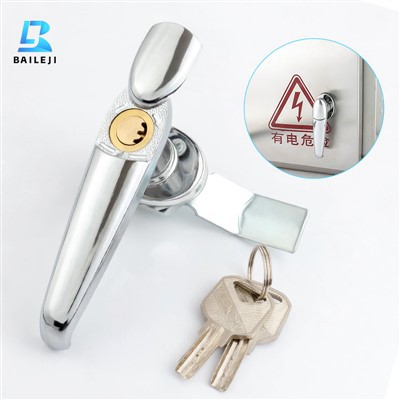
Cam locks are another great option, especially for sheds with sliding doors or wooden doors where you want a lock that doesn’t hang out the front. Cam locks mount inside the door, and a key turns a metal bar (the cam) that latches into a hole in the door frame. They’re less vulnerable to bolt cutters than padlocks because the lock cylinder is recessed into the door, not sticking out where a thief can clamp bolt cutters on it. I recommend cam locks with a 5-pin core, same as the padlocks, and make sure to get one with a hardened steel cam—cheap cams bend easily if someone pries at the door. A lot of people with small sheds or garden sheds love cam locks because they look neat, don’t take up space, and are easy to install without modifying the door too much.
Now, let’s talk about what most “lock experts” won’t tell you: the weakest part of any shed lock is usually the installation, not the lock itself. I’ve seen customers install a hasp on a thin plywood shed door with ½-inch wood screws that just pull out if you tug at them. I’ve also seen people put a high-security padlock on a hasp that’s only mounted with two small screws, and when the lock gets picked, the whole hasp pulls off the wall. My rule of thumb for installation: use screws that are at least twice as long as the material you’re screwing into. If you’re mounting a hasp on a door that’s 1 inch thick, use 2-inch screws, and make sure they go into the frame, not just the door. For cam locks, use the mounting screws that come with the lock—don’t substitute smaller ones. And if you’re not handy, pay someone to install it. I can’t tell you how many times a customer has called me after breaking their new lock trying to install it on a flimsy shed door.
Wait, let’s also address a common myth: a deadbolt is good for a shed. No, deadbolts are for house doors, not shed doors. House doors have solid frames, they’re locked from the inside, and a thief can’t get to the area around the deadbolt. A shed door is usually thinner, has a flimsy frame, and a thief can reach around the door or pry it open enough to get a crowbar behind the deadbolt and bend it or the frame. Deadbolts for sheds are overkill, and they’re way more expensive than a good hasp and padlock combo that’s actually designed for shed entry.
Let’s test this with real examples from my business. Last year, I worked with a customer in Cleveland who had a 10×12 shed in his backyard, tucked 20 feet from the house, with a lawnmower, a generator, and a few power tools worth about $1,500. He originally had a standard brass padlock and a cheap hasp. He came to me after someone broke in over a weekend, cut the padlock with bolt cutters, and stole the generator. I recommended a 5-pin boron-carbide padlock, a hardened steel hasp with 2-inch security screws, and a cam lock for the side door he barely used. I installed it for him, and eight months later, he sent me an email saying no one had bothered trying again, and a neighbor nearby had a break-in a month later because their hasp was mounted with cheap screws. Another example: a community garden in Columbus, with 12 small tool sheds, all next to each other in a well-lit area near a playground. They didn’t need high-security locks, just something that stopped quick, opportunistic theft, so I installed disc detainer combination padlocks on each hasp. A few months later, their volunteer coordinator told me that not only had there been no break-ins, but no one could forget their keys or get locked out, which was a huge win for the group.
Now, what about the edge cases? What if you have a shed that’s not wood, like metal, or a vinyl shed? For metal sheds, I still recommend hasp and padlock, but make sure the hasp is mounted to the metal frame, not just the metal siding, which can be dented or pried off. For vinyl sheds, you have to be extra careful with installation—vinyl is not as strong as wood, so use shorter screws and make sure the hasp is mounted to the frame, not just the vinyl panels. Never drill into a vinyl shed without checking where the frame is behind the siding, otherwise you’ll just make a weak spot.
What if budget is an issue? A lot of customers come to me saying they don’t want to spend $100 on a lock for a shed that only has a lawnmower and garden tools. That’s fair. The sweet spot for a basic, reliable lock for a low-risk shed is a 5-pin steel padlock (not boron-carbide, which is more expensive) and a good quality hasp. You can get that for around $30 total, which is way better than a $10 padlock from the grocery store that will get cut off in two minutes. If the shed is medium-risk, with tools or small power equipment, budget $70 to $100 for a boron-carbide padlock and a heavy-duty hasp. For high-risk, expensive items, budget $150 to $200 for a cam lock or a high-security padlock with a reinforced hasp. The old saying “you get what you pay for” applies here, but that doesn’t mean you need to overspend on features you don’t need.
I want to be clear: no lock is unbreakable. A determined thief with a blowtorch can cut through almost any lock, and a thief who’s willing to take a whole shed can just lift the roof or break the walls down. But the best mechanical lock for a shed isn’t the one that can stop a professional thief—it’s the one that stops the opportunistic thief, which is the kind that makes up 90% of shed break-ins. Most thieves don’t want to spend more than a minute on a shed. They want something fast, easy, and low-risk. A good lock that’s installed correctly will make your shed look like a harder target than the neighbor’s with a flimsy padlock, and that’s all you need.
At the end of the day, if you’re not sure what’s right for your shed, or if you want to upgrade your current lock, feel free to reach out to our team for a no-obligation consultation. We work with all kinds of sheds, from suburban backyards to rural farms, and we can help you find the right lock for your needs and budget. We don’t do one-size-fits-all, because we know your shed and your stuff are unique.
Smart Cabinet Lock References:
- National Crime Prevention Council. (2022). Residential Shed Security Best Practices. U.S. Department of Justice.
- Lock Manufacturers Association. (2021). Mechanical Lock Performance Standards for Outdoor Entry Applications.
- Ohio State University Extension. (2020). Farm and Rural Property Security: Sheds and Outbuildings.
- Consumer Reports. (2023). Padlock and Lock Security Testing: What Works for Home and Outdoor Use.
Suzhou Baileji Intelligent Lock Industry Co., Ltd.
As one of the most professional mechanical lock enterprises in China, we’re featured by quality products and good price. Please rest assured to buy discount mechanical lock in stock here and get pricelist from our factory. Also, customized service is available.
Address: 3rd Floor, Building 9, Shengteng Industrial Park, No. 8 Ruyuan Road suzhou, jiangsu, China
E-mail: vip@bailejilocks.com
WebSite: https://www.bailejilock.com/
