If you’ve ever walked through a factory floor, traced the chain on a bicycle, or watched a conveyor system hum along in a manufacturing plant, you’ve probably seen a sprocket in action. But how many times have you stopped to ask, “What does a sprocket’s tooth count actually mean, and why does it matter to how my equipment runs?” As a sprocket supplier with 12 years of getting this right for everything from small custom bikes to heavy mining conveyors, I can tell you this number isn’t just a random count of teeth—it’s one of the most critical specs you’ll get wrong if you don’t understand what it does. Let’s break this down simply, the way I explain it to my customers every day. Sprocket

First, let’s start with the basics: a sprocket is a toothed wheel that mates with a chain (or sometimes a timing belt) to transfer rotary motion from one shaft to another. The “tooth count” is just the number of those teeth around the outer circumference of the wheel, right? Well, yes, but the story doesn’t end there. That number dictates almost everything about how your system performs: speed, torque, efficiency, even how long your chains and sprockets last. To put it in terms anyone can grasp, think of two sprockets on a bike: the small one attached to your pedal (front sprocket) and the larger one on your rear wheel (back sprocket). When you switch to a smaller back sprocket (lower tooth count), your bike goes faster but requires more effort to pedal. Switch to a larger back sprocket, and you get more torque for hills, but slower speed. That’s the tooth count in action.
Let’s dive into the science a little, because understanding why this happens helps you pick the right sprocket. The core relationship here is speed ratio, which is calculated by dividing the number of teeth on the driven sprocket (the one being turned, usually the rear in a bike or the tail sprocket on a conveyor) by the number of teeth on the drive sprocket (the one you turn with a motor or your legs). For example: if your drive sprocket has 10 teeth and your driven sprocket has 40, your speed ratio is 4:1. That means for every one full rotation of the drive sprocket, the driven sprocket turns four times. Flip that ratio, and you get torque ratio: torque reverses the speed ratio, so that 10-tooth drive / 40-tooth driven setup gives you a 1:4 torque boost. That’s why when you’re moving a heavy load, you want a higher torque ratio—you need a bigger driven sprocket relative to your drive, which comes down to tooth count.
But speed and torque aren’t the only factors. Tooth count also impacts wear, which is where a lot of my customers run into problems. I’ve seen so many people come to me with a complaint that their chains are stretching or breaking too fast, and nine times out of 10, they picked a sprocket with too few teeth. Here’s why: when a chain wraps around a sprocket, each link has to articulate to fit the curve of the sprocket. If the sprocket has too few teeth (like under 17 for a standard roller chain), the chain has to bend at a sharper angle to wrap around it. That sharp bend puts extra stress on the chain pins and plates, causing fatigue, stretching, and breakage much faster than it should. On the flip side, a sprocket with a higher tooth count means the chain bends at a shallower angle, distributing stress more evenly. The result? Longer chain life, less downtime, fewer replacement parts. For a factory that runs 24/7, that downtime alone can cost tens of thousands of dollars a day—so getting tooth count right isn’t just a minor detail, it’s a cost-saver.
Now, tooth count also ties into sprocket pitch, which is the distance between the centers of two adjacent teeth. You can’t just grab any sprocket with 15 teeth and expect it to work with your chain; the pitch has to match. For example, a 0.5-inch pitch chain (common on bicycles and light conveyors) will only fit sprockets made for 0.5-inch pitch, regardless of tooth count. But even within the same pitch, tooth count changes how the sprocket interfaces with the chain. Let’s take roller chain, the most common type for industrial applications: ANSI standards (the American National Standards Institute) set specific tooth profiles for every pitch, and those profiles are designed to work best with a range of tooth counts. For instance, ANSI 40 pitch chain (0.5-inch pitch) works with sprockets that usually have between 11 and 120 teeth, but the sweet spot for most applications is 17 teeth or more, as that minimizes chain wear.
I’ve seen this play out with a manufacturing client last year: they had a conveyor system moving packaged goods in their packaging line, and they kept replacing chains every 3 months. They had a sprocket with 12 teeth, which was the smallest available for their chain pitch. I recommended switching to a 19-tooth sprocket on the drive end of their system, and sure enough, their chains started lasting over 18 months. That’s not a fluke—industry data from the Chain Manufacturers Association backs this up: sprockets with a minimum of 17 teeth for standard roller chain reduce chain wear by up to 70% compared to sprockets with 12 teeth. That kind of difference directly impacts their operational costs, not just parts, but labor for replacements.
It’s not just industrial applications, either. I work with a lot of custom bike builders, and they swear by tooth count for fine-tuning a bike’s performance. A road bike built for speed will often have a front drive sprocket with 53 teeth (a high count) and a rear cassette with teeth ranging from 11 to 28, so the rider can get that fast, low-torque gearing for flat roads. A mountain bike, on the other hand, might have a front sprocket with 32 teeth and a rear sprocket that can go as low as 10 teeth, so riders can get the high torque they need to climb steep trails without struggling. Even for something as small as a go-kart, tooth count can make the difference between a vehicle that accelerates fast and one that’s too slow to compete.
Of course, there are exceptions to the “higher tooth count is always better” rule. If you’re working with a compact system where space is limited, a lower tooth count might be necessary. For example, a small garden tractor’s drive system has limited space, so a 10-tooth sprocket might be the only option, and manufacturers design chains to withstand that slight extra wear for the sake of size. But even then, there are rules: never go below the minimum tooth count recommended for your chain type, because even in a small space, a sprocket that’s too small will wear out the chain and the sprocket itself much faster, leading to more frequent repairs.
Another thing to consider: sprocket tooth count and noise. When a chain engages with a sprocket, each tooth hitting the chain creates a small impact, which translates to noise. Sprockets with fewer teeth mean each tooth engages with a larger segment of the chain’s circumference, so each impact is slightly more forceful. Higher tooth counts mean more teeth engaging, spreading the impact out more, which leads to quieter operation. For facilities where noise is a concern (like food processing plants, where workers are on the floor all day), that’s a big deal—reducing noise levels not only improves workplace safety, but also reduces worker fatigue over long shifts.
Let’s talk about how to calculate tooth count for your specific application, because a lot of customers come to me with a motor and a load, and they need to figure out what sprocket they need. First, you need to decide on the speed ratio you want. Let’s say you have a motor that runs at 1750 RPM, and you want your conveyor shaft to run at 200 RPM. Your speed ratio is (1750 / 200) = 8.75:1. Then, you pick a drive sprocket tooth count (let’s say 15 teeth, a common starting point for small motors) and multiply that by the ratio: 15 * 8.75 = 131.25. You’d round that to a standard tooth count, usually 130 or 132, for the driven sprocket. But remember, you also have to check that minimum tooth count for your chain—if 130 teeth is way over the minimum, that’s fine, but if it’s under, you might need to adjust your ratio to use a higher drive sprocket tooth count instead.
Wait, but what about worn sprockets? A lot of people forget that sprockets wear too, not just chains. When a sprocket’s teeth wear down, their pitch circle diameter increases, which means the effective tooth count changes. That’s why when you replace a chain, you should always inspect the sprockets—if the teeth are hooked or worn more than 0.02 inches, you need to replace the sprocket too, even if it “looks fine.” Using a worn sprocket with a new chain will cause the chain to stretch much faster, because the mismatched pitch doesn’t sit right on the worn teeth. Tooth count is one of the key ways to measure wear, by the way—if you count the teeth and find they’re unevenly worn on one side, that’s a sign your alignment is off, which can also cause premature wear.
Let me give you a quick example of that: a customer in the agriculture sector came to me last year with a grain elevator conveyor that was skipping, and chains were breaking every other month. They’d replaced the chain twice, but didn’t check the sprockets. When we pulled the sprockets, we found one side of the drive sprocket’s teeth were rounded, so the effective tooth count was less than the actual number stamped on the sprocket. That misalignment and worn tooth profile meant the chain wasn’t engaging properly, causing the skipping and breakage. Replacing both sprockets with the correct tooth count and pitch fixed the issue, and they haven’t had a problem since.
So, to wrap this up, let’s make sure we’re clear on what a sprocket tooth count is: it’s the number of teeth on a sprocket that interface with a chain or timing belt, a spec that directly impacts speed, torque, wear, noise, and overall system performance. It’s not just a number you pull off a spec sheet—it’s a critical design choice that balances your needs for speed, power, space, and durability.
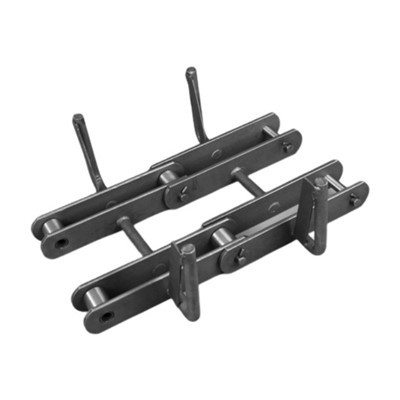
Chain Plate Feeder Chain If you’re not sure what tooth count is right for your application—whether it’s a custom bike, an industrial conveyor, a go-kart, or heavy mining equipment—I can help. I’ve worked with sprockets for over a decade, and I’ve helped thousands of clients find the perfect tooth count for their needs, no matter how big or small. Don’t guess at your sprocket specs; get in touch with me to discuss your requirements, and I’ll walk you through the best options to keep your system running smoothly, reduce downtime, and save money on replacement parts.
References
- Chain Manufacturers Association. (2022). Roller Chain and Sprocket Design Guidelines. CMA Press, Washington, DC.
- ANSI/ASME B29.1M-2017. Specification for Power Transmission Roller Chains, Attachments, and Sprockets. American Society of Mechanical Engineers, New York, NY.
- Wilson, D. G., & Papadopoulos, J. (2004). Bicycling Science (3rd ed.). MIT Press, Cambridge, MA.
- Industrial Equipment Manufacturers Association. (2021). Conveyor System Design Best Practices. IEMA, Chicago, IL.
- Lee, K. H., & Park, S. J. (2019). “Wear Analysis of Roller Chain Sprockets Under Different Tooth Counts.” Journal of Mechanical Design, 141(8), 081701.
Zhejiang Hangte Chain Transmission Co., Ltd.
We are one of the most experienced sprocket manufacturers and suppliers in China since 1999. Please rest assured to buy high quality sprocket made in China here from our factory. If you have any enquiry about cooperation, please feel free to email us.
Address: No.195 Qinglin East Street, Qingshan Lake Subdistrict, Lin’an District, Hangzhou City, Zhejiang Province
E-mail: hangtechain@gmail.com
WebSite: https://www.chinahtchain.com/
