As a supplier of combustion gas capture devices, I’ve spent over a decade working with power plants, manufacturing facilities, and industrial sites to tackle one of the most overlooked parts of emissions control: not just capturing pollutants, but making sure they’re disposed of safely. Too many operations treat capture as a one-and-done step, only to run into regulatory fines or public health risks when the captured gases aren’t handled right. Let’s break down what actually works, grounded in on-the-ground experience, not just textbook theory. Combustion Gas Capture Device
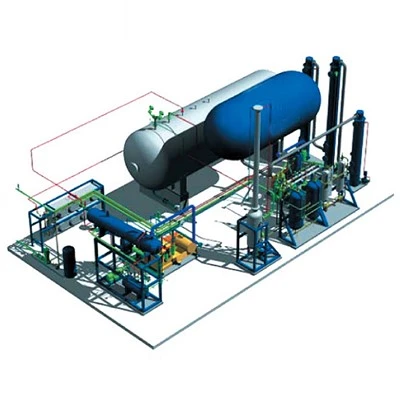
First, let’s get clear on the pollutants we’re talking about. Combustion gas from fossil fuel or biomass burners isn’t just “exhaust”—it’s a mix of nitrogen oxides (NOₓ), sulfur dioxide (SO₂), particulate matter (PM), carbon monoxide (CO), and sometimes trace heavy metals like mercury. Each of these has unique properties, so a one-size-fits-all disposal method never works. I’ve seen teams try to dump wet scrubber sludge straight into landfills and end up with leachate contaminating local groundwater. I’ve also watched smaller facilities waste money on overcomplicated thermal systems that weren’t sized for their actual output. The key is matching the disposal method to the pollutant, and making sure every step after capture is locked in, no loose ends.
Let’s start with the most common pollutant: particulate matter. If your capture device uses baghouses or electrostatic precipitators (ESP) to trap PM, the waste product is dry dust, not a slurry. A lot of people think this dust is just inert ash, but it’s often loaded with heavy metals and acid-soluble compounds. Disposal here can be done a few ways, but the safe ones are regulated for a reason. For non-hazardous PM (like ash from clean coal or wood combustion), stabilization in a solid matrix—like mixing it with fly ash or cement to form a solid block before landfilling—prevents wind dispersal and leaching. For hazardous PM (like lead or arsenic from industrial burners), we work with clients to send it to RCRA (U.S. Resource Conservation and Recovery Act) approved hazardous waste facilities, where it’s treated to lock contaminants away permanently. A common mistake I see: facilities storing dry PM in uncovered bins, letting dust blow onto adjacent property. That’s a quick way to trigger neighborhood complaints and regulatory alerts. Our capture systems include enclosed hoppers and vented dust collection for the storage stage, so that problem doesn’t happen in the first place.
Next, sulfur dioxide and NOₓ, two gaseous pollutants that trickle through capture systems if they’re not treated right. Many clients use wet scrubbers to capture SO₂, which creates a slurry of calcium sulfite or sulfate. This slurry is high pH, but it’s also reactive—if it’s not neutralized and dewatered properly, it can eat through storage containers or leach acidic compounds into the ground. The safe disposal here is a two-step process: first, the slurry is dewatered using centrifuges or filter presses to reduce its water content by 80% or more, turning it into a solid cake. Then, that cake is tested for leachability; if it meets non-hazardous criteria, it can be used as a construction material (like in road base or cement production) because the solid form can’t move easily. If it’s hazardous, it goes to a specialized treatment plant where it’s vitrified—heated to 1500°C or higher to turn it into a glass-like inert material that traps contaminants. For NOₓ, which is often removed via selective catalytic reduction (SCR), the byproduct is typically nitrogen gas, which is harmless, but some older SCR systems produce ammonia slip—unused ammonia that can react to form new pollutants. Our capture devices include ammonia scrubbing add-ons that trap that slip, so you don’t end up with a secondary disposal problem from a secondary pollutant.
Mercury is the wildcard here. It’s present in trace amounts, but its volatility means it can escape even strict capture systems if you’re not careful. For facilities with coal-fired boilers or medical waste incinerators, we often partner them with activated carbon injection (ACI) systems integrated with our capture devices, which trap mercury onto activated carbon. The waste here is spent activated carbon coated with mercury. The only safe disposal for this is hazardous waste facilities equipped for mercury recovery, because mercury is reusable—we’ve worked with clients that send their spent carbon to plants that extract 95% of the mercury, turning a waste product into a raw material for batteries or electronics. A bad call here: trying to incinerate the mercury-coated carbon on-site. That releases elemental mercury into the air, which is a neurotoxin that accumulates in the food chain. I’ve seen fines of over $200,000 for that exact mistake—worse, it exposes workers and nearby communities to long-term health risks that no business can afford.
Then there’s carbon monoxide, a toxic gas that’s often overlooked because it’s not a greenhouse gas in the same way as CO₂, but it’s deadly in high concentrations. Many capture systems for CO use catalytic oxidation, which turns CO into CO₂, but that CO₂ needs to be managed too—especially for facilities in areas with strict greenhouse gas regulations. Disposal for CO₂ is moving away from just venting into the atmosphere; now, we focus on carbon capture, utilization, and storage (CCUS) methods that turn the gas into something useful or store it permanently. For industrial clients, we work with them to pipe captured CO₂ to nearby oil fields for enhanced oil recovery, or to geologic storage sites deep underground where it can’t leach into groundwater. For smaller facilities, the alternative is using our low-cost, modular CO₂ capture systems that clean and purify the gas for use in food and beverage production (like carbonating soft drinks) or industrial cooling. Venting is still an option in some cases, but only if it’s measured and reported to regulators, and only after all other capture and utilization steps have been exhausted.
The biggest takeaway from my 12 years in this business is that safe disposal starts at capture. A lot of facilities cut corners on their capture devices to save money, only to end up with disposal costs that are 3x higher than the initial investment. Our combustion gas capture systems are designed not just to pull pollutants out of exhaust, but to make the downstream disposal as simple and compliant as possible. We build our hoppers, scrubbers, and byproduct collection systems to separate dry dust from liquid slurries, so you don’t have to spend extra money on post-capture processing. We include real-time monitoring for every pollutant, so you can track what’s being captured and disposed of, which makes reporting to regulators a breeze.
I’ve worked with a 500 MW power plant in Ohio that was fined $180,000 three years ago because their PM capture device was leaky, and their disposal contractor wasn’t properly stabilizing their ash. We installed our modular baghouse capture system, added enclosed ash storage, and partnered them with a local disposal facility that specializes in industrial ash. In the two years since, they’ve had zero regulatory issues, and they saved $75,000 a year on disposal costs because the stabilized ash qualified for non-hazardous landfill rates. That’s the kind of return on investment that matters.

Disposing of captured combustion gas pollutants isn’t just a technical problem—it’s a responsibility. Whether you’re a small manufacturing shop or a large power plant, cutting corners on this step risks fines, health issues, and damaged reputations. If you’re looking to upgrade your capture system to make disposal safer, more compliant, and more cost-effective, let’s talk. We can work with your facility to audit your current emissions and byproduct handling, design a custom capture setup that fits your needs, and connect you with vetted disposal partners to make every step as smooth as possible. Reach out to our team to start the conversation.
Specialty Gases References
- U.S. Environmental Protection Agency. (2022). “Proper Disposal of Combustion Gas Pollutants: Compliance Guidance for Industrial Facilities.” EPA 456/F-22-003.
- International Energy Agency. (2021). “CO₂ Capture, Utilization, and Storage: Safe Disposal Standards for Industrial Emissions.” IEA Clean Coal Centre Report.
- World Health Organization. (2020). “Mercury Disposal and Exposure Prevention: Best Practices for Combustion Facilities.” WHO Environmental Health Series.
- American Society of Mechanical Engineers. (2023). “Design Standards for Combustion Gas Capture and Byproduct Storage Systems.” ASME B31.1-2023.
Xinxiang Jiale Intelligent Equipment Co., Ltd.
As one of the most professional combustion gas capture device manufacturers and suppliers in China, we’re featured by quality products and good service. Please rest assured to buy durable combustion gas capture device for sale here from our factory. We also accept customized orders.
Address: No.3913, 9th Floor, Unit 3, East Commercial and Office Complex, Baolong City Plaza, Hongqi District, Xinxiang City, Henan Province, China
E-mail: cc2397410@gmail.com
WebSite: https://www.jiale-asu.com/
