Hey there, Large Pallet Sleeve Box
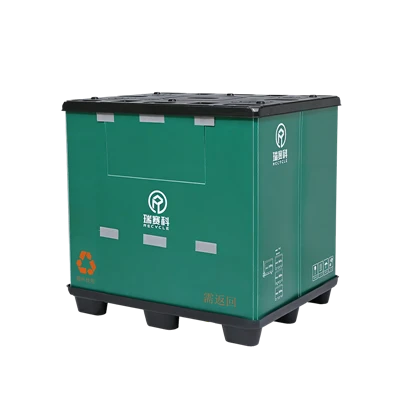
If you’re reading this, chances are you’re either in the market for large pallet sleeve boxes (hi, same here—we’ve been supplying these bad boys for years) and you’ve hit a little snag: how the hell do you transport empty ones without turning them into a crumpled mess before they even reach your warehouse? Trust me, I get it. A while back, we had a client who tried stacking 15 empty sleeves on a standard pallet and throwing them on a delivery truck, only to open the doors to three torn sleeves and a whole lot of swearing on their end. That’s when we realized most people skip the “easy part” of moving empty sleeves because they think, “Hey, they’re empty—just stack ‘em!” Spoiler: it’s not that simple.
Let’s break this down like we’re chatting over coffee (no stuffy supply chain jargon, promise). First, what even is a large pallet sleeve box, just in case you’re new here? For the uninitiated, it’s that flexible, bag-like liner that slips right over a pallet to keep dust, moisture, and dirt away from whatever you’re storing—think bulk food parts, industrial hardware, even retail stock. They’re big, though. Like, if you’ve got a 48”x40” pallet, a sleeve might stretch 50” wide and 100” tall when fully open. Empty, they fold flat, which is where the confusion starts. You don’t want to fold ’em so tight you damage the plastic (most are HDPE, right? Durable but not indestructible) but you also can’t let ’em billow out like a sad inflatable in the back of a van.
First step: pre-transport prep, and this is non-negotiable. Don’t just grab a handful of folded sleeves and toss ’em on a pallet. We always tell our clients to first fold each sleeve correctly. Wait, how? Let’s do it step by step, no fancy tools needed. Lay the empty sleeve flat on a clean floor—no gravel or sharp bits, that’s asking for a hole. Then, fold the sides in towards the center so it’s narrower, like folding a sheet. Next, fold it lengthwise twice, so it ends up being a long, skinny bundle—not a huge, floppy square. If you fold it too small, you’re crinkling the plastic, which makes it weaker when it’s time to slip it over the pallet. Too big, and it’s going to shift. Aim for a bundle that’s about the size of a large carry-on suitcase—manageable, not too bulky.
Once all your sleeves are folded, it’s time to group them. Don’t stack every bundle on top of each other willy-nilly. We use a simple trick: group 8-10 folded sleeves into a “mini-stack” and tie a soft, wide strap around the middle, not the top or bottom. Why wide? A thin wire or a thick rope can cut into the plastic if the stack shifts during transport. Soft nylon straps work best, or even a folded piece of the sleeve’s extra material (free, and uses what you already have). That mini-stack stays together, so when you move them, you’re not juggling 20 loose sleeves.
Now, the pallet choice—this is another mistake we see. A lot of people use a standard wooden pallet, but wait: empty sleeve bundles are light, but they’re big, so you need a pallet that’s not too small. If your sleeves are for a 48”x40” pallet, use a 48”x40” pallet. Don’t try to squeeze a 50” sleeve on a 40” pallet—it’s going to stick out, get caught on the truck’s door, or blow around. Also, make sure the pallet is in good shape. No broken slats, no splinters—splinters will poke through the folded plastic faster than you can say “bad delivery.”
When loading the pallets, here’s where people go wrong: stacking too high. We say max 5 mini-stacks per pallet. Wait, that’s it? Yep, because each mini-stack is 8-10 sleeves, so 5 is 40 total, which is heavy enough but not so tall that the top stack is going to topple over during a turn on the highway. Also, stagger the stacks. Don’t put all 5 stacks right next to each other in a row. Offset them so the edges of one stack don’t hang over the pallet’s edge—we’ve had stacks hang over and get scraped by the forklift on the other end, which is a total waste.
Securing the load—oh man, this is the big one. A lot of people just throw a tarp over the pallet and call it a day. That’s not enough. First, use stretch wrap, but not just any stretch wrap. Use 18”-wide industrial stretch wrap, not the flimsy stuff you use for moving boxes around your house. Start from the bottom of the pallet, wrap around the skids, and work your way up, overlapping each wrap by 50%. Do at least 8 wraps around the base, then keep going up the sides, pulling tight. Then, add a few cross-wraps—like, wrap around the pallet once horizontally, then once vertically, to lock the stacks in place. If you don’t pull tight enough, the stacks will shift, and the stretch wrap will just act like a loose blanket.
Then the tarp: get a heavy-duty, waterproof tarp that’s bigger than the pallet. Drape it over the top, then pull it down tight around the sides. Don’t just tie the corners—use bungee cords or ratchet straps to secure it to the pallet’s skids. If the tarp is loose, wind will get under it, lift the whole load, and send some of your sleeves flying. We had a client last year who lost three empty sleeves when the tarp blew off on the highway—they ended up having to rush order replacements, which cost them extra time and money. That’s the kind of mistake we want you to avoid.
Wait, what about if you’re transporting these in a van or a smaller truck, not a semi? Same rules apply, just on a smaller scale. Fold the sleeves correctly, group them into mini-stacks, tie them, put them on a small pallet (or even a sturdy cardboard pallet if you’re only moving a few), and secure with stretch wrap and a tarp. Don’t just throw the loose stacks in the back of the van—they’ll roll around, get stepped on, and crease so bad they won’t slide over pallets easily.
Also, a quick pro tip from our experience: if you’re transporting empty sleeves long distance (more than a few hours), add a layer of corrugated cardboard between each mini-stack. Why? If the stretch wrap slides, the cardboard acts as a buffer, so one stack doesn’t rub against another. We did a test once with and without the cardboard—without it, we had 2 scratched sleeves; with it, zero. It’s a cheap, easy fix.
What about common mistakes to avoid? Let’s list them out, because we’ve seen every single one: 1) Folding the sleeves too tight—this causes permanent creases that can tear when you stretch the sleeve over a pallet. 2) Using thin straps or wire to secure stacks—these cut into the plastic, leading to holes that let moisture in. 3) Stacking too high—we once had a pallet with 8 mini-stacks topple over on a delivery, and every single sleeve was ruined. 4) Forgetting a tarp—wind and rain are enemies here, even if the forecast says “sunny.” 5) Using damaged pallets—splinters are plastic’s worst enemy.
Now, if you’re still unsure, here’s the thing: we supply large pallet sleeve boxes all the time, and we work with companies that need them shipped empty too. If you’re not sure about your transport setup, just give us a shout. We can even send you a free sample to test the folding and stacking, no strings attached. We know how frustrating it is to get a shipment of empty sleeves only to have them beat up before you even use them, so we’re happy to help you figure out what works for your operation.
Wait, one last thing—if you’re moving a small number of sleeves, like 5 or 6, you don’t need a whole pallet. Just fold them, tie them with a soft strap, and put them in a plastic bin in the back of your truck. That way, they don’t get knocked around. It’s the little things that matter.
At the end of the day, transporting empty large pallet sleeve boxes isn’t rocket science, but it does take a little thought. Skip the “just stack ‘em” shortcut, follow the steps we talked about, and you’ll get your sleeves to their destination in perfect shape. No crumples, no tears, no extra costs from replacements.
If you’re ready to order large pallet sleeve boxes (new or replacement) or just want to chat about the best way to move them, get in touch with our team—we’re here to make this easy for you. No sales pitches, just straight-up advice from people who’ve been in the game for years.
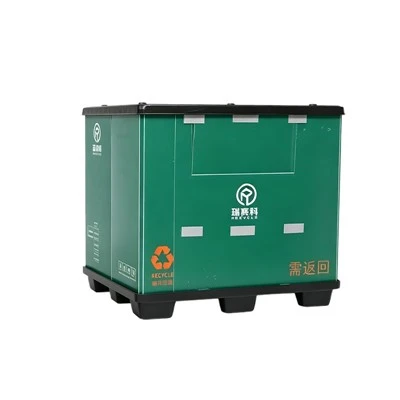
Oh, and before I go, don’t forget: a little prep goes a long way. Your sleeves will thank you, your delivery team will thank you, and your budget will thank you.
Lightweight Pallet Sleeve Box References:
- Industrial Packaging Association. (2022). Best Practices for Transporting Flexible Packaging Materials.
- Pallet & Container Manufacturers Association. (2023. Empty Goods Transport Guidelines for Warehouse Supplies.
- HDPE Plastic Packaging Association. (2021. Handling and Storage Tips for Flexible Pallet Liners.
Jiangsu Recycle Logistics Technology Co., Ltd.
Jiangsu Recycle Logistics Technology Co., Ltd. is one of the most professional large pallet sleeve box manufacturers and suppliers in China. We have world-leading production equipment and strong manufacturing capabilities. Please feel free to wholesale bulk custom made large pallet sleeve box from our factory.
Address: Jiangsu Recycle Logistics Technology Co., Ltd., No.6 Yongcheng Road, Shanghu Town, Changshu City, Jiangsu Province
E-mail: packing@szrecycle.cn
WebSite: https://www.js-recycle.com/
