If you’ve ever stepped into a commercial cold room for food storage, pharmaceutical warehousing, or even a small industrial freezer bay, you’ve probably noticed the way the space stays consistently cool—no gaps, no sudden temperature swings that could spoil sensitive goods. That consistency doesn’t happen by accident. A huge part of it comes down to the cold room sandwich panels that form the walls, ceilings, and floors. As someone who’s been supplying these panels for over a decade, I get asked one question more than any other: “What’s the right temperature range for these panels to perform their best?” It’s not a one-size-fits-all answer, and getting it wrong is what leads to wasted energy, damaged inventory, and costly repairs down the line. Cold Room Sandwich Panel
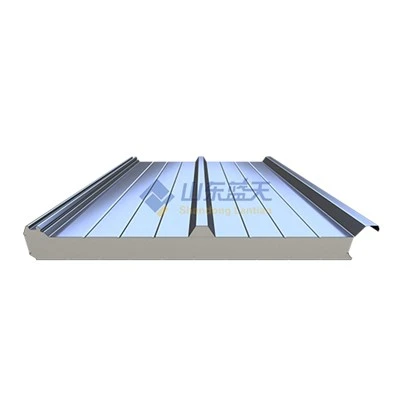
First, let’s get clear on what cold room sandwich panels actually are, because if you don’t understand their makeup, you can’t understand their temperature limits. These panels are composite structures: two rigid outer skin layers, usually made of steel (galvanized for corrosion resistance, or stainless steel for heavy-washdown areas like meat processing plants) bonded to a thick core of insulating material. The core is where the magic happens—most often polyurethane (PUR), polyisocyanurate (PIR), or extruded polystyrene (XPS), each with its own insulation value and temperature tolerance.
For most standard cold room applications—think grocery store walk-in coolers, small produce storage rooms, or pharmaceutical temperature-controlled storage units—the ideal operating temperature range for the panels falls between -40°C (-40°F) and +10°C (50°F). Wait, let’s break that down. If your cold room is storing leafy greens or fresh dairy, you’re running at around 0°C to +5°C (32°F to 41°F), and these standard panels work perfectly here. But if you’re running a deep freezer for frozen meat, ice cream, or frozen pizza, that’s where we dip to -18°C (0°F) all the way down to -40°C (-40°F), and these same panels still hold up. Why -40°C? Below that, most of the common core insulators start to break down. Polyurethane, for example, becomes brittle at temperatures lower than -40°C, which can cause it to crack or separate from the outer steel skins—creating gaps where cold air escapes and warm air seeps in, driving up your energy bills.
Now, let’s talk about the edge cases, because not every cold room fits into that standard range. What if you need a panel for an ultra-low-temperature freezer, like those used in medical research to store vaccines at -80°C (-112°F) or cryogenic storage for biological samples? Standard panels won’t work here. For those environments, we use panels with a different core material—often a closed-cell phenolic foam or a vacuum insulation panel (VIP) core, which can tolerate temperatures as low as -80°C (-112°F) without failing. But here’s the catch: VIP panels, while extremely insulating, are more fragile and more expensive than standard PUR/PIR panels, so we only recommend them for specialized, ultra-cold applications.
On the other end of the spectrum, what if your cold room is slightly warmer, like a climate-controlled storage space for cured meats or wine that stays around +12°C to +15°C (54°F to 59°F)? Wait, some people mistakenly think “cold room” means it’s freezing, but a lot of commercial cold rooms are actually cool rooms, not freezers. For these moderate, above-freezing temperatures, standard panels work just as well, but there’s a caveat: we have to make sure the panels are properly sealed. If a panel is exposed to repeated temperature swings above +15°C (59°F), the bond between the core and the skins can weaken over time, especially if there’s moisture buildup in the core. That’s why we always advise clients to pair their panels with the right air-tight door seals and ventilation systems, even for cooler, non-freezing spaces.
A common mistake I see new clients make is trying to use a one-size panel for all their needs. A restaurant owner might buy a standard -40°C rated panel to build a small walk-in cooler, thinking “lower is better,” but that’s actually a waste of money. Panels rated for ultra-cold environments have thicker cores or specialized insulators that cost more, and you don’t need that extra insulation if your cooler only runs at 2°C (36°F). Conversely, a manufacturer trying to build a deep freezer for ice cream might try to cut costs with standard panels rated only for -18°C, and within a year, the panels start cracking, leading to $10,000 or more in lost inventory and energy bills from consistent temperature fluctuations.
Another factor that affects the temperature range isn’t just the panel’s rated limit—it’s installation. Even the best panel in the world won’t perform if it’s installed incorrectly. I’ve visited cold rooms where the owner bought cheap panels, cut corners on sealing the joints, and ended up with frost buildup along the walls that gradually seeped into the panel core. That frost turns into ice, which damages the insulation, lowers its R-value (that’s the measure of insulation effectiveness, by the way—higher R-value means better insulation), and shrinks the panel’s usable temperature range. For example, a panel that was meant to work at -40°C might only handle -25°C after frost damage, because the ice in the core is a much better conductor of heat than the insulating foam.
Wait, let’s get into the science behind why temperature affects these panels so much. The outer steel skins expand and contract with temperature changes, right? That’s thermal expansion. When the temperature drops drastically, the steel skins shrink, and if the core isn’t flexible enough to move with them, the bond between skin and core breaks. PUR foam is more flexible than XPS, which is why it’s preferred for deep freezers. But below -40°C, even PUR loses its flexibility—it becomes rigid, brittle, and prone to cracking. That’s why the lower limit for standard PUR/PIR panels is -40°C. Above +10°C, the core’s insulating gases (most PUR panels use blowing agents like cyclopentane or HCFCs to boost insulation) start to escape, reducing the panel’s R-value over time. Wait, no—actually, the upper limit for standard panels is around +15°C, but most manufacturers rate them for up to +10°C to be safe, because above that, the blowing agents degrade faster. That’s why a panel used in a room that hits +20°C regularly will have a shorter lifespan than one used in a consistent -20°C freezer.
What about outdoor cold rooms? Like those used in shipping containers for refrigerated transport, or cold rooms built in warehouses with no indoor climate control? Outdoor panels have to handle extreme temperature swings, from hot summer days (up to +35°C, 95°F) to cold winter nights (down to -10°C, 14°F). For these applications, we recommend panels rated for a broader temperature range, usually between -40°C and +25°C (77°F), because they have to handle both the cold interior and the external temperature changes. I’ve had clients who tried to use standard indoor outdoor panels for a shipping container cold room, and within two years, the outer skins started corroding from the temperature differentials, and the core lost insulation. That’s why matching the panel’s temperature rating to its environment—whether it’s indoor walk-in, outdoor, ultra-cold, or moderate cool—is non-negotiable.
Let me share a real example from a client of mine last year. A craft ice cream manufacturer in Ohio came to me wanting to build a new 1,000 sq ft freezer for their artisanal ice cream, which has to be stored at -22°C (-8°F) to keep its texture. They initially tried to save money by buying panels rated only for -18°C, thinking “that’s cold enough for our product.” I explained that their product needs a consistent temperature, and a panel rated for -18°C might not hold up to the daily temperature fluctuations of their freezer, which runs a few degrees colder to maintain product quality. We went with standard deep-freeze panels rated for -40°C, installed proper vapor barriers along the floor (since Ohio has high humidity that can seep into the slab), and added heated panel edges to prevent frost buildup at the joints. Six months later, they told me their energy bills were 15% lower than expected, and there had been no temperature fluctuations—no batches of ice cream had to be thrown out due to warm spots in the freezer. That’s the difference between understanding the temperature range of your panels and guessing.
Now, how do you find the right panel for your specific cold room? First, you need to know your cold room’s operating temperature range exactly. Don’t just say “cold”—measure it. If you’re running a cool room for produce, that’s +0°C to +10°C. If it’s a freezer, that’s -18°C to -40°C. If it’s ultra-low, that’s below -40°C. Then, factor in your environment: is it indoor or outdoor? Does it have high humidity? Is it a heavy-use space, like a warehouse for bulk storage, or a small restaurant walk-in?
As a supplier, I don’t just sell panels—I help clients match their panels to their needs. A lot of suppliers will just push the most expensive panel, but I tell clients: if you don’t need ultra-cold, don’t pay for it. If you need ultra-cold, don’t cut corners on insulation. That’s why I always advise clients to work with someone who knows the ins and outs of cold room panel temperature ranges, not just someone who can sell you a panel.
If you’re planning a new cold room, or you’re having issues with your existing panels (like frost buildup, temperature swings, or high energy bills), the first step is to get clear on your required operating temperature. Too many people ignore this, and end up with panels that don’t fit their needs. I’ve seen small businesses go out of business because of spoiled inventory caused by improperly rated panels. It’s not a small investment—cold rooms are major assets, and the panels are their foundation.
So to recap: standard cold room sandwich panels (made with PUR or PIR cores, the most common type) have a safe, effective temperature range of -40°C (-40°F) to +10°C (50°F) for indoor applications. For above-freezing cool rooms, that upper limit is roughly +15°C, but stick to the +10°C rating to ensure longevity. For ultra-low-temperature environments below -40°C, you’ll need specialized panels with phenolic or vacuum insulation cores, which can handle as low as -80°C (-112°F). Outdoor cold rooms require panels rated for a broader range, typically -40°C to +25°C (77°F), to handle external temperature swings. And no matter the rating, proper installation and maintenance (sealing joints, preventing moisture buildup) will extend your panel’s lifespan and keep it within its effective temperature range.

If you’re building a new cold room, replacing old panels, or have questions about which temperature-rated panels are right for your application, don’t hesitate to reach out. I’ve worked with restaurants, pharmaceutical companies, food distributors, and research facilities for years, and I can help you find the perfect solution that fits your needs and budget. We can walk through your project, discuss your required temperature range, and provide a panel system that will keep your inventory safe and your energy costs low for years to come.
Clean Room Sandwich Panels References:
- ASHRAE Handbook: Refrigeration Systems and Applications, American Society of Heating, Refrigerating and Air-Conditioning Engineers, 2022.
- Insulation Materials and Systems for Cold Storage Facilities, National Insulation Association, 2021.
- Performance Guidelines for Polyurethane and Polyisocyanurate Foam Insulation Panels, Polyurethane Technical Industrial Association, 2020.
- Vacuum Insulation Panels for Ultra-Low-Temperature Storage, International Institute of Refrigeration, 2019.
Shandong Lantian New Material Technology Co., Ltd.
Shandong Lantian New Material Technology Co., Ltd. is one of the most reliable manufacturers and suppliers of cold room sandwich panel in China, featured by quality products and low price. Please rest assured to buy bulk cold room sandwich panel for sale here from our factory. Contact us for pricelist and customized service.
Address: North End of Wanshida Road, Dianzi Town Industrial Park, Boxing County, Binzhou City, Shandong Province
E-mail: Lantian023@ltaaaaa.com
WebSite: https://www.ltpirpanels.com/
