If you’ve ever stepped into a busy commercial office, a hospital, or a large retail space, you’ve likely glanced up at a suspended ceiling and noticed those long, angled panels hanging in neat, parallel rows—those are suspended ceiling baffles. For years, my team and I have supplied these baffles to businesses across North America, and one of the most common questions we get from facility managers and building owners is: “Do suspended ceiling baffles require maintenance?” Suspended Ceiling Baffles
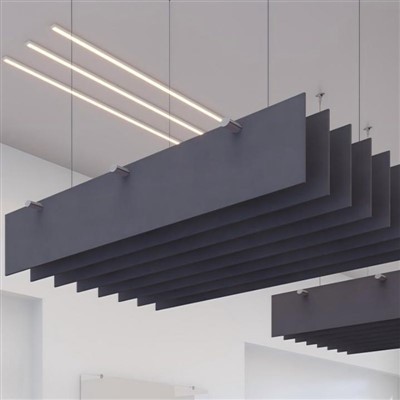
It’s a fair question. Baffles aren’t as flashy as new HVAC systems or energy-efficient lighting, and they’re often treated like invisible part of a space—until they’re not. I’ve heard people assume that because they’re mounted high above the floor, out of reach, they just stay clean and functional forever. Others think that if a baffle isn’t visibly broken or hanging crookedly, there’s no need to check on it. But after nearly a decade in the business, I can tell you that assumption couldn’t be further from the truth. Suspended ceiling baffles do require regular, targeted maintenance to perform as intended, and skipping that work can lead to bigger, costlier problems down the line.
Let’s start with what suspended ceiling baffles actually do, because their maintenance needs tie directly to their purpose. Most baffles are used to control acoustics, improve air flow, or blend with a space’s design. For example, in open-concept offices, they reduce echo so conference calls and team discussions don’t bleed into each other. In hospitals, they help maintain quiet in patient rooms while working with the HVAC system to circulate clean air. In commercial kitchens, they resist grease and moisture buildup. If you’re not maintaining them, they can’t do that job well—and that’s where the issues start.
First, let’s talk about the most visible maintenance need: cleaning. Baffles are designed to catch dust, lint, grease, and other airborne particles, which makes them a natural filter for a space’s air. Over time, that accumulated debris blocks the tiny gaps between baffles and the open channels that carry air. The result? Reduced HVAC efficiency. My team worked with a small industrial warehouse last year that skipped cleaning their baffles for three years. The HVAC system had to run 20% longer each day to keep the temperature consistent, and their monthly energy bill jumped by nearly $1,200. That’s not a tiny expense, and it’s all because they didn’t think to clean panels mounted 12 feet above the ground.
The type of cleaning a baffle needs depends entirely on where it’s installed. In a standard office space, dust is the main culprit. Dry dust can be removed with a soft brush attachment on a vacuum, or a low-pressure air blower—no need to take the baffles down, which saves time and cost. In more high-humidity or high-particle spaces, like restaurants, gyms, or manufacturing facilities, grease or mold can build up. Those require a gentle, non-abrasive cleaning solution and sometimes removing baffles to deep clean, or even replacing them if the buildup has been there too long. I always tell clients that a quick visual check quarterly is enough for offices, but spaces with heavier airborne contaminants need bi-annual cleaning and inspection.
Next, damage and wear. Baffles aren’t indestructible. Even high-quality metal or fiberglass baffles (the two most common materials we supply) can be damaged over time. For metal baffles in high-traffic spaces, a ball hitting a panel or a maintenance worker bumping into one with a ladder can bend or dent the material. Fiberglass baffles, while lightweight and good for acoustics, can chip or crack if they’re handled roughly during installation or cleaning. When a baffle is bent or damaged, it throws off the balance of the entire ceiling system. In open offices, a bent baffle can change the sound reflection, making the space noisier instead of quieter. In HVAC setups, a damaged baffle can redirect air flow, leaving some areas of the space too hot or too cold.
I’ve seen clients wait until a problem becomes obvious—like a lopsided baffle hanging down into a walkway—before fixing it. But small damage, like a slight bend or a tiny crack, can be caught early with regular inspections, often before it affects performance. For example, a hospital client of ours does bi-monthly walks of their patient floors, and their maintenance team checks a small sample of baffles each time. Last year, they caught a set of baffles that had accumulated mold around the edges, before it spread to the ceiling tiles below. They were able to clean the baffles and fix the ventilation issue that was causing the moisture, instead of having to replace a whole section of ceiling.
Another big part of maintenance for suspended ceiling baffles is environmental checks. Where a baffle is installed has a huge impact on how it holds up over time. If it’s in a space with high moisture—like a swimming pool, a steam room, or a basement with poor ventilation—it’s at risk for corrosion, especially if it’s made of untreated metal. Even galvanized steel baffles can rust if they’re exposed to consistent moisture. The same goes for spaces with harsh chemicals, like labs or industrial clean rooms. Those chemicals can break down the material of the baffle, making it brittle over time.
We often recommend that clients in these high-risk areas do more frequent inspections—every six months instead of every year—and opt for corrosion-resistant or chemical-resistant baffles when they first install a ceiling. But even those need occasional checks to make sure the coating isn’t wearing off, and there’s no hidden moisture buildup behind the baffles that could cause rust.
Wait a second—what if you just replaced your baffles? Do they need maintenance right away? Absolutely. A lot of clients come to us for new baffles, and they think that once they’re installed, they don’t have to think about maintenance for years. But that’s not true. Even a brand new set of baffles will start collecting dust and debris within a few months, especially if the space is prone to high air flow or airborne particles. We had a retail client who installed new metal baffles in their store during a renovation, and six months later, they called us because the baffles had grease spots all over them from the bakery section adjacent to their clothing area. A quick clean fixed the spots, but if they’d waited another six months, the grease would have seeped into the metal and caused permanent discoloration.
So, what does a good maintenance schedule for suspended ceiling baffles actually look like? It doesn’t have to be complicated. For most standard spaces (offices, retail, schools), a quarterly visual check is enough. That check should include: looking for visible damage (bends, cracks, missing panels), checking for dust or debris buildup, and making sure all baffles are aligned properly. Every two years, schedule a more thorough cleaning—either dry, for low-dust spaces, or gentle wet cleaning for areas with minor grease. For high-risk spaces (restaurants, gyms, labs, warehouses), bump that up to bi-annual visual checks and annual deep cleaning.
I also always recommend that clients keep a spare set of baffles on hand if they can. Replacement is quick, and having spares means you don’t have to wait days or weeks for new panels if one is damaged or has to be replaced due to excessive buildup. My team can help you calculate how many spares you need based on the size of your space and the type of environment you’re in, so you don’t overbuy or underbuy.
Now, I know what some of you are thinking: this all sounds like more work, and more cost. Why not just skip the maintenance, and replace baffles every few years if they get too dirty or damaged? It’s a valid thought. But when you add up the costs of energy waste from blocked baffles, noise complaints, HVAC repairs, and emergency replacements, regular maintenance is almost always cheaper in the long run. The warehouse I mentioned earlier that had the $1,200 monthly energy bill? They spent $800 on a professional cleaning for their baffles, and their energy bill dropped by $900 a month—they earned back the cost of cleaning in less than a month, and saved thousands each year after that. For the hospital that caught the mold early, they avoided a $5,000 ceiling replacement that would have been needed if the mold had spread.
And let’s not forget about compliance, especially for spaces like healthcare and education. Many local health and safety codes require proper air quality and noise levels, and poorly maintained baffles can make a space fall out of compliance. That’s a risk no building owner wants to take—fines, temporary closures, or having to redo sections of a ceiling because it doesn’t meet standards. Properly maintained baffles help you stay on the right side of those regulations, which is another big win.
Over the years, I’ve seen too many clients overlook the maintenance of their suspended ceiling baffles, and it always leads to avoidable problems. I’ve also worked with clients who have a solid maintenance routine, and they tell me it’s one of the easiest, most impactful parts of their building upkeep. It doesn’t require special training or expensive equipment—just a little attention on a regular basis.
If you’re a building manager or owner reading this, and you haven’t checked your suspended ceiling baffles in the last year, I encourage you to take 10 minutes to do a quick walkthrough today. Look up, check for any bends, cracks, or visible dirt. If you notice something, don’t wait—reach out to our team to talk about inspection, cleaning, or replacement options. If you’re installing new baffles, we can help you pick the right material for your space, and even work with you to create a custom maintenance schedule that fits your needs and budget.
Suspended ceiling baffles play a big role in making your space functional, comfortable, and safe. They might be out of sight, but they shouldn’t be out of mind. Maintenance isn’t a chore—it’s an investment in the performance of your building, and in saving you time and money down the line.
If you’re ready to discuss your suspended ceiling baffle needs, or want to learn more about how to implement a maintenance plan for your space, feel free to reach out to our team to connect for a procurement conversation.
Acoustic Noise Barrier References
- American Society of Heating, Refrigerating and Air-Conditioning Engineers (ASHRAE). 2021. Ventilation for Acceptable Indoor Air Quality. Atlanta, GA: ASHRAE.
- National Floor Safety Institute (NFSI). 2022. Commercial Building Maintenance Best Practices. Irving, TX: NFSI.
- Acoustical Society of America (ASA). 2020. Acoustic Performance of Suspended Ceiling Baffles. Melville, NY: ASA.
- International Facility Management Association (IFMA). 2021. Facility Maintenance and Operations Guide. Houston, TX: IFMA.
Guangzhou MQ Acoustic Materials Co., Ltd.
Guangzhou MQ Acoustic Materials Co., Ltd. is one of the most professional suspended ceiling baffles manufacturers and suppliers in China, featured by quality products and low price. Welcome to buy CE approved suspended ceiling baffles in stock here and get quotation from our factory. We also accept customized orders.
Address: Room D403, KeZhu Business Building, ZhuJi Road, TianHe District, GuangZhou, China
E-mail: Lizzy@mq-acoustics.com
WebSite: https://www.acoustic-projects.com/
