If you’ve ever spent hours scrolling through bedding sets, trying to find something that fits not just your bed size but also your personal style, you’ve probably wondered: Can Tencel bedding sets be customized? As a Tencel bedding set supplier who’s worked with hundreds of customers over the past eight years, I get this question all the time—and the short answer is yes, but there’s a lot more to it than just picking a pattern and calling it a day. Let’s break down what customization for Tencel bedding actually means, why it’s different from regular cotton, and how we make it work for our clients, whether they’re homeowners, interior designers, or small boutique hotels. Tencel Bedding Set

First, let’s start with what Tencel is, because that’s the foundation of why customization has its own unique considerations. Tencel (brand name for lyocell fiber, made by Lenzing) is a cellulosic fiber derived from sustainably harvested eucalyptus trees, with a closed-loop production process that recycles 99% of the solvents used. It’s prized for being ultra-soft, temperature-regulating (so it stays cool in summer and warm in winter), moisture-wicking, and hypoallergenic—way more than standard cotton, which is why it’s become a go-to for high-quality bedding. But unlike cotton, which has been produced and custom-cut for decades, Tencel bedding is still evolving, especially when it comes to tailored options. That’s where my experience as a supplier comes in: I’ve seen customers assume “custom bedding” is just “custom size,” but it’s so much more than that.
When someone asks if Tencel bedding can be customized, most are thinking of size first. Standard bedding sizes (twin, queen, king, California king) are great for most households, but for boutique hotels, vacation rental properties, or even homeowners with non-standard bed frames (like antique beds or custom platform beds), standard sizes don’t fit. For Tencel, custom sizing is absolutely possible—here’s how we do it, and what to keep in mind. Unlike cotton, which can stretch slightly when cut, Tencel has a very tight, consistent weave (usually 300 to 600 thread count for bedding) that means we have to pre-cut fabric to exact measurements, adding only a small seam allowance (1.5 inches, standard for bedding) to ensure the final set fits perfectly. We worked with our factory in Portugal (a key Tencel textile hub) to adjust their cutting process specifically for Tencel, because cutting it too quickly can cause fraying that’s more noticeable than with cotton. We’ve done custom sizes as small as 28 inches wide (for a daybed) and as large as 84 inches wide (for a king-size bed with extra-wide side rails) over the years, and the key for customers is to provide exact measurements: not just the mattress dimensions, but also the depth of the mattress (tall mattresses, like 18 inches, need deeper pocket fitted sheets, which is another common customization request we handle for Tencel).
Next, fabric finish customization. A lot of people don’t realize that Tencel can be finished in different ways, which changes the look and feel of the bedding—and that’s something we can adjust for custom orders. The base Tencel fabric is a soft, matte weave, but we can add a satin finish (via a chemical process that polishes the fibers) for a sleeker, silkier feel, or a crinkle finish (light washing that creates subtle texture) for a more relaxed, bohemian look. For clients who sell to customers with sensitive skin, we can even skip the harsh chemical softeners that some mass-produced bedding uses, offering a “raw Tencel” finish that’s even more hypoallergenic. We recently did a custom order for a high-end spa in Vermont, which wanted Tencel bedding that felt just a little crinkly (to look unmade, like a luxury hotel spa) but still maintained Tencel’s temperature control for clients relaxing in the rooms. That order worked because we tested a small sample first—we always do this with custom Tencel orders, since the finish affects the fiber’s durability, something we learned after a 2019 order where we skipped a sample and the satin-finish Tencel faded unevenly after the first wash. That mistake taught us: for Tencel, which doesn’t have the same “break-in” period as cotton, every custom finish needs a wash test before we go into full production.
Then there’s pattern and color customization, which is what most people picture when they think of custom bedding. Tencel bedding can be printed, dyed, or even embroidered, but there are limitations specific to the fiber that we navigate for clients. Unlike cotton, which absorbs dye easily and can handle large, intricate prints, Tencel’s smooth fibers mean that digital prints come out extra sharp (a big plus for clients who want a logo, a custom artwork, or a small-scale floral pattern), but hand-dyed finishes are a bit trickier. We can do custom solid colors in hundreds of Pantone shades, which is great for interior designers who want their bedding to match a specific wall color or rug. A few years back, an interior designer in Chicago reached out to us, needing Tencel bedding in a custom sage green that matched a client’s marble fireplace. We matched the Pantone color exactly, and because Tencel’s dye uptake is consistent, the color didn’t fade or look patchy after washes—something the designer had struggled with when ordering custom cotton bedding from other suppliers. For prints, we work with a local design studio in India that specializes in Tencel digital printing, which is more sustainable than traditional screen printing (less water waste, since it uses only the ink needed for the design). We also do small-scale custom embroidery: we can add a monogram, a hotel brand logo, or even a small design like a tree or a flower to the corner of the pillowcases. That’s become super popular with small boutique hotels, because it gives their bedding a custom, branded touch without being too loud.
Wait, but there are a few things that can’t be customized, right? It’s important to be honest about that, because not every customization request is possible with Tencel. For example, if a customer wants a heavily quilted Tencel bedspread with thick batting, that’s not ideal—Tencel is a lightweight fiber, and thick quilting can make it feel bulky and lose its temperature-regulating properties. We always advise clients on that, instead of saying “no” right away. We had a customer a few years back who wanted a heavy quilted Tencel comforter for a winter cabin; we suggested instead a lightweight Tencel duvet cover (custom sized) with a down alternative insert, which gave them the warm, cozy feel they wanted without compromising Tencel’s benefits. Also, very large prints (like a full-size mural on a flat sheet) can look distorted because Tencel’s weave is tighter than cotton, so we recommend keeping prints no larger than 24×24 inches for best results.
Now, let’s talk about why someone would choose custom Tencel bedding over mass-produced, and what the process is like with a supplier like me. For homeowners, it’s about having bedding that fits their space exactly and feels like theirs—no more settling for a queen-size fitted sheet that’s too tight around a 16-inch mattress, or a color that doesn’t match their bedroom. For interior designers and boutique hotels, custom Tencel bedding is a way to stand out; it’s not something every hotel has, so it gives their brand a luxury edge, especially when paired with Tencel’s eco-friendly reputation (a big selling point for modern travelers). The process for a custom order with us is straightforward: first, you reach out with your request (whether it’s size, color, finish, or print), we send a free sample of the fabric in the exact specs you want, you approve it, we adjust the price (custom orders do cost 15-20% more than standard sets, because of the labor and material for cutting and printing), you place the deposit, and we produce the set in 4-6 weeks (way faster than many competitors, because we keep our Tencel fabric in stock at our warehouse in Los Angeles, instead of ordering it from overseas).
I should also mention that as a Tencel bedding supplier, we prioritize sustainability in every custom order—something that’s non-negotiable for Tencel. We don’t use any synthetic coatings, we recycle all fabric scraps from custom cuts (we work with a local textile recycling company that turns them into insulation), and all our custom prints use water-based, non-toxic ink. That’s a big reason why clients come back to us for custom orders; they don’t have to choose between customization and sustainability, which is rare in the bedding industry.
I get it, though—if you’ve never ordered custom bedding before, it can feel intimidating. Will it really fit? Will the color match? Will it hold up after a few washes? We’ve addressed all those concerns over the years, and that’s why we have a 100% satisfaction guarantee for all custom orders. If your custom Tencel bedding doesn’t fit, fade, or look like the sample you approved, we’ll remake it at no extra cost. That’s a promise we don’t make for standard orders, but custom orders deserve that extra care, because they’re tailored specifically to what you need.
At the end of the day, the question “Can Tencel bedding set be customized?” isn’t a yes-or-no answer—it’s a “yes, and here’s how we make it work for you, with care for the fiber, your needs, and the planet.” Whether you’re a homeowner with a non-standard bed, an interior designer looking for a specific color, or a boutique hotel wanting branded bedding, custom Tencel is possible. It’s not the right fit for every single request, but when it is, it’s one of the best investments you can make for comfortable, personal, eco-friendly bedding.
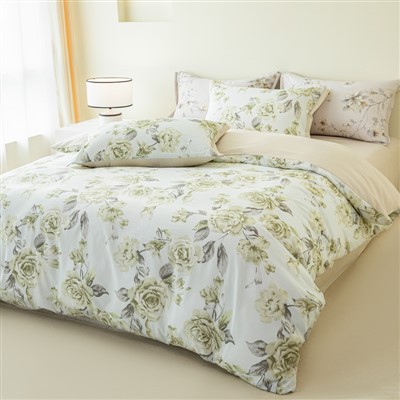
If you’re ready to talk through your custom Tencel bedding needs—whether you have a rough idea of what you want, or you’re still figuring out the details—reach out to us to discuss your requirements and request a free sample. We’re here to help you create a bedding set that’s perfect for your space.
Tencel 4-piece Sheet Set References
- Lenzing AG. (2024). Tencel Lyocell Fiber: Production and Properties. Retrieved from industry technical guidelines for Tencel textiles
- Textile Institute. (2023). Custom Bedding Manufacturing: Best Practices for Cellulosic Fibers
- Sustainable Furnishings Council. (2022). Tencel Bedding: Eco-Certifications and Custom Production Standards
Jiangsu Weisha New Energy Technology Co., Ltd.
As one of the most professional tencel bedding set manufacturers in China, we’re featured by quality products and low price. Please rest assured to buy discount tencel bedding set made in China here and get quotation from our factory. We also accept customized orders.
Address: Buildings 13-14, Standard Factory Building, Sanhe Kou Village, Chuanjiang Town, Tongzhou District, Nantong City, Jiangsu Province
E-mail: 348030855@qq.com
WebSite: https://www.weishatex.com/
