If you’ve ever worked in industries like mining, quarrying, demolition, or bulk material handling, you know that a custom horizontal drum cutter isn’t just another piece of equipment—it’s a specialized tool tailored to exacting site conditions. As someone who’s spent 12 years as a horizontal drum cutter supplier, I’ve lost count of how many times potential customers ask: “What’s the lead time for a custom unit?” It’s not a question with a one-size-fits-all answer, and skipping the details only leads to misaligned expectations, rushed orders, and even delays that cost you time and money. Let’s break down what actually goes into that lead time, step by step, from the initial conversation to when your cutter arrives on site. Horizontal Drum Cutter
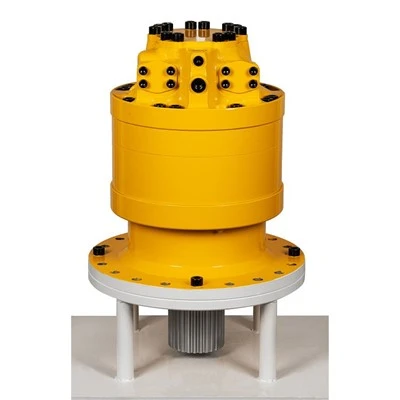
First, let’s clarify what “custom” means here. A lot of buyers come in thinking “custom” just means a different color, but for us, it’s about design adjustments that solve a specific problem on your job. Maybe you’re working in a quarry with bedrock that’s denser than the standard unit can handle, so you need a modified drum with thicker, harder-facing teeth. Or maybe you operate in a demolition zone where overhead clearances are tight, so the overall height of the cutter has to shrink by 6 inches to fit under a bridge. It could even be a compatibility tweak to match your existing excavator’s hydraulics—like adjusting the pressure flow rate or adding a specific adapter plate so you don’t need to rent extra equipment. All of these touches are what make a horizontal drum cutter yours, and each one adds time to the process.
The very first phase, right after we agree to move forward with a custom quote, is requirements validation. This isn’t just filling out a form—it’s a deep dive into your site specs, which takes 1 to 3 business days. I’ve seen this go wrong before when a customer skips this step: once, a mining contractor wanted a cutter for a new ore seam, but they didn’t tell us the seam was layered with both soft clay and hard silicate rock. We almost built a drum with standard teeth that would have worn out in 20 hours instead of the 150 it needed to last. Now, our team has a checklist we walk through every time: machine compatibility (excavator model, hydraulic flow, operating weight), site material properties (hardness, abrasiveness, size of feed material), operational needs (cut depth, speed, required output), and site constraints (clearance, access for transport, power source if it’s a self-powered unit). We also send over a short survey, and if a customer isn’t sure about some specs, we’ll hop on a 30-minute video call to walk through their site plans. That extra time upfront avoids costly do-overs later.
Next is the design engineering phase, which takes 7 to 14 business days. Our in-house team doesn’t just pull up a pre-made model and tweak a few numbers—we build a new digital 3D model for every custom unit. Why? Because a horizontal drum cutter is a high-stress tool: it’s spinning at up to 120 RPM, exerting tons of force on material, so even a small miscalculation can lead to structural failure. For example, if we oversize the drum to handle deeper cuts, the weight might put too much strain on your excavator’s hydraulic arms, and that’s a risk we can’t take. Our engineers run finite element analysis (FEA) simulations to test the drum’s welds, tooth retention, and overall structural integrity under real load conditions. We also map every tooth’s placement to ensure even wear—so you don’t have to replace half the teeth after a week of use. For most of our customers, this phase includes 1 or 2 rounds of revisions: maybe you see the initial design and say, “We need the side guards to be removable so we can fit the cutter through a narrow access point,” or “Adjust the tooth angle to reduce dust on our worksite.” Each revision adds a few days, but it’s worth it to get a design that works for you.
Once the design is finalized, we move to material sourcing and fabrication, which is the longest part of the lead time: 21 to 45 business days. This is where the “custom” part starts to take physical shape, and timeline here varies a lot based on the parts you need. Standard horizontal drum cutters use stock materials, but custom units often require specialized components. For example, if you need tungsten carbide teeth for abrasive rock, we have to order those from a metallurgy partner that only produces high-grade carbide on a 10-day lead time. Or if you’re in a remote location with extreme cold, you might need a heat-treated steel frame to prevent cracking, which has to go through a separate tempering process that takes 5 days. Our fabrication shop is 10,000 square feet, so we handle most of the build in-house—welding the drum, mounting the tooth holders, integrating the hydraulic hoses, and running initial tests. We also do a pressure test on the hydraulic system at this stage to make sure there are no leaks, and a spin test for the drum to confirm it’s balanced (unbalanced drums cause vibration that damages your excavator). Sometimes, if a custom part has a delay—like a hydraulic motor that’s backordered—we adjust the timeline transparently. Last year, a demolition contractor needed a cutter for a 10-story building, and the custom adapter plate we needed was delayed 3 days, so we shipped a standard adapter first so they could start prepping the site, then swapped it out once the custom part arrived. That flexibility is key.
After fabrication comes quality assurance and pre-shipment testing, which takes 3 to 5 business days. This step is non-negotiable for us, because we don’t want a customer to receive a cutter that doesn’t work when it gets to their site. We test the cutter on a test bench in our shop: run it through a range of hydraulic pressures, simulate cutting soft and hard materials to check tooth performance, and make sure all safety features (like emergency stop buttons and pressure relief valves) are working. We also take photos and a short video of the test run to send to you, so you can see exactly what you’re getting. If there’s a small tweak—like adjusting the feed speed to match your excavator—we handle it here, before it leaves our yard.
Putting it all together, the total lead time for a custom horizontal drum cutter ranges from 39 to 70 business days, or roughly 8 to 14 weeks. But wait—this isn’t a hard number. There are a few factors that can shorten or extend that timeline. For example, if you’re a returning customer we’ve worked with before, we already have your machine specs on file, so we can skip the requirements validation phase and cut 3 days off the start. If you need a rush order for an emergency job, we can prioritize your design and fabrication—last quarter, we had a customer whose mine had a breakdown in their old cutter, so we turned around a custom unit in 28 business days by rearranging our production schedule. On the flip side, if your design requires a rare material or a complex modification—like a cutter with a rotating drum that can adjust cut width on the fly, or a unit that’s compatible with a 100-ton excavator’s specialized hydraulics—we might need an extra 10 business days for material sourcing and engineering.
I also want to address a common misconception: some customers think buying a “standard” horizontal drum cutter will be faster, and then they’ll modify it themselves to fit their needs. But that almost never saves time. We’ve seen customers who try to weld new teeth or adjust the frame on a standard unit, only to damage the structure within a week, leading to weeks of downtime. A custom cutter is built from the start to match your exact site, so you don’t have to waste time and money on after-market modifications. Plus, our custom units come with a 12-month warranty, whereas modifying a standard unit voids any factory support.
If you’re weighing the cost vs. lead time, it’s important to think about downtime on your worksite. A mining site that’s behind schedule can cost tens of thousands of dollars a day in lost production. Rushing a custom cutter to save a week might seem like a win, but if it arrives and doesn’t fit, you’re looking at a delay that could stretch to months. We always tell customers: it’s better to spend an extra week on design and fabrication to get a cutter that works the first time, than to risk weeks of downtime from a misbuilt unit.
At the end of the day, a horizontal drum cutter is an investment in your work. A custom one isn’t just a tool—it’s a solution that makes your job safer, faster, and more efficient. If you’re ready to talk through your needs, or have more questions about lead times, reach out to our team to start a conversation. We’ll walk you through every step, keep you updated on the timeline, and make sure your cutter is exactly what you need for your site.
Horizontal Drum Cutter References
- Society for Mining, Metallurgy & Exploration. (2021). Custom Heavy Equipment Design for Mining Operations. SME Annual Conference Proceedings.
- International Organization for Standardization. (2019). Safety Requirements for Earth-Moving Machinery – Drum Cutters. ISO 12100:2019.
- Construction Equipment Association. (2022). Lead Time Factors for Custom Industrial Machinery. CEA Industry Report.
- Metallurgical Society. (2020). Tungsten Carbide Performance in Abrasive Cutting Applications. Journal of Materials Engineering and Performance.
Ningbo Oushijie Hydraulic Transmission Co., Ltd.
Ningbo Oushijie Hydraulic Transmission Co., Ltd. is one of the most professional horizontal drum cutter manufacturers and suppliers in China, also supports customized service. With abundant experience, we warmly welcome you to wholesale durable horizontal drum cutter at competitive price from our factory.
Address: Changshi Sanxing Industrial Zone, Jiulong Lake Town,Zhenhai District, Ningbo, Zhejiang, China
E-mail: yong@nbosj.com
WebSite: https://www.nbosj.com/
