If you’ve ever walked through a metal fabrication shop or a manufacturing facility that turns raw steel into parts for cars, airplanes, or heavy machinery, chances are you’ve glimpsed a heat treatment furnace in action. These machines aren’t just big ovens—they’re precision-engineered tools that alter the physical and sometimes chemical properties of metals, making them stronger, more durable, or resistant to corrosion. As a supplier of heat treatment furnaces, I talk to metalworkers every day who only know their furnace as “the thing that hardens our parts.” That’s why I wanted to break down exactly what makes up one of these systems, so you can understand why every part matters, and how choosing the right components makes all the difference in your process. Heat Treatment Furnace
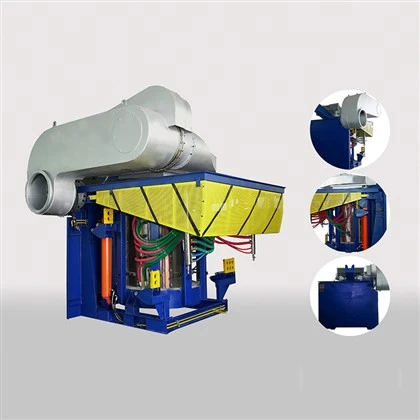
Let’s start with the most visible part: the furnace chamber. This is the core where the heat treatment happens. It’s not just a metal box—its design depends on the type of work you’re doing. For example, if you’re annealing metal (heating it to soften it for forming), you need a chamber that’s large enough to hold batches of parts without crowding, and lined with insulation that keeps heat consistent. For quenching (rapid cooling to harden steel), the chamber has to be tight enough to hold a controlled atmosphere—more on that later—so the metal doesn’t oxidize and turn brittle. I remember a customer who tried to save money on a furnace with a thin chamber liner for their car parts. Within six months, the liner warped and they had to replace the whole chamber, costing them twice as much as a high-quality, thick-walled chamber would have. That’s why the chamber isn’t something to cut corners on.
Next, insulation. You can’t maintain precise heat without good insulation, and precision is everything in heat treatment. A part that’s heated 20 degrees too hot might end up too soft, and 20 degrees too cold might leave it too hard, leading to cracks later. Insulation lines the walls, ceiling, and floor of the chamber, and it’s usually made from lightweight, heat-resistant materials like ceramic fiber or refractory brick. Ceramic fiber is great for furnaces that heat up quickly, while refractory brick holds up to extreme, sustained high temperatures—like the 2,300 degrees Fahrenheit we use for some tool steel treatments. Without proper insulation, your furnace will waste energy, take longer to reach set temperatures, and have hot spots that ruin parts. That’s why we spec insulation tailored to each customer’s process, not just a one-size-fits-all roll.
Then there’s the heating system. This is what generates the heat inside the chamber, and it comes in two main types: electric and fuel-fired. Electric furnaces use resistive heating elements—usually made of nickel-chromium or silicon carbide—that heat up when electricity runs through them. They’re popular because they’re easy to control, clean, and don’t produce exhaust that can contaminate parts. For smaller operations or processes that need precise low-temperature work, electric is often the way to go. Fuel-fired furnaces use natural gas or propane burners, which are better for large, high-volume operations that need to heat big batches quickly. The key here is that the heating system has to match your needs—we once sold a fuel-fired furnace to a small job shop that mostly did batch annealing of small metal brackets. They ended up wasting 40% more fuel than they should have, because they didn’t need the burner’s power. That’s why we ask every customer about their daily workload, temperature requirements, and part sizes before recommending a heating setup.
Now, the controlled atmosphere system. This is one of the most misunderstood parts of a heat treatment furnace, and it’s critical for parts that can’t oxidize. When metal is heated in open air, it reacts with oxygen and nitrogen, forming scale—a brittle layer that has to be ground off later, wasting time and material. A controlled atmosphere system replaces the air inside the chamber with gases like nitrogen, argon, or a mix of endothermic gas (made from natural gas and air) to create an inert environment. For example, when we harden small gear parts for agricultural equipment, we use a nitrogen atmosphere to keep the gear surfaces smooth and strong, no extra grinding needed. Some furnaces even use vacuum atmospheres—we call these vacuum furnaces—which pull all the air out before heating, perfect for high-end aerospace parts that need zero contamination. A lot of customers skip this part to save money, but it’s a false economy: scale ruins parts, so you end up scrapping good material anyway.
Let’s talk about the quench system, too—this is what cools parts quickly after heating, and it’s how hardening happens. Quench systems vary too: some use liquid (like oil, water, or polymer solutions), others use gas (for vacuum furnaces, where high-pressure nitrogen or argon blows over the parts to cool them fast). The quench rate has to be just right—too slow, and the metal won’t harden properly; too fast, and it cracks. That’s why our furnaces have adjustable quench speeds, so you can tweak it for different materials. A customer of ours makes heavy machinery shafts, and they told us their old furnace had a fixed quench rate, so 15% of their shafts were cracking. After we installed a furnace with a variable quench system, that scrap rate dropped to less than 1%. That’s the impact a good quench system has on your bottom line.
Then there’s the control panel and automation. Old furnaces required someone to stand by and adjust the temperature manually all day, but modern heat treatment furnaces have digital control panels that let you set exact temperatures, hold times, and quench speeds, and they log every step of the process. This isn’t just convenient—it’s a quality control tool. If a part fails later, you can look back at the control logs to see if the furnace was off, which helps you fix problems fast. We also offer cloud-connected controls now, so you can monitor your furnace from your phone or office, even if you’re on a job site. A lot of our younger customers love this feature because it fits with their digital workflow, but we still make sure the controls are user-friendly for crews who’ve been doing this for 20 years—no complicated coding required.
We can’t forget the cooling and ventilation system, either. Even if your heating is precise, the furnace has to cool down safely when you’re done, and it has to vent any excess gases or fumes. For fuel-fired furnaces, the ventilation system carries away exhaust from the burners, so those gases don’t build up inside the shop. For vacuum furnaces, the cooling system helps lower the chamber temperature after processing, so you can unload parts faster. We also add safety features here—like pressure relief valves for controlled atmosphere systems, so if the gas pressure gets too high, it releases automatically, no risk of damage.
Finally, there’s the support structure and loading mechanism. This is the part that holds everything together and lets you load and unload parts easily. For small furnaces, it might be a simple door you swing open, but for large, high-volume operations, we use rail-guided carts or robotic loaders that move batches of parts in and out of the chamber without anyone having to lift heavy materials. This doesn’t sound like a big deal, but if your loading mechanism is slow or unreliable, it can slow down your entire production line. We worked with a farm equipment manufacturer who was using manual loading for their 500-pound batches of axles—their crew was taking two hours per batch, and they had a few injuries from lifting. After we installed a robotic loader, their batch time dropped to 45 minutes, and their workers got injured less often.

I know a lot of people see heat treatment furnaces as just boxes that get hot, but every part serves a purpose, and cutting corners on any of them comes back to hurt you in quality, cost, or downtime. As a supplier, our job isn’t just to sell you a furnace—it’s to help you pick the right parts for your specific needs, whether you’re a small job shop with 10 employees or a large aerospace plant running 24/7. If you’re thinking about upgrading your furnace or investing in a new one, don’t hesitate to reach out—we can walk you through every component, answer your questions, and make sure you get a system that works for your business.
Continuous Casting Machine References
- ASM International. (2019). Heat Treater’s Guide: Practices and Procedures for Irons and Steels. ASM International.
- Davis, J. R. (Ed.). (1996). Heat Treating of Carbon and Low-Alloy Steels. ASM International.
- Campbell, F. C. (2012). Manufacturing Technology for Aerospace Structural Materials. Elsevier.
- Nuclear Regulatory Commission. (2020). Industrial Furnace Safety Standards for Controlled Atmosphere Operations. U.S. Government Publishing Office.
- Journal of Heat Treatment and Materials. (2021). Advances in Controlled Atmosphere Heat Treatment for Modern Manufacturing. Taylor & Francis.
Xi’an Aobang Technology Co., Ltd.
As one of the most professional heat treatment furnace manufacturers and suppliers in China, we’re featured by quality products and good price. Welcome to buy durable heat treatment furnace for sale here and get quotation from our factory. Customized orders are welcome.
Address: No.268, Caotan 6th Road, Economical and Technological Development Zone, Xi’an, Shaanxi, China.
E-mail: alicezhang@xaabfurnace.com
WebSite: https://www.xaabfurnace.com/
