When you run a sheet metal enclosure shop, every decision you make directly impacts the final product’s longevity, performance, and reputation. One of the most frequent questions I get from clients—from industrial equipment manufacturers to telecom installers—isn’t just “can you build the enclosure?” It’s “what paint is going to hold up for our specific use case?” Sheet metal isn’t like wood or plastic; it’s prone to rust, scratches, and corrosion when exposed to harsh environments, so the right paint isn’t just a cosmetic choice—it’s a functional one. Over the 12 years I’ve been running our shop, I’ve tested dozens of paint types, worked through failures with clients, and learned which formulas actually stand the test of time. Today, I’m breaking down the paint types that work best for sheet metal enclosures, based on real-world use, not just industry spec sheets. Sheet Metal Enclosure

First, let’s get one non-negotiable out of the way: you can’t just spray any paint straight onto sheet metal. Sheet metal has a smooth, non-porous surface, and even a small amount of oil or residue from fabrication (like leftover coolant from laser cutting) will make paint bubble or peel within months. Our shop always starts with a two-step preparation process that’s non-negotiable. First, we do a phosphate conversion coating wash—this etches the metal’s surface just enough to give paint something to grip to, and it also adds a thin layer of corrosion resistance. For clients dealing with marine or heavy industrial environments, we follow that with a chromate conversion coating, which is more aggressive at preventing rust, though we’re careful to only use it where regulations allow. Skip the prep, and even the priciest epoxy paint will fail. Now, onto the paints themselves.
1. Alkyd Enamel: The Budget Workhorse for Indoor Enclosures
If your enclosure is going inside a climate-controlled warehouse, office machine room, or retail electronics cabinet, alkyd enamel is often the sweet spot. I see so many clients default to this because it’s cheap, easy to apply, and gives a smooth, glossy finish that looks professional. Alkyd enamel is an oil-based paint that bonds well to properly prepped sheet metal, resists scuffs from forklift traffic or moving parts, and comes in almost every RAL color a client could want.
That said, alkyd has major limits, and I’ve had to fix more than a few enclosures where clients tried to use it outdoors or in damp spaces. It fades quickly in direct sunlight—within 6 months, a bright red alkyd enclosure will look pale and chalky. It also doesn’t hold up to moisture: a small leak in a warehouse, or even high humidity from a basement, will cause it to blister. I usually recommend alkyd for low-stakes indoor applications, and only if the client is working with a tight budget. Last year, we built 20 enclosures for a local server farm’s indoor wiring closet, and every one uses alkyd enamel—they’ve held up perfectly for two years, with zero complaints. But I’d never specify it for an outdoor telecom box or a compressor housing exposed to rain.
2. Latex (Acrylic) Paint: The Green Choice for Moderate Outdoor Use
In the last 10 years, acrylic latex paint has blown up as a go-to for outdoor sheet metal enclosures, and for good reason. It’s water-based, so it has way fewer fumes and is easier to clean up than oil-based alkyd or epoxy, making it a favorite for clients who care about sustainability. Most high-quality acrylic latex formulas are UV-resistant, which means they won’t fade nearly as fast as alkyd—we’ve tested samples that were left on our shop’s roof for three years, and they still look close to their original color.
But here’s what I’ve learned the hard way: not all acrylic latex is created equal. Cheap exterior latex from a big-box store will peel off sheet metal within a year, because it’s designed for porous surfaces like wood. You need a 100% acrylic latex formula that’s specifically formulated for metal—generic exterior paint just won’t bond. We use a specific brand for our residential outdoor enclosures, like electrical meter boxes, and it works great for mild climates: no rust, no fading, even with occasional rain. However, it’s not tough enough for extreme environments. If your enclosure is near saltwater (like a coastal marina) or subject to heavy industrial chemicals, acrylic latex will break down faster than epoxy. I also avoid it for enclosures that get constant abrasion—like the sides of a loading dock, where a forklift might bump it—because it scratches easily.
3. Epoxy Paint: The Gold Standard for Harsh Environments
If I had to pick one paint type that’s worth the extra cost, it’s two-part epoxy. This is the workhorse for enclosures that will be exposed to heavy corrosion, chemicals, moisture, or extreme temperatures—think marine enclosures, chemical processing equipment, outdoor agricultural machinery, or enclosures in coastal areas where salt air is a constant issue.
Epoxy is a thermoset resin, meaning it cures into a hard, plastic-like surface that’s almost impossible to scratch or chip once it’s fully cured. It bonds exceptionally well to prepped sheet metal, and it resists just about everything: salt spray, acids, alkalis, even common industrial solvents like grease or hydraulic fluid. I’ve had clients in the food processing industry (where enclosures are regularly washed down with harsh cleaners) swear by epoxy—they’ve had enclosures that have been in use for 7 years that still look like they just left our shop.
But there are a few tradeoffs to epoxy that clients need to know. First, it’s not as forgiving to apply as alkyd or acrylic. It has a short pot life—once you mix the two parts, you usually only have 30 to 60 minutes to spray it before it starts to gel. Our shop uses a professional HVLP spray system to apply it evenly, and we control the temperature and humidity in our spray booth to avoid bubbles or runs. Second, it’s more expensive than the other options, usually 2 to 3 times the cost of alkyd. And while it’s UV-resistant in some formulas, most standard epoxy will fade if left in constant direct sunlight—if you’re using it outdoors, we always top it with a clear acrylic topcoat to protect the color. For most heavy-use enclosures, though, the extra cost is worth it. We recently built enclosures for a wind farm’s outdoor power converters, and every one gets a two-coat epoxy system with a clear topcoat—after two years of exposure to wind, rain, and sun, they still look flawless, and not a single one has developed rust.
4. Powder Coating: The Durability King for Long-Term Performance
If you’re looking for the most durable, longest-lasting paint option for sheet metal enclosures, powder coating is the way to go. It’s not liquid paint—it’s a dry powder made of resin, pigments, and additives that’s electrostatically applied to the sheet metal, then cured in an oven at 400 to 450 degrees Fahrenheit. The result is a hard, uniform finish that’s 2 to 3 times thicker than liquid paint, and it resists scratching, chipping, and corrosion better than any liquid formula I’ve worked with.
I’ve been offering powder coating as an option at our shop for 8 years, and it’s become one of our most popular add-ons. It’s perfect for almost any enclosure: outdoor telecom cabinets, agricultural equipment housings, medical device enclosures, even decorative enclosures for retail displays. It’s available in every color imaginable, from matte black to high-gloss blue, and you can get textures too—smooth, hammered, textured, even anti-slip finishes for areas where people might handle the enclosure.
The benefits don’t stop at durability. Powder coating is also more environmentally friendly than liquid paint—there’s no volatile organic compounds (VOCs) emitted during application, and any overspray can be collected and reused, so we waste almost 0% of the material. That’s a big selling point for clients who need to meet green regulations.
Of course, powder coating isn’t right for every project. It has higher upfront costs than liquid paint, because you need the special spray booth and oven equipment, though the price per part evens out for larger orders. It also doesn’t work well for small, complex parts that might warp in the oven, though for most standard sheet metal enclosures, it’s perfect. We also make sure to pair powder coating with the right prep: we use a iron phosphate wash before applying the powder, which ensures maximum adhesion. Last year, we built 50 enclosures for a coastal water treatment plant, and all of them are powder coated—after a year of exposure to salt water and chemical treatment, not a single one has rusted, and the finish still looks as good as the day we installed it. If you’re willing to invest a little more for a finish that will last 10+ years, powder coating is hard to beat.
5. Specialty Paints: When You Need a Custom Solution
Sometimes, standard paint types just won’t cut it. For those cases, there are specialty paints designed for specific harsh conditions. For example, zinc-rich paint is a type of primer that adds extra corrosion resistance—we use it as a base coat for enclosures that will be buried partially underground, or exposed to extreme salt spray. It has tiny zinc particles that act as a sacrificial anode, meaning the zinc will corrode before the sheet metal does. There’s also high-temperature paint, which is designed to handle temperatures up to 1200 degrees Fahrenheit—we use this for enclosures around industrial furnaces, engines, or exhaust systems.
I also work with a lot of clients who need anti-static or conductive paints for electronic enclosures, to prevent static electricity from damaging sensitive components. These paints are formulated with carbon or metal particles to conduct electricity, so they’re perfect for telecom or semiconductor enclosures. The key with specialty paints, though, is to make sure they’re matched to your exact environment—don’t use a high-temperature paint for a coastal enclosure, and don’t use conductive paint for an indoor machine cabinet. I always sit down with clients to walk through their use case, because a “one size fits all” paint rarely works for specialized projects.
Now, let’s talk about the mistakes I see clients make all the time, because even the best paint will fail if you pick the wrong one for the job. First, assuming outdoor paint works anywhere outdoors: a paint that works in a mild, rainy climate will fall apart in a desert with extreme UV, or a coastal area with salt air. We had a client a few years ago who installed acrylic latex enclosures in Florida—they peeled and rusted within 6 months, because Florida’s salt air and intense sun were way too much for acrylic. We had to strip them down, re-prep the metal, and apply epoxy topcoats at extra cost. Second, skipping the prep step: I can’t tell you how many times a client has brought us an enclosure they painted themselves, saying “the paint is peeling, what did I do wrong?” And 9 times out of 10, they didn’t clean or etch the sheet metal first. Smooth sheet metal is like a glass—paint just slides off if there’s no texture to grip. Third, choosing price over performance: going with the cheapest paint will save you $50 per enclosure upfront, but if it fails in a year, you’ll end up replacing all of them, which costs 10 times more. I always tell clients to ask: “what is the lifespan I need for this enclosure?” and “what conditions will it be exposed to?” That’s the only way to pick the right paint.
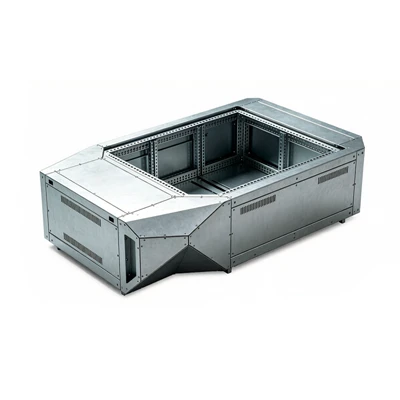
At our sheet metal enclosure shop, we don’t just build enclosures—we build solutions that last. We’ve worked with over 200 clients across industries, and we’ve seen every possible failure, so we know how to match the right paint to your project. Whether you need indoor enclosures for office equipment, outdoor enclosures for telecom, heavy-duty enclosures for industrial machinery, or something in between, we can help you pick the paint that will hold up for years, no matter what environment your enclosure goes into. If you’re looking to order custom sheet metal enclosures, or you have questions about which paint is best for your project, get in touch with our team to discuss your needs. We’ll walk you through all your options, share examples of past projects, and help you create an enclosure that works exactly how you need it to.
Sheet Metal Enclosure References:
- “Protective Coatings for Metals: Theory and Application” by James S. Reid, ASTM International, 2002
- “Corrosion Resistance of Organic Coatings for Steel” by H. Ishizaki, Journal of Coatings Technology, Vol. 71, No. 898, 1999
- “Powder Coating Technology: Fundamentals and Applications” by J. H. Batsbergen, Society of Manufacturing Engineers, 2015
- “Selection Guide for Paints and Coatings for Sheet Metal” by the American Galvanizers Association, 2021
Hefei Excellent Intelligent Technology Co., Ltd.
As one of the most professional sheet metal enclosure manufacturers in China, we’re featured by quality products and good service. Please rest assured to wholesale bulk customized sheet metal enclosure made in China here from our factory. Also, pricelist is available.
Address: No. 3 Jingyi Road, Douzhen Industrial Park, Gangji Town, Changfeng County, Hefei City, Anhui Province
E-mail: 1637201948@qq.com
WebSite: https://www.cnakst.com/
