Hey everyone, as someone who’s been supplying outdoor LED displays for over a decade, I get it—if you’re looking to invest in one of these bad boys, durability is probably top of your list. Like, who wants to drop tens of thousands on a screen that craps out after a year? I’ve had clients come to me all the time asking, “How long will this thing actually hold up?” So let’s break this down real, no-jargon stuff, because I’m not here to give you a textbook lecture. Outdoor LED Display
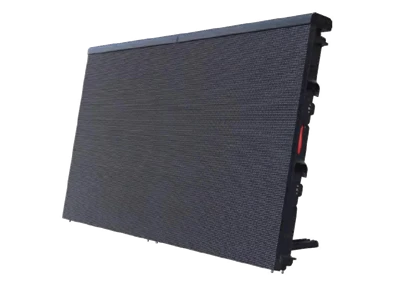
First off, let’s talk about what actually makes an outdoor LED display durable. You’re not just buying a screen for your storefront or a festival—you’re subjecting it to all kinds of garbage: rain, snow, extreme heat, UV rays that can fry anything, even dust and salt if you’re near a coast. Indoor LEDs are built for nice, controlled offices; outdoor ones have to be basically tanks. But here’s the thing: durability isn’t just one number. It’s a mix of parts, build quality, and how you take care of it.
Let’s start with the core components. The LED chips themselves—those little things that make the light. Not all chips are created equal. I’ve seen cheap Chinese imports that use generic chips that fade after 10,000 hours, but the good ones we source last way longer. Typical high-quality outdoor LED chips have a lifespan of 50,000 to 100,000 hours. Wait, what does that even mean? If you run the screen 12 hours a day, every single day, that’s like 11 to 22 years. But hold on— that’s the “half-life,” right? The time it takes for the brightness to drop to 50% of its original level. So it’s not like the screen dies at 50k hours; it just gets dimmer over time. Most people don’t notice a big drop until it’s way past that mark.
Then there’s the enclosure. This is the box that holds all the electronics and LEDs. Outdoor enclosures can’t just be plastic—they have to be aluminum, usually die-cast or extruded, because plastic cracks in extreme temps. We use IP65 or IP67 rated enclosures for all our displays. Wait, what’s IP? Ingress Protection. IP65 means it’s totally dust-tight and can handle low-pressure water jets from any direction—perfect for rain. IP67 is even better, can be submerged up to a meter for 30 minutes, which is great for areas that get flash floods or are near a beach where salt spray is a thing. A lot of cheap suppliers will cut corners here and use IP54, which only protects against splashing water, not full-on rain. I’ve had a client who went with a cheaper display from a random seller, and after a heavy thunderstorm, water seeped in and fried the mainboard. Total loss. So that enclosure rating is non-negotiable if you want durability.
Next up, the drivers and circuit boards. These are the brains of the operation. They have to be coated with a conformal coating—usually a thin layer of acrylic or epoxy—to protect against moisture, dust, and corrosion. Without that coating, salt from coastal air can eat away at the circuits, or moisture can cause short circuits. I’ve seen displays without proper coating that failed in just 2 years, while our coated ones are still going strong after 8. It’s a small extra step that makes a huge difference.
Now, let’s talk about factors that affect how long your display actually lasts. It’s not just the parts—your environment plays a huge role. If you’re in Arizona, where summer temps hit 115°F, that’s way harder on a screen than if you’re in Seattle, where it’s mild and rainy most days. UV rays are a big one too—constant sun can break down the plastic lenses on the LEDs, making them look faded over time. We use anti-UV lenses on all our displays now, which slows that fading way down. Then there’s maintenance. If you never clean the dust off the screen, especially if it’s in a dusty area, that dust can block light and even trap moisture against the enclosure, leading to corrosion. A quick wipe with a soft cloth a couple times a month goes a long way. Also, making sure the display is properly installed—level, with good ventilation, so it doesn’t overheat. Overheating is one of the biggest killers of outdoor LEDs, because high temps speed up the aging of the chips and circuits.
Wait, what’s the average lifespan I tell clients? Most high-quality outdoor LED displays will last 7 to 15 years, depending on how you use them. If you run it 24/7, that’s on the shorter end—7-10 years. If you use it 12 hours a day, like for a restaurant menu or a concert venue, you can easily get 12-15 years out of it. I’ve had a client who put our display up for a small town’s annual fair, runs it 4 weeks a year, 8 hours a day. That display is still going strong after 12 years. It’s not running nonstop, so the parts don’t wear out as fast.
Now, let’s bust some myths I hear all the time. First myth: “All outdoor LEDs are the same, so the cheapest one is fine.” No way. I tested a cheap display a couple years back—after 6 months, the red LEDs started fading because they used low-quality chips. Our display, same period, was still as bright as day one. Another myth: “Durability is just about the LED lifespan.” Like I said, the enclosure, coating, installation all matter more than the chips alone. If you put 50k hour chips in a garbage enclosure, water will get in and kill the screen in a year.
What about warranty? That’s another way to gauge durability. Most reputable suppliers (like us, of course) offer a 2-5 year warranty on parts and labor. Some even offer a 10-year warranty on the LED chips. If a supplier only gives a 1-year warranty, that’s a red flag—they don’t stand behind their product, so it’s probably not built to last. We offer a 3-year standard warranty, and we’ve only had a 1% failure rate in the last 5 years, and almost all of those were from clients who didn’t install it properly or tried to modify the display themselves.
Let’s talk about real-world examples. We did a project for a coastal hotel in Florida—salt air, hurricanes, you name it. We installed 3 of our IP67 rated displays 8 years ago. They still look great, no corrosion, no fading. Another project: a gas station in Texas, where summer temps hit 118°F. Our display there is 6 years old, still runs 24/7, no issues. Compare that to a competitor’s display we replaced there last year—theirs was only 3 years old, the heat fried the driver boards, and the colors were all washed out.
So what can you do to maximize the durability of your outdoor LED display? First, buy from a reputable supplier—someone who uses IP65/IP67 enclosures, high-quality chips, conformal coating, and offers a solid warranty. Second, pick the right display for your environment. If you’re near the coast, go with IP67, extra anti-salt coating. If you’re in a super hot area, make sure the display has good ventilation and heat management. Third, do basic maintenance: clean the screen regularly, check for any loose connections, make sure the ventilation fans (if it has them) are working. Don’t leave it running in extreme cold if you don’t have to—most displays can handle cold down to -40°F, but if you’re in a place that gets -20°F every night, you might want to dim it a bit or turn it off when not in use to save the parts.
Wait, another thing: brightness. Outdoor displays need to be bright enough to be seen in direct sunlight, but higher brightness also means shorter lifespan. Because brighter LEDs run hotter, which speeds up aging. So if you go with a display that’s just bright enough for your area, not way overkill, it’ll last longer. We help clients calculate the right brightness based on their location—like, a display for a busy highway needs 5,000 nits, but a display for a dark park only needs 2,500 nits. Matching the brightness to your use is a big part of durability.
I know when you’re looking at outdoor LED displays, it can be overwhelming. There’s so much tech talk, so many numbers, and every supplier says theirs is the most durable. But at the end of the day, durability is about quality parts, good build, and proper use. Cheap displays might seem like a steal upfront, but they’ll cost you more in repairs and replacement down the line. Our clients who invest in our displays stick with us because they know they’re getting something that will last.
All In One Screen If you’re in the market for an outdoor LED display—whether it’s for a storefront, event, stadium, or anything else—don’t hesitate to reach out. We can walk you through what’s best for your location, budget, and needs, no pressure. We’ve installed hundreds of displays, so we know exactly what holds up in different environments, and we’ll make sure you get something that lasts.
References
- LED Magazine. "Outdoor LED Display Durability: Key Factors for Long-Term Performance," 2022.
- Display Industry Association. "IP Ratings for Commercial Outdoor Displays," 2021.
- Reliable LED Components Corp. "LED Chip Lifespan and Real-World Aging," 2023.
Suzhou One World Technology Co., Ltd.
With abundant experience, we are one of the most professional outdoor led display manufacturers and suppliers in China. Please feel free to buy cheap outdoor led display for sale here from our factory. All customized products are with high quality and competitive price.
Address: Room 928, No.28 Wansheng Street, Suzhou Industrial Park, Suzhou, Jiangsu Province
E-mail: sales@oneworldtech.cn
WebSite: https://www.yishitongtech.com/
