Hey there! I’m a supplier of axial flow fans, and I often get asked about the difference between axial flow fans and centrifugal fans. It’s a great question, and I’m here to break it down for you in a way that’s easy to understand. Axial Flow Fans
How They Work
Let’s start with how these two types of fans work. Axial flow fans are pretty straightforward. The blades of an axial flow fan are designed to move air parallel to the axis of the fan. It’s like a big propeller that just pushes the air straight through. You’ve probably seen these in things like computer cooling fans, where they need to quickly move a large volume of air in a straight line.
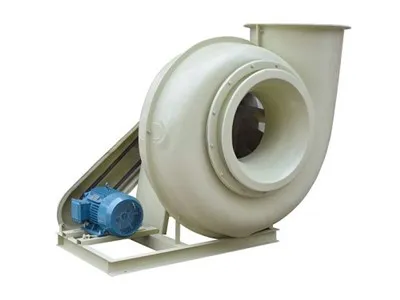
On the other hand, centrifugal fans work a bit differently. They take in air at the center, or the eye, of the fan. Then, the blades spin the air outwards, perpendicular to the axis of the fan. It’s kind of like when you spin a bucket of water around, and the water gets pushed out to the sides. This design allows centrifugal fans to create a higher pressure than axial flow fans.
Performance Differences
One of the biggest differences between the two is in their performance. Axial flow fans are all about moving a large volume of air at a relatively low pressure. They’re great for applications where you need to move a lot of air quickly, like in ventilation systems for large buildings or in cooling towers. For example, if you have a big warehouse and you need to get fresh air in and stale air out fast, an axial flow fan is the way to go.
Centrifugal fans, however, are better at handling higher pressures. They can move air through ducts and pipes more effectively, even when there’s a lot of resistance. This makes them ideal for applications like HVAC systems in commercial buildings, where the air has to travel through long ducts and around bends. If you need to push air through a complex system with a lot of obstacles, a centrifugal fan will do a better job.
Noise Levels
Noise is another important factor to consider. Axial flow fans tend to be noisier than centrifugal fans. The high – speed rotation of the blades and the way they move air can create a lot of noise, especially at high speeds. This might not be a big deal in an industrial setting where there’s already a lot of background noise, but it could be an issue in a more quiet environment like an office or a home.
Centrifugal fans, on the other hand, are generally quieter. Their design allows for a more smooth and controlled airflow, which results in less noise. If noise is a concern for your application, a centrifugal fan might be a better choice.
Size and Space Requirements
When it comes to size and space, axial flow fans are usually more compact. They can be designed to be relatively small while still moving a large volume of air. This makes them a great option for applications where space is limited, like in small electronic devices or in tight mechanical spaces.
Centrifugal fans, however, are often larger and bulkier. Their design requires more space to accommodate the spinning blades and the housing that directs the air. If you have plenty of space available, this might not be a problem. But if you’re working with a tight space, an axial flow fan will be a better fit.
Energy Efficiency
Energy efficiency is a hot topic these days, and it’s important to consider when choosing a fan. Axial flow fans are generally more energy – efficient when it comes to moving a large volume of air at a low pressure. Their simple design and the way they move air directly through make them use less energy in these types of applications.
Centrifugal fans, while they might use more energy in some cases, can be more efficient when dealing with high – pressure applications. Their ability to handle resistance better means that they can move air effectively through a system without having to use excessive amounts of energy.
Applications
As I mentioned earlier, the applications for these two types of fans are quite different. Axial flow fans are commonly used in:
- Cooling systems: They’re used in things like radiators, chillers, and air – cooled condensers to move large volumes of air over the cooling surfaces.
- Ventilation systems: For both commercial and industrial buildings, axial flow fans can quickly exchange the air inside the building with fresh outside air.
- Agricultural applications: They’re used in greenhouses to control the temperature and humidity, and in barns to keep the air fresh for livestock.
Centrifugal fans are often used in:
- HVAC systems: In buildings, they’re used to move air through the ductwork and distribute conditioned air throughout the space.
- Dust and fume collection systems: They can create the high pressure needed to pull dust and fumes through the collection system and out of the building.
- Industrial processes: In processes where air needs to be moved at high pressures, such as in pneumatic conveying systems.
Which One Should You Choose?
So, how do you decide which type of fan is right for you? Well, it all depends on your specific needs. If you need to move a large volume of air quickly and don’t need a lot of pressure, an axial flow fan is probably the best choice. They’re compact, energy – efficient for low – pressure applications, and can handle a lot of air.
If you’re dealing with a system that has a lot of resistance, like long ducts or complex airflow paths, a centrifugal fan will be more suitable. They can create the high pressure needed to move air through these systems effectively, and they’re generally quieter.

As an axial flow fan supplier, I’m always happy to help you figure out the best solution for your needs. Whether you’re working on a small DIY project or a large industrial installation, I can offer you high – quality axial flow fans that are designed to perform.
Centrifugal Fans If you’re interested in learning more about axial flow fans or you’re thinking about placing an order, I’d love to hear from you. Just reach out, and we can have a chat about your specific requirements. I’m here to make sure you get the right fan for your job.
References
- "Fan Engineering: The Application, Selection, and Testing of Fans", Buffalo Forge Company
- "Industrial Ventilation: A Manual of Recommended Practice", American Conference of Governmental Industrial Hygienists
Shandong Qiyue Fan Co., Ltd.
With abundant experience, we are one of the most reliable axial flow fans manufacturers and suppliers in China. Please feel free to wholesale high quality axial flow fans made in China here from our factory. We also accept customized orders.
Address: Dongchen Industrial Park, Zhoucun District, Zibo, Shandong, China
E-mail: sales@qiyuefan.com
WebSite: https://www.qiyuefan.com/
