If you’ve ever worked with industrial piping, whether for chemical processing, oil & gas, or even clean water systems, you’ve probably heard the hype about stainless steel seamless pipes being “corrosion-proof.” Let me cut through the marketing noise straight from where I’m at—we’re a stainless steel seamless pipe and tubes supplier, so I deal with these products every single day, and the short answer is no, they’re not totally corrosion-resistant. But wait, that’s not a bad thing. Corrosion resistance isn’t a “one-size-fits-all” superpower, and understanding how seamless stainless steel holds up (and where it might struggle) is what will actually help you pick the right pipe for your project. Stainless Steel Seamless Pipe and Tubes
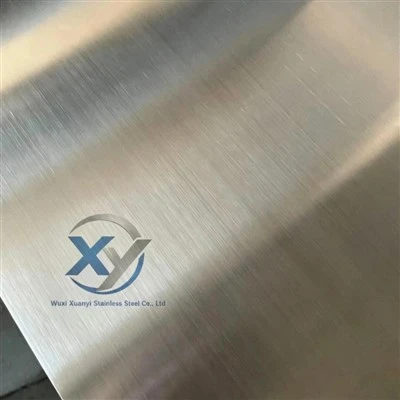
First, let’s start with the basics that make stainless steel different from regular steel. You know regular steel rusts, right? Leave a carbon steel pipe out in the rain for a week, and you’ll have a flaky, crumbly mess that eats through the wall. Stainless steel? It’s got at least 10.5% chromium added to the mix. That chromium is the magic: when it hits oxygen (like in air or water), it forms a super thin, almost invisible layer on the surface called a passive film. This film is like a protective shield—if it gets scratched or damaged, it reforms automatically, so it stops oxygen and moisture from attacking the underlying metal. That’s why stainless steel doesn’t rust like regular steel.
But here’s where it gets specific to seamless pipes vs. welded ones, which is a big deal for our customers. Seamless pipes are made by pushing a solid steel billet over a piercing rod to form a hollow tube, no weld seam at all. Welded pipes, on the other hand, are rolled flat, bent into a circle, and then the edges are fused together with heat or pressure. The weld seam is a weak spot, especially if the welding process changes the metal’s structure there. Our seamless pipes don’t have that seam, so the passive film is consistent all the way around the pipe. That means no extra corrosion risk from a poorly executed weld—something we see a lot of clients run into when they go with cheaper welded options.
Now, what do people actually mean when they ask, “are they corrosion resistant?” It depends on the environment. Let’s break down the good first, because that’s why most industries choose seamless stainless steel. For general environments, like fresh water, mild atmospheric conditions (think a factory in a moderate climate, not a coastal refinery), and most common chemicals, 304 stainless steel (the workhorse we supply most of) will hold up for decades. I’ve got a customer in the food and beverage industry who’s been using our 304 seamless pipes for their juice processing lines for 12 years now—no rust, no pinholes, no downtime. That’s exactly the corrosion resistance you want.
But the catch comes when you introduce things that can break that passive film. Let’s talk about two common culprits: chloride ions and high temperatures. Chlorides are everywhere—saltwater, road salt, even some cleaning chemicals and process water. If you leave a stainless steel pipe submerged in saltwater long enough, or expose it to high chloride levels, the passive film can break down in a process called pitting corrosion. Pits are tiny, deep holes that form on the surface, and once they start, they’re hard to stop. A lot of people think “stainless = no corrosion” so they’ll use 304 seamless pipes for a coastal desalination line, and come back a year later wondering why half the pipes are leaking. In that case, we’d recommend 316 stainless steel, which has molybdenum added—another alloy element that makes it way more resistant to chlorides. That’s a key point: not all stainless steel is the same, and seamless pipes from grade to grade have very different corrosion resistance.
Then there’s high temperature corrosion. If you’re running pipes at over 1000°F (538°C), the passive film starts to break down, and your stainless can suffer from oxidation or even something called intergranular corrosion. Wait, intergranular—why does that happen in seamless pipes? Seamless pipes have a uniform grain structure, right? But if they’re not heat-treated properly during manufacturing, the grains at the edges can become sensitized, meaning they’re more likely to corrode when exposed to certain chemicals. That’s why we test every batch of our seamless pipes for sensitization, so our customers don’t have to worry about that. We’ve had clients in the power generation industry switch to our properly heat-treated seamless 321 stainless pipes (which has titanium added to prevent sensitization) because their old welded pipes were cracking at high temperatures due to grain boundary corrosion.
Another thing a lot of people don’t consider: flow conditions. If your piping system has high-velocity fluid, or fluid with abrasives like sand, it can cause erosion-corrosion. That’s when the constant flow wears away the passive film faster than it can reform, leading to localized corrosion. Seamless pipes actually hold up better here than welded ones, because the weld seam is often thinner or has a rougher surface, making it more prone to both wear and corrosion. We had an oil and gas client a couple years back who was dealing with constant leaks in their 6-inch welded transfer lines. They switched to our seamless 316L pipes, and the leaks stopped—part of the reason was the uniform surface that resisted both erosion and chloride corrosion.
Wait, let’s clear up a myth too: some people think stainless steel seamless pipes corrode “over time” no matter what, but that’s not true. If used in the right environment, they can last for 50+ years. I’ve seen old industrial facilities where the original stainless seamless pipes installed in the 1970s are still in great shape, even after decades of use. The key is matching the grade to the application. 304 is for mild environments, 316 for chloride-heavy areas, 321 for high heat, duplex stainless steel for super harsh stuff like offshore oil rigs.
Now, what are the scenarios where they might not be the best call? Let’s be honest here—if you’re working with strong acids like concentrated sulfuric acid or hydrochloric acid at room temperature, stainless steel (even 316) will corrode. For that, you’d need something like hastelloy or titanium. But for 90% of the piping applications our customers come to us for, stainless steel seamless is the way to go because of that corrosion resistance.
Let’s also talk about how we test our products to make sure they live up to that claim. Every seamless pipe we supply goes through pressure testing, and we do corrosion testing per industry standards like ASTM A262, which checks for intergranular corrosion. We also provide material test certifications for every order, so our customers can see exactly what grade of stainless steel they’re getting, and confirm it’s suitable for their specific environment. That transparency is important—we don’t want someone buying a cheap, off-grade seamless pipe that can’t handle their application, because that leads to headaches for both sides.
I get it, when you’re sourcing piping, it’s easy to just look for the cheapest option, but corrosion resistance isn’t something to cut corners on. A pipe that corrodes early will cause unplanned downtime, product loss, and even safety hazards—no amount of saved money on a cheaper pipe makes up for that. Our seamless pipes are made to have consistent corrosion resistance, no weak weld seams, and uniform structure, which is why so many repeat customers come back to us.
At the end of the day, the question “are stainless steel seamless pipes corrosion resistant?” doesn’t have a yes or no answer. It’s: are they corrosion resistant for your specific application? If you’re using the right grade of stainless steel, in an environment that matches that grade’s strength, then yes—they’re one of the most reliable corrosion-resistant options out there for industrial, commercial, and even residential piping (wait, yes, even residential! A lot of homeowners use our seamless stainless pipes for water lines because they don’t leach chemicals and resist corrosion way better than copper in some cases).
If you’re currently dealing with corroding pipes, or you’re planning a new project and want to make sure your piping holds up for years to come, we can help you pick the right seamless stainless steel pipe or tube for your needs. We don’t push the most expensive grade—we ask about your environment, operating temperature, fluid type, and budget, and recommend what will work best. That’s how we do things, and it’s why our customers trust us for all their piping needs.
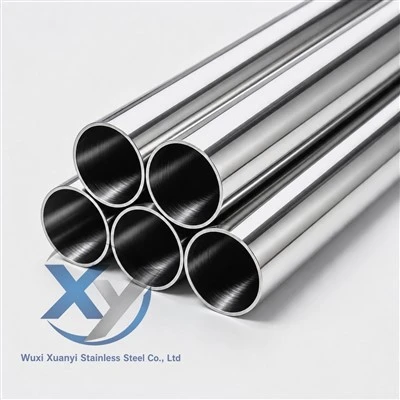
Don’t leave your piping to chance with inferior products. Reach out to us to discuss your requirements and get a tailored recommendation for your project.
References
Stainless Steel Welded Pipes and Tubes ASTM A262, Standard Practices for Detecting Susceptibility to Intergranular Corrosion in Iron-Chromium-Nickel Alloys
ASM International, Corrosion: Principles and Practice, 5th Edition
NACE International, Corrosion Control for Piping Systems in Industrial Applications
Wuxi Xuanyi Stainless Steel Co., Ltd.
Wuxi Xuanyi Stainless Steel Co., Ltd. is one of the most professional stainless steel seamless pipe and tubes manufacturers and suppliers in China. With abundant experience, we warmly welcome you to wholesale bulk durable stainless steel seamless pipe and tubes made in China here from our factory. If you have any enquiry about cooperation, please feel free to email us.
Address: 1207-1208, Building 11, Shengang Metropolis Plaza, No. 299 Fangcheng Avenue, Xinwu District, Wuxi City,China.
E-mail: jscherryxy@163.com
WebSite: https://www.xuanyisteel.com/
