If you’ve ever worked in industries like pharmaceuticals, food and beverage processing, or chemical manufacturing—industries where a small, preventable failure can trigger massive production downtime, regulatory non-compliance issues, or even product safety risks—you’ve probably heard the term “combi seal” thrown around. As someone who’s spent the last 12 years on the ground working with these seals, first as an engineer in a processing plant, then as a supplier focused on solving real, on-the-job problems instead of just checking boxes, I can tell you this: a combi seal isn’t just another mechanical part. It’s a hybrid component that combines two or more sealing functions into a single, compact unit—think radial shaft sealing, static barrier sealing, even dust or contamination exclusion, all in one piece. That’s the beauty of them, but it’s also where the design pitfalls start. Too many manufacturers cut corners on combi seal design, leading to premature replacements, unplanned shutdowns, and extra costs that don’t show up on the initial quote. Today, I want to break down the key design considerations we walk through for every custom or standard combi seal we supply, lessons I’ve learned from helping hundreds of clients fix bad seal designs that left them stranded at 2 a.m. on a production floor. Combi Seal
First and foremost, you have to start with the application’s operating environment, and I don’t just mean “temperature” or “pressure”—I mean drilling down into the exact, day-to-day conditions the seal will face. Let’s take a recent example: a client in the midwest who made powdered infant formula came to us with a repeating issue: their rotary mixer shafts were burning out standard combi seals every 30 days. At first, we looked at the temperature, which peaked at 120°F, and the low-pressure environment inside the mixer, but that wasn’t enough. When we visited their plant, we noticed the mixers weren’t just holding dry powder—they had small amounts of lactic acid residue left from previous batches that seeped into the seal cavity during cleaning, along with airborne lactose dust that was coarser than their initial specs had accounted for. That’s when we realized their original combi seal design used a standard nitrile rubber (NBR) lip, which swells slightly in acidic conditions but hardens when exposed to fine dust, leading to premature lip wear. The takeaway here? Operating environment design considerations go far beyond basic metrics. You have to account for process fluids (not just their names, but their pH levels, concentrations, and whether they’re residual or constant), particulate contaminants (size, hardness, and whether they’re suspended in air or a liquid), and even clean-in-place (CIP) or sanitization routines. For the infant formula client, we switched to a fluoroelastomer (FKM) main sealing lip that’s resistant to lactic acid, added a dual-lip design with a harder polyurethane scraping lip on the air side to block lactose dust, and adjusted the spring tension to handle the small amount of residual fluid. That seal is still going strong 11 months later, and that’s why environment is the non-negotiable starting point—skipping this step is like buying rain boots for a desert: they don’t do what you need them to, no matter how good the material is.
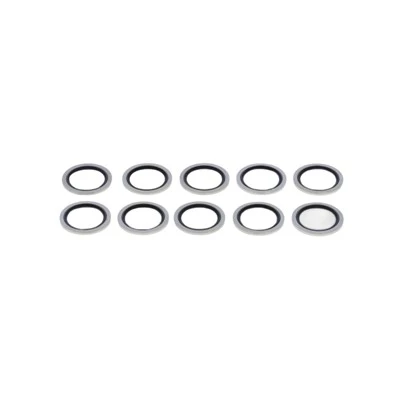
Next up, material compatibility, and this is where a lot of suppliers (and even some engineers) cut corners by relying on generic material data sheets instead of real-world testing. Combi seals have multiple components, so you can’t just pick one material and call it good. Let’s break down the components of a typical combi seal to make this concrete: there’s the main dynamic sealing lip (the part that contacts the rotating shaft), a secondary static barrier lip (to prevent fluid leakage between the seal housing and itself), a dust/exclusion lip (for external contaminants), a garter spring (to keep the main lip pressed tight against the shaft), and often a metal core (to hold the seal shape in the housing). Each of these parts needs to work together, not just individually, and all need to be compatible with the process, with each other, and with the materials they’re installed next to. For example, let’s say you have a combi seal for a chemical processing pump that uses an FKM main lip and a stainless steel metal core. If the process fluid is a strong alkaline solution, the stainless steel core might undergo galvanic corrosion when paired with FKM, which releases small particles that can contaminate the process and wear down the seal lip over time. I’ve seen this exact issue happen at a specialty chemical plant in Texas: their original combi seals had 302 stainless steel cores that corroded after 90 days, leaving black metal particles in their solvent product. We switched them to a Hastelloy core that’s compatible with alkaline chemicals and paired it with an EPDM secondary lip that doesn’t swell in high-pH solutions, and the corrosion stopped immediately. Another common material mistake is not accounting for material outgassing, especially in pharmaceutical or aerospace applications where zero contamination is required. A client making sterile injectable drugs once told us their combi seals were leaving silicone residue that failed batch testing—turns out they’d used a silicone rubber lip for flexibility, but silicone outgasses volatile organic compounds (VOCs) that can get trapped in sterile fluid pathways. We switched them to a medical-grade thermoplastic elastomer (TPE) that meets USP Class VI standards, and they haven’t had a residue issue in three years. The key here is to test materials not just in a lab with pure fluids, but in the exact process conditions the seal will see, including cross-material interactions. Generic compatibility charts are a starting point, not a final decision—always validate.
Then there’s the dimensional design, which sounds straightforward until you realize how much a tiny misalignment can tank seal performance. A combi seal has to fit perfectly in both the shaft and the housing, and the tolerances for each dimension depend on whether it’s a dynamic (rotating or moving) or static part of the seal. Let’s start with the shaft: most people think the seal lip’s diameter has to match the shaft exactly, but what they don’t account for is shaft surface finish and roundness. If a shaft has a roughness of Ra 1.6 or higher (meaning it’s more grooved than smooth), even a perfectly sized seal lip will wear out fast, because the tiny grooves in the shaft will catch and abrade the rubber. For the infant formula client I mentioned earlier, their shaft had a Ra of 3.2, which was double the recommended limit for their combination of FKM and a rotating speed of 150 RPM. We worked with their maintenance team to polish the shaft to Ra 0.8, which extended seal life by another 60% after the material change. On the housing side, the bore diameter and counterbore depth matter too—too loose, and the seal can shift inside the housing, creating gaps where contaminants can get in; too tight, and it can compress the static lip so much that it loses its ability to flex with temperature changes. I’ve also seen issues with misalignment between the shaft and the seal housing, especially in large equipment like processing centrifuges. If the shaft is not perfectly concentric with the housing, the seal lip will wear unevenly on one side, leading to leakage within weeks. A good combi seal design will include a chamfer on the housing entry to guide the shaft during installation, and specify a maximum runout tolerance for the shaft of 0.002 inches per inch of shaft diameter. Dimensional design also has to account for installation processes: if the seal is going to be pressed into the housing with a tool, the edge of the seal can’t be sharp enough to cut the housing, or the lip can’t be so thin that it gets damaged during installation. We add lead-in chamfers to all our combi seals for exactly this reason—our engineers spent six months testing different chamfer angles to find the one that prevents installation damage without sacrificing sealing performance.
Now, function integration, which is the whole reason a customer picks a combi seal over two separate seals. The biggest mistake here is trying to cram too many functions into one seal, or designing a seal that does all things poorly, because it’s a jack-of-all-trades. Let’s explain: a combi seal’s core value is combining, say, a dynamic shaft seal and a static O-ring into one part, reducing installation steps and housing size. But if you add a third function, like a temperature sensor, without accounting for space, you can make the seal too thick, which increases friction, generates more heat, and leads to higher energy use and faster wear. I had a client in the renewable energy sector come to us with a custom combi seal they’d tried to design for a wind turbine gearbox: it had a main seal lip, a static barrier, a grease retention function, and a small temperature sensor embedded in the metal core. The result was a seal that was 15% thicker than standard, so when it was installed, it exerted too much pressure on the shaft, leading to excessive heat generation. After six months, the seal failed, causing the gearbox to seize and costing the client over $200,000 in downtime. When we redesigned it, we removed the integrated sensor (they opted to use external, non-intrusive sensors that didn’t require modifying the seal), optimized the lip geometry to balance grease retention and friction, and adjusted the spring tension to reduce heat buildup. The redesigned seal now has a 3x longer lifespan, and the client uses external sensors for monitoring, which are more accurate than the embedded sensor they’d tried to add. The lesson here: only integrate functions that are truly necessary for the application, and prioritize the primary sealing function first. If a secondary function adds significant complexity or compromises the main seal’s performance, it’s not worth it. That’s also why we work closely with clients to map their exact needs before quoting: if they just need a seal that keeps oil in and water out, we don’t add dust exclusion features that would make the seal more expensive and thicker, but if they need to block fine particles in a food processing line, we add the appropriate lip without overcomplicating it.
Finally, regulatory and compliance considerations, which are non-negotiable for industries like pharmaceuticals, food and beverage, and medical devices. I’ve spent a lot of time navigating FDA 21 CFR Part 11, EU 10/2011 for food contact materials, and USP Class VI standards, and I can tell you that a bad combi seal design that doesn’t meet these standards can shut down an entire production line. For example, in the food and beverage industry, any seal component that comes into contact with food has to be made of materials that don’t leach harmful substances, and can withstand repeated CIP cycles at high temperatures (often up to 180°F). If a combi seal’s material is not certified for food contact, even a tiny trace of it in a batch of product can lead to a full product recall, which is way more expensive than using a certified material from the start. For pharmaceutical clients, the standards are even stricter: seals have to be made of materials that don’t shed particulates, can be sterilized via autoclaving or gamma irradiation, and are documented with full traceability from raw material to finished part. I remember a biotech client who had a batch of monoclonal antibodies rejected because their combi seal shed 2-micron particles that were large enough to clog the filtration system. The original seal used an uncoated metal core that released fine particles, and the main lip was a standard NBR that wasn’t compatible with gamma sterilization. We redesigned the seal with a electropolished 316L stainless steel core (which is required for medical applications) and a medical-grade EPDM lip that meets USP Class VI and can withstand 50+ gamma sterilization cycles. The next batch passed inspection, and they’ve used our seals for all their new production lines since. For chemical processing, compliance often means resistance to specific hazardous materials, and compatibility with OSHA standards for exposure limits for seal components. Skipping compliance checks isn’t an option—you have to build them into the design from the first sketch, not as an afterthought.

At the end of the day, a good combi seal design isn’t about the shiniest material or the most complex geometry—it’s about solving a specific, real problem for the application, balancing performance, cost, and long-term reliability. Over 12 years as a supplier, I’ve learned that the clients who get the most value from their combi seals are the ones who work with suppliers that treat design considerations not as a list of boxes to check, but as a collaborative process. If you’re struggling with combi seal failures, unplanned downtime, or seal designs that just don’t work for your operations, we’re here to help. We work with clients across industries to design custom combi seals tailored to their exact operating conditions, material requirements, and compliance needs, no generic one-size-fits-all solutions. Just reach out to our team to discuss your sealing challenges, and we’ll walk through the design steps together to find a solution that keeps your operations running smoothly.
Rod/Piston Seal References:
- Mechanical Seals: Design, Selection, and Application, 2nd Edition, by A. G. Nesbitt, CRC Press, 2006.
- "Seal Materials for Harsh Environments," Tribology International, Vol. 42, No. 10, 2009, pp. 1523-1531.
- FDA 21 CFR Part 177: Food Contact Substances, U.S. Food and Drug Administration, 2023.
- "Shaft Surface Finish and Seal Performance: A Practical Guide," Proceedings of the International Conference on Fluid Sealing, 2018, pp. 215-224.
- USP Class VI Plastics and Elastomers, United States Pharmacopeia Convention, 2022.
Hebei Jinwo Machinery Technology Co., Ltd.
Hebei Jinwo Machinery Technology Co., Ltd. is one of the most professional combi seal manufacturers and suppliers in China, featured by quality products and good price. Welcome to buy bulk advanced combi seal in stock here and get pricelist from our factory. We also accept customized orders.
Address: Room 2109, Tower A, Meidong International, No.16 Guang’an Avenue, Chang’an District, Shijiazhuang City, Hebei Province, China
E-mail: info@jinwoseal.com
WebSite: https://www.jinwoseal.com/
