If you’ve ever worked with leather goods—think custom belts, luxury handbags, or durable leather work gloves—you know that finding a fast, strong, and consistent way to bond those thick, flexible materials without ruining their finish is half the battle. For years, our clients have asked me: “Can your head foot operated HF welding machine actually handle leather?” As a supplier who’s walked our customers through hundreds of welding projects, I’m here to break this down, not with jargon, but with real-world insights and hard science. Head Foot Operated HF Welding Machine
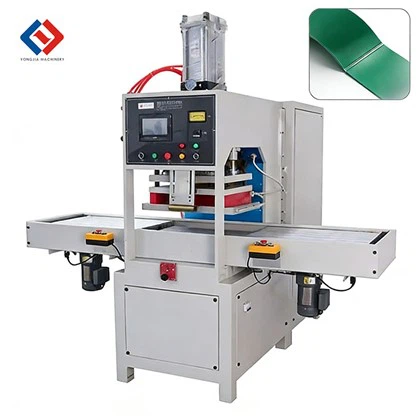
First, let’s start with the basics: what is a head foot operated HF welding machine, and how does it work? Unlike large industrial HF (high frequency) welders that require full-time operators and fixed setups, our head foot operated model is designed for small to mid-sized production runs, prototyping, or one-off custom jobs. It uses low-to-moderate high frequency energy—usually between 27.12 MHz, the frequency allocated for industrial non-medical HF use—to generate molecular heat within thermoplastic materials, fusing them together at the molecular level instead of just gluing or stitching. The “head foot operated” part refers to the dual controls: an adjustable foot pedal that lets you lift and lower the welding press, and a manual head adjustment to set pressure and exposure time, giving you total control over small batches.
Now, the critical question: can it weld leather? The short answer is yes—but with a very important caveat: not all leather is created equal. Let’s clarify that: leather is a natural material, and its composition varies wildly. Full-grain leather, top-grain leather, and even split leather are animal hides that, on their own, are mostly protein (collagen) with small amounts of moisture and natural oils. These are not thermoplastic materials, so standard HF welding won’t work on them. Wait, then what leather can we weld?
That’s where bonded leather, faux leather (also called vegan leather or PU leather), and thermoplastic-coated leathers come in. Bonded leather is made from scrap leather fibers bound together with a thermoplastic adhesive, usually polyurethane (PU) or polyvinyl chloride (PVC). Faux leather is typically a fabric base coated with a thin layer of PU or PVC to mimic the look and feel of real leather. Both of these materials are thermoplastic, meaning they soften when heated and re-harden into a strong bond when cooled—exactly the type of material our head foot operated HF welder is designed for.
Let’s dive into why HF welding is a great fit for these leather-like materials. Traditional methods of bonding faux or bonded leather include adhesives, stitching, or solvent cement. But adhesives can be messy, leave visible lines, and take time to cure. Stitching adds bulk, which is a problem for thin accessories like wallet edges or watch straps. Solvent cement can emit harsh fumes and sometimes eats through the base fabric. HF welding, on the other hand, creates a seamless bond without extra materials, works in seconds, and leaves a clean, professional finish that’s identical to the material itself.
I’ve seen this in action firsthand. Last year, a small leather goods brand specializing in crossbody bags came to us frustrated. They’d been using heat press welding on their faux leather panels, but the bonds were weak, especially after the bags were exposed to rain. They tried our head foot operated HF welder on their new line: the PU-coated faux leather fused perfectly, with a bond that was stronger than the fabric base. They ran a durability test, submerging a stitched bag and an HF-welded bag in water for 72 hours— the stitched seam frayed, while the HF seam held, no leaks, no separation. That’s the kind of result that sticks with you.
Of course, there are variables that can make or break a good weld, even with compatible leather materials. Let’s talk about what we teach every customer who uses our head foot operated HF welder for leather:
First, frequency and power settings. Our machines have adjustable power dials, which is non-negotiable for leather work. If you use too much power, you’ll burn through the PU coating or leave yellow, discolored marks on the surface—something no luxury goods brand wants. Too little power, and the bond won’t penetrate the coating, leading to weak seams. For thin faux leather (like 0.5mm for wallets), we recommend 30-50% power, a 2-3 second weld time, and low pressure to avoid crushing the material. For thicker bonded leather (1.5mm for work belts), bumping power up to 50-70% and weld time to 4-5 seconds works best.
Second, tooling (the welding dies). The head of our machine uses custom metal dies that shape the weld. For leather materials, we use smooth, rounded dies instead of sharp, jagged ones. Sharp dies can cut through thin PU coatings, while rounded dies apply even pressure, creating a smooth, flat weld that doesn’t disrupt the leather’s texture. We also offer textured dies for customers who want a branded, embossed weld line—like a logo or edge trim that matches their product’s design.
Third, material preparation. Even the best welder can’t fix a bad material prep job. For faux leather, you need to make sure the surfaces you’re welding are free of dust, oil, or silicone—these contaminants create a barrier that prevents the thermoplastic layers from bonding. A quick wipe with isopropyl alcohol before welding will go a long way. For bonded leather, avoid materials with too much extra adhesive from manufacturing, as that can also interfere with the HF energy transfer.
I should also address a common misconception: some people think HF welding makes leather toxic, especially for products that come into contact with skin, like wallets or phone cases. When used correctly, our machines produce no harmful fumes or byproducts. The HF energy only affects the thermoplastic layers in the material, not the base leather or fabric. We’ve had multiple customers test their welded products for skin contact, and all have passed safety standards. That’s a big win for small brands selling to eco-conscious consumers.
But what about real leather—can we weld that at all? Wait, there is one exception for full-grain leather: if it’s been treated with a thermoplastic coating, like waterproofing or a PU topcoat, that coating can be welded, even if the base leather itself isn’t. For example, a customer making waterproof leather jackets used our machine to weld the sealed seam edges; they applied a PU coating to the seam area first, then used HF to fuse it to the jacket’s main panel, creating a 100% waterproof barrier. That’s not welding the leather, but it’s using a compatible coating to create a strong, seam-free bond that acts like a weld for the whole product.
Now, let’s talk about when a head foot operated HF welder is the right choice for leather work, and when you might want a different machine. This model is perfect for runs of 50 to 500 units, or for prototyping. It’s portable, so you can move it to a workbench in your studio, no need for a dedicated industrial space. It’s also more affordable than large-scale HF welders, which makes it ideal for small businesses or startups that don’t have the budget for a full-time industrial setup.
If you’re doing high-volume production runs of over 10,000 units a month, you might want to look at a semi-automatic HF welder, but even then, many of our mid-sized clients with 1,000 to 5,000 unit runs swear by the head foot operated model for its speed and flexibility. One client told me they can produce 200 leather keychains in an hour with our machine, which is twice as fast as their old heat press method. That kind of efficiency adds up quickly.
I’ve also worked with custom upholstery clients who use our head foot operated HF welder to bond faux leather for car interiors, boat seats, and furniture. The bonds hold up to daily use, UV exposure, and cleaning products, which is a huge plus. Unlike adhesive bonds that can peel off after a few years, HF-welded leather seams are permanent, which means less rework for the customer.
Of course, every material is different, which is why we offer free test welds for any customer who’s unsure if our machine will work with their leather products. We’ve had customers send us small samples of their faux leather or bonded leather, and we test different power settings and weld times to find the perfect combination before they even buy a machine. That’s something we pride ourselves on—we don’t just sell a machine; we help you make it work for your specific needs.
So, to circle back to the original question: can a head foot operated HF welding machine be used for welding leather materials? The answer is a qualified yes—if you’re working with thermoplastic-coated leather, faux leather, or bonded leather. It’s not a one-size-fits-all solution for every type of leather, but for the materials most common in modern leather goods manufacturing, it’s one of the fastest, strongest, and most cost-effective methods available.
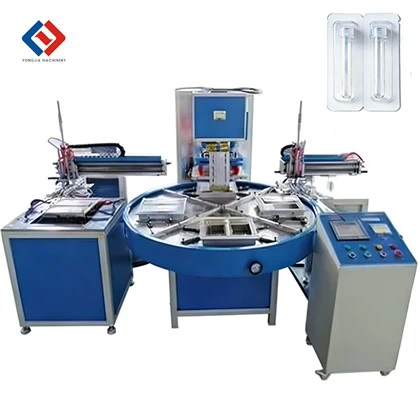
If you’re a leather goods maker, upholsterer, or prototyper looking to upgrade your bonding process, don’t guess—reach out to our team to discuss your specific project. We can help you test your materials, adjust settings, and find the right configuration of head foot operated HF welder for your production needs.
Fully Automatic Hot Press Welding Machine Reference
HF Welding Technology for Thermoplastic Materials, Industrial Heating Magazine, 2022
Bonded Leather Manufacturing Processes, Leather Industries of America, 2021
High Frequency Welding Safety Standards for Consumer Goods, Occupational Safety and Health Administration, 2020
Dongguan Yongjia Machinery Equipment Co., Ltd.
We are one of the most reliable head foot operated hf welding machine manufacturers and suppliers in China, specialized in providing high quality customized service. Please feel free to wholesale advanced head foot operated hf welding machine at low price from our factory. For quotation, contact us now.
Address: No. 240, Chashan South Road, Chashan Town, Dongguan City, Guangdong Province, China
E-mail: info@yjwelding.com
WebSite: https://www.yjhighfrequencymachine.com/
