If you’re in the market for high and low voltage switchgear, you’ve probably heard a lot about its role in keeping power systems safe and efficient. But as a supplier who’s worked on dozens of projects across commercial buildings, manufacturing plants, and data centers, I can tell you that one of the most overlooked, yet critical, parts of any switchgear installation is cable entry and exit. Get this wrong, and you’re looking at everything from minor power disruptions to costly electrical hazards. Let me walk you through the specific requirements for both high and low voltage setups, share what I’ve learned from years of on-site work, and explain why partnering with the right supplier makes all the difference. High and Low Voltage Switchgear
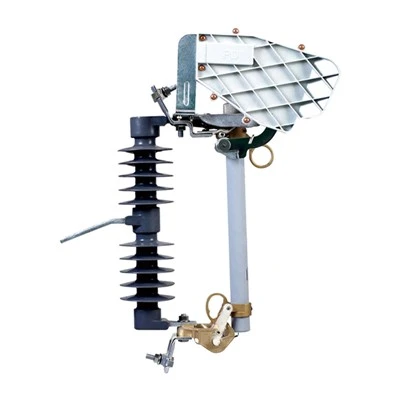
First, let’s clarify the basics. Low voltage (LV) switchgear typically handles up to 1,000 volts, used for distributing power within facilities like offices, factories, and residential complexes. High voltage (HV) switchgear steps up or steps down power for long-distance transmission, so it operates at anything above 1,000 volts—often 11kV, 33kV, or even higher for utility projects. The rules for cable entry and exit are different for each, but they all tie back to three core goals: safety, reliability, and compliance.
Starting with low voltage switchgear, the requirements here are practical but non-negotiable. Let’s talk about cable gland selection first. LV cables are usually smaller in diameter, so you need glands that fit the exact cable size, right? But it’s not just about fitting—IP rating matters a lot. If switchgear is installed in a basement or a factory where dust, moisture, or accidental spills are common, the glands and entry points have to meet an IP54 or higher standard to prevent foreign objects from getting inside. I learned this the hard way early in my career: a client had installed LV switchgear in a paper mill, and they used glands with IP20 rating. Within six months, paper dust had built up on the bus bars, causing a short circuit that shut down their entire production line. That’s when I started emphasizing that IP rating isn’t a one-size-fits-all detail.
Another key point for LV is phase separation. LV systems have multiple conductors, and when you bring cables into the switchgear, you need to make sure there’s enough space between each phase cable to prevent arcing. The National Electrical Code (NEC) sets a minimum distance, but in my experience, it’s better to add extra space if the installation is in a tight enclosure. Also, for grounded LV systems, the neutral cable needs its own dedicated gland entry—never share a gland with a phase cable, because that can create electrical imbalances over time.
Cable exit for LV is equally important, especially if you’re running cables outdoors or through wall penetrations. When you exit switchgear into an outdoor environment, you need what’s called a weatherproof seal. A common mistake I see is using silicone caulk around wall penetrations, but silicone degrades over time from UV exposure and temperature changes. Instead, we recommend using compression glands with built-in weatherproof gaskets, or for wall runs, flexible metal conduits that maintain their seal against moisture. Also, LV cables that exit switchgear need to be secured with cable cleats at regular intervals—every 1.5 meters for horizontal runs, every meter for vertical runs—to prevent strain on the cable connections. If a cable pulls loose from the bus bar, that’s a sudden outage waiting to happen.
Now moving on to high voltage switchgear, where the stakes are much higher. HV cables are thicker, carry far more power, and the risk of failure is catastrophic. Let’s start with cable entry into HV switchgear. First, insulation coordination is non-negotiable. HV systems have much higher voltage levels, so the cable insulation, the gland, and the switchgear enclosure all have to be rated for the same voltage. If you use a 11kV gland for a 33kV cable, the insulation will break down, leading to a flashover that can destroy the entire switchgear unit. I once worked on a utility project where a subcontractor used generic glands instead of HV-rated ones—within a week, a flashover occurred that cost the utility over $200,000 in downtime and repairs. That’s why we always verify every component’s voltage rating before delivery.
Another critical requirement for HV cable entry is the use of cable terminal connectors, not just glands. HV cables can’t be pulled directly into the switchgear enclosure; you need specialized terminals that crimp onto the cable end and connect to the bus bars inside. These terminals have to be tested for tensile strength, because HV cables are heavy, especially for underground or overhead runs. Also, for HV switchgear, cable entry points must be equipped with arc-resistant seals. In the event of an internal arc fault, these seals prevent hot gases and plasma from escaping the enclosure, protecting anyone nearby. That’s a safety standard set by international bodies like IEC, and we never cut corners on arc-resistant components for HV setups.
Cable exit for HV also has unique rules. If you’re running HV cables overhead, the exit point must have strain insulators to support the weight of the cable. Underground HV cables need extra protection at the exit: you should use waterproof joint boxes between the switchgear and the underground cable, to prevent water from seeping into the switchgear enclosure. Also, HV cables that exit switchgear must be marked with clear voltage and phase labels at every bend, junction, and exit point. This is not just good practice—it’s a requirement for maintenance technicians, who need to identify cables quickly during repairs.
Now, beyond voltage-specific rules, there are universal requirements that apply to both LV and HV switchgear. Let’s talk about compliance. Most regions require switchgear installations to meet national standards: NEC in the US, IEC standards in Europe and many other countries, AS/NZS in Australia. These standards outline everything from the size of entry openings to the type of seals used. As a supplier, we don’t just sell switchgear—we provide documentation that proves every cable entry and exit component is compliant. That includes test reports for glands, terminals, and arc-resistant parts, which are non-negotiable for getting a project approved by inspectors.
Another universal point is cable management. Both LV and HV cables need to be routed neatly inside and outside the switchgear enclosure to avoid damage. Inside, we use cable trays or ties to keep cables away from hot bus bars and moving parts. Outside, cable runs should be at least 300mm away from heat sources like transformers, and 1 meter away from other electrical cables to prevent interference. I’ve seen too many installations where cables are tangled, leading to abrasion that wears down insulation and causes leaks. Our team works with installers during the design phase to map out cable routes before any equipment is on site, which saves time and avoids costly reworks.
Also, future-proofing is something we prioritize with every project. When we design switchgear for a client, we leave extra space for additional cable entries. No one wants to have to rip out a perfectly working switchgear unit just to add a new circuit in a year or two. For LV, that might mean 20% extra entry openings; for HV, since each entry is more expensive, it’s about allowing for modular cable connections that can be added without major modifications.
Wait, let’s address a common misconception: some clients think that buying cheaper glands or components will save money, but in the long run, it’s the opposite. A low-quality gland might cost 20% less upfront, but if it fails, you’re looking at downtime, repairs, and even liability if someone is injured. As a supplier, we build our products with high-quality materials—for example, brass glands for LV that resist corrosion, and silicone rubber seals for HV that can handle extreme temperature swings. We also provide a 2-year warranty on all cable entry and exit components, which gives our clients peace of mind.
Now, let’s talk about what happens when you get cable entry and exit wrong. I mentioned earlier the paper mill short circuit, but there was another project: a data center in Chicago that had LV switchgear installed with insufficient phase separation. A technician was working on the switchgear and accidentally touched two phase cables, causing an arc that required replacing three switchgear units and taking a portion of the data center offline for 12 hours. The root cause? The installer didn’t follow the NEC phase distance requirements, because they thought the switchgear was “tight enough” without extra space. That’s why we always conduct a site visit before delivering equipment, to make sure the entry and exit points are compatible with the installation environment.
For HV, the consequences are even higher. A few years ago, a manufacturing plant in Texas had a HV switchgear failure due to a poorly sealed cable entry. Water seeped into the enclosure during a heavy rainstorm, causing a flashover that destroyed the entire HV system. The plant was down for three days, costing them over $1 million in lost production. That’s why, as a supplier, we coordinate with electrical contractors to ensure that wall penetrations and outdoor installations are properly sealed, even if they’re not part of the switchgear itself.
So, what should you look for when choosing a switchgear supplier for your cable entry and exit needs? First, experience. Look for a supplier that has worked on both LV and HV projects across different industries—manufacturing, data centers, utilities—because each has unique requirements. We’ve handled projects ranging from 500kVA LV switchgear for a small retail center to 132kV HV switchgear for a solar farm, so we know how to adjust our products to fit each site.
Second, technical support. A good supplier won’t just drop off the equipment and leave. We provide on-site support during installation, helping inspect cable glands, verify phase separation, and ensure that exit points meet local codes. We also offer training for maintenance teams, teaching them how to inspect cable entries for wear, replace seals, and identify potential issues before they cause failures.
Third, customizability. No two projects are the same. Some installations have limited space for cable entries, others have extreme environmental conditions. As a supplier, we design our switchgear with modular cable entry and exit options, so we can adjust to your site’s specific needs, instead of forcing you to use a one-size-fits-all design.
If you’re planning a switchgear installation, whether it’s a new build or a replacement, don’t underestimate the importance of cable entry and exit. These details might seem small, but they’re the foundation of safe, reliable power distribution. I’ve seen firsthand how proper cable management and compliant components can prevent costly failures, and how mistakes can turn a simple project into a major headache.
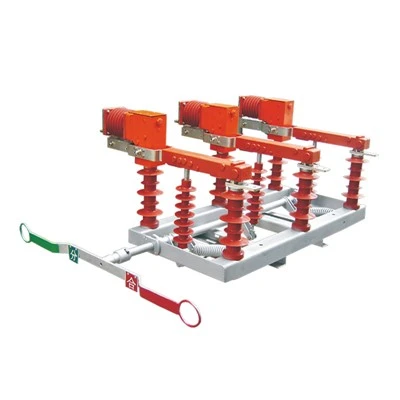
If you want to learn more about our switchgear options, our cable entry and exit components, or get a consultation for your upcoming project, feel free to reach out to our team to discuss your specific requirements. We’re here to help you design a system that meets all safety standards, fits your budget, and stands the test of time.
References
High and Low Voltage Switchgear National Electrical Code (NEC) 2023, Article 409 (Switchgear and Switchboards)
International Electrotechnical Commission (IEC) 62271-200: High-voltage switchgear and controlgear – Part 200: Common specifications for high-voltage switchgear and controlgear assemblies
Australian Standard AS/NZS 3439: Low-voltage switchgear and controlgear assemblies
Institute of Electrical and Electronics Engineers (IEEE) Std. C37.20.1: High-voltage switchgear for alternating-current systems rated above 1000 V and up to 38 kV
Zhongtai Electric Power Technology Co., Ltd.
With abundant experience, we are one of the most professional high and low voltage switchgear manufacturers and suppliers in China. We warmly welcome you to wholesale bulk customized high and low voltage switchgear from our factory. If you have any enquiry about quotation, please feel free to email us.
Address: High-tech Industrial Park, Chongren County, Fuzhou City, Jiangxi Province (No. 261 Yingbin Avenue)
E-mail: info@zhongtaielectric.com
WebSite: https://www.zhongtaipower.com/
