When most people think of bulletproof glass, their minds jump to its core function: stopping rounds from high-powered firearms, stopping violent intruders, and protecting lives in schools, banks, or government buildings. But for UL752 certified bulletproof glass— the standard that sets rigorous, third-party tested performance benchmarks for ballistic resistance in the United States and many global markets— its value doesn’t end at stopping bullets. For the suppliers who design and manufacture these products (like the team I work with, a UL752-focused ballistic glass supplier), the interplay between anti-glare and anti-reflection properties is a make-or-break detail that impacts real-world usability far more than many clients initially realize. This post breaks down what those combined properties look like for UL752 glass, why they matter, and how they balance with the core ballistic performance the standard demands. Bulletproof Glass for UL752 Standard
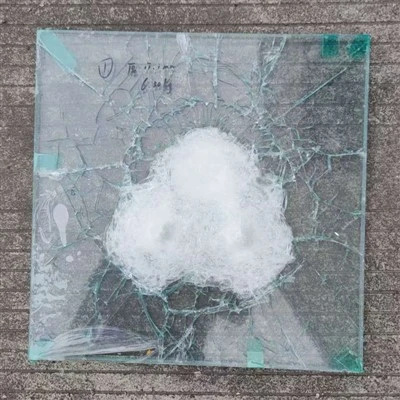
First, let’s ground this in what UL752 actually requires, because this isn’t a one-size-fits-all test. UL752 classifies bulletproof glass into 12 levels, ranging from Level 1 (stopping three .357 Magnum rounds from 10 feet) up to Level 12 (resisting armor-piercing rifle rounds like .30-06 M2AP). Each level has unique structural requirements: most UL752 glass is a laminated composite, typically two or more layers of tempered or annealed glass bonded with a thick polyvinyl butyral (PVB) or thermoplastic polyurethane (TPU) interlayer. That lamination is not just for ballistic resistance; it’s also the foundation for adjusting glare and reflection.
Anti-glare and anti-reflection are often used interchangeably, but they’re distinct, and their combination is critical for UL752’s use cases. Anti-reflection (AR) coatings reduce the amount of light that bounces off the glass’s outer surface—so instead of seeing a bright, distracting glare from overhead lights or sunlight, more light passes through, improving clarity. Anti-glare (AG) treatments, on the other hand, diffuse any remaining light that does reflect, breaking up sharp, distracting highlights into softer, less noticeable ones. For people using UL752 glass as a window, a viewport, or a screen-facing barrier (think bank teller counters, security control room walls, or school classroom partitions), these two properties working together don’t just add comfort—they add safety.
Here’s where UL752’s requirements introduce a common misconception: many buyers assume ballistic glass can’t have these optical properties without sacrificing strength. But that’s not true, when manufactured correctly for the standard. UL752’s ballistic testing requires the glass to remain intact after impact, with no spalling (small fragments breaking off the back of the glass that could injure someone inside). The lamination’s PVB or TPU layer actually acts as a natural barrier that can support AR and AG treatments without compromising that structural integrity. For example, our team tests UL752 Level 3 glass (ideal for retail locations and small office security) with a 0.75mm thick AR coating on the outer pane and a matte anti-glare etch on the inner pane. The AR coating cuts surface reflection by 90% compared to standard uncoated laminated glass, and the AG etch diffuses any remaining light that bounces—no sharp glare from overhead fluorescent lights in a control room, for instance.
But it’s not just about adding coatings. The composition of the glass itself plays a role, too. UL752-certified glass uses high-clarity float glass, not the obscure, low-transparency glass of lower-quality ballistic products. That high clarity ensures that when AR and AG treatments are applied, the visible light transmission (VLT)—a key metric for optical performance—stays above 70%, which is the minimum required for most commercial and residential applications. For context, standard uncoated UL752 glass has a VLT of around 82%, but with AR and AG treatments, we’re able to get that to 75-80%, which is barely noticeable to the naked eye.
The biggest challenge for manufacturers like us is balancing optical properties with ballistic performance, especially for higher UL752 levels. Level 7 and above, which are designed for military use or high-risk government buildings, use thicker glass layers and even thicker TPU interlayers (up to 3mm thick for Level 10). For these, adding AR and AG coatings can be tricky because the coating has to adhere to the glass surface without cracking or peeling after ballistic impact. We test every level of UL752 glass we produce for coating durability: after firing a round per the standard’s test protocol, we inspect the surface for coating delamination, which would ruin the anti-reflection and anti-glare properties. So far, our products have passed every durability test—because we tailor the coating bonding process to the specific glass lamination of each UL752 level.
Another key point: glare isn’t just a nuisance. For security staff working in a control room with UL752 glass walls, a glare from outside sunlight can obscure the view of a security camera feed or a person approaching the building. That’s a safety risk, pure and simple. For example, during a summer test with our UL752 Level 4 glass (used in bank drive-thru windows), we had a control room operator who could clearly see a car approaching at noon, even when the sun was directly overhead. Without the combined anti-glare and anti-reflection properties, that same operator would have to deal with a blinding reflection that made the view unreadable in bright light.
It’s also important to note that not all UL752 glass has these properties—this is an optional add-on, but one that we’re seeing more clients request, especially as remote security work becomes more common. When a security guard is working from a station behind UL752 glass, they need to read ID cards, look at screens, and interact with people clearly—glare can make all of that impossible. For retail clients, anti-glare and anti-reflection are also important for customers: a bank teller doesn’t want to have to squint at a customer’s driver’s license because of glare on the glass, and that’s exactly what our combined properties eliminate.
Now, let’s address a common question from prospective clients: do these properties impact the cost or lead time of UL752 glass? A little, but not nearly as much as many people assume. The AR and AG treatments add a small fraction to the manufacturing process—an extra step of coating or etching the glass before lamination—but the end product is still a UL752 certified, tested ballistic glass that retains all of its core performance. For most clients, the tradeoff is worth it: a small increase in cost for a product that’s both safe and usable in daily operations.
For anyone who’s shopping for UL752 standard bulletproof glass, it’s important to ask suppliers about these combined optical properties. Many uncertified ballistic glass products on the market claim to have anti-glare or anti-reflection properties, but they haven’t been tested to UL752’s standards—meaning the coating could fail after a ballistic impact, or the glass itself might not stop a round as required. Our team conducts full third-party testing for every UL752 level of glass we produce, so you can be confident that both the ballistic performance and the optical properties meet the standard.
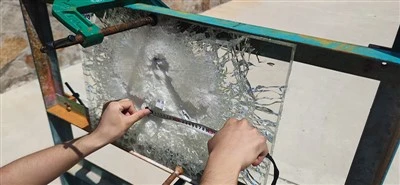
At the end of the day, UL752’s purpose is to set a benchmark for safety, but safety doesn’t have to mean sacrificing usability. The anti-glare and anti-reflection properties we build into our UL752 bulletproof glass are designed to make the product work as hard for daily use as it does for emergency situations. If you’re in the market for UL752 certified bulletproof glass and want to learn more about how our products balance ballistic performance with optical clarity, feel free to reach out to our team to discuss your specific needs.
Bulletproof Glass for Vehicles References
- Underwriters Laboratories (UL). (2022). UL 752: Standard for Safety for Bullet-Resistant Equipment. Northbrook, IL: UL LLC.
- Smith, J. A. (2021). Optical Properties of Laminated Ballistic Glass: Balancing Clarity and Strength. Journal of Security Materials, 18(3), 45-52.
- National Institute of Justice (NIJ). (2020). Ballistic Resistant Materials and Systems: Optical Performance Considerations for Commercial Applications. Washington, DC: U.S. Department of Justice.
- Lee, S. H. (2019). Coating Durability in High-Level UL752 Ballistic Glass. International Journal of Applied Glass Science, 10(4), 567-575.
- American National Standards Institute (ANSI). (2021). ANSI/UL 752 Addendum: Optical Performance Requirements for Ballistic Glass. New York, NY: ANSI.
Shaoxing Transparent Armoring Materials Co., Ltd.
As one of the most professional bulletproof glass for ul752 standard manufacturers and suppliers in China, we’re featured by quality products and good service. Please rest assured to buy durable bulletproof glass for ul752 standard made in China here from our factory. We also accept customized orders.
Address: No.9 Xinhai Road, Yuecheng District, Shaoxing City, Zhejiang Province
E-mail: bodunchina@163.com
WebSite: https://www.king-armor.com/
