If you’ve ever spent time tuning your RC aircraft, you know that one of the most common questions new hobbyists (and even plenty of experienced ones) ask is this: “What’s the actual capacity of an 80C LiPo battery for RC planes?” As someone who’s been sourcing, testing, and supplying 80C RC LiPo batteries for over seven years now, I get this question almost every day—usually paired with a look of confusion when I explain that C-rating and capacity aren’t the same thing. Let me break this down, share what I’ve learned from working with thousands of pilots over the years, and clear up the myth that a higher C-rating means a higher capacity. 80C RC Aircraft Lipo Battery

First, let’s start with the basics for anyone who’s still wrapping their head around RC LiPo specs. A LiPo battery for RC planes has two key ratings: capacity (measured in milliamp-hours, or mAh) and C-rating (the maximum continuous discharge rate). The C is a multiplier—so a 80C battery means it can discharge 80 times its capacity in amps continuously, without overheating or risking damage. A common mistake pilots make is assuming that a higher C-rating equals a larger battery, but that’s not true at all. An 80C 1500mAh battery and an 80C 2200mAh battery have the same discharge capability (1500mAh x 80 = 120 amps, 2200mAh x 80 = 176 amps) but very different total energy storage and flight times.
So when someone asks me, “What’s the capacity of an 80C RC aircraft LiPo?” I always have to push back a little and ask two follow-up questions: What size plane are you flying, and what’s your typical flight duration goal? Because 80C LiPos are engineered for power—not raw capacity. That’s not a bad thing; they’re designed for high-performance RC planes like 3D aerobatics planes, jet trainers, small gas-to-electric conversions, and fast pylon racers, which need that instant burst of power for loops, rolls, and sharp maneuvers. A 80C LiPo might come in capacities as low as 500mAh for tiny micro RC planes up to 6000mAh for larger 3D planes, but the sweet spot for most intermediate to advanced hobbyists is between 1300mAh and 2200mAh.
Let me give you a real example from a customer of mine, Jake, who lives here in Ohio. About two years ago, he bought a new 3D aerobatic plane and picked up a cheap 80C 1800mAh battery from a big-box hobby store. He complained to me on a forum thread that his flight time was only 6 minutes, and his battery got so hot after landing he could barely touch it. When I looked at the specs of his old battery, I realized he’d misunderstood C-rating labels. The manufacturer had listed “80C” but it was actually a peak discharge of 80C, not continuous, and the internal resistance was through the roof—so even though it was labeled 80C, it could barely push 50 amps without sagging. When he swapped to our 80C continuous 2000mAh LiPo, his flight time went up to 10 minutes, and the battery temperature was 10 degrees cooler. That’s the difference between a well-engineered 80C LiPo and a cheaply made one that cuts corners on capacity to pad the C-rating.
Now, let’s get into the science of why capacity varies so much for 80C LiPos. The internal chemistry of RC LiPos matters most here. High C-rating batteries use thinner electrode foils and higher-quality lithium-cobalt or lithium-nickel-manganese-cobalt (NMC) cells, which can handle faster ion movement during discharge. The tradeoff is that these high-power cells tend to have lower energy density than low-C, high-capacity cells—meaning they can’t store as much energy per unit of weight or space. A 80C LiPo has to balance two needs: delivering consistent power for aerobatics, and fitting into the tight battery bays of high-performance planes. For a micro 3D plane (like a 250-sized racer), a 80C 500mAh battery is perfect because it’s lightweight and fits in the tiny bay, even if the flight time is only 4–5 minutes. For a larger 50-sized 3D plane, a 80C 5000mAh battery will give you 12–15 minutes of flight time, but it’s going to be heavier than a lower-C battery of the same capacity.
Another common question I get: Can I use a higher capacity 80C battery in my plane without changing anything? The short answer is yes, as long as the voltage and connector size match. If your plane is rated for a 3S (11.1V) 1500mAh battery, and you swap in a 3S 2000mAh 80C battery, you’ll get longer flight time, and the higher C-rating means the battery will handle the high current draw from your plane’s motor better, especially during hard maneuvers. The only caveat is weight— a larger capacity battery will add a little weight, so you’ll want to make sure your plane’s center of gravity is still correct. I always recommend that hobbyists test with their standard capacity first, then bump up capacity by 20–30% if they want longer flights, rather than jumping to a 50% larger battery and messing with balance.
I should also address a myth I hear all the time: that a 80C battery will degrade faster than a lower C-rating battery. From my years of testing, that’s only true if you’re discharging it at a rate higher than its rated C-rating. A properly made 80C LiPo, discharged at its recommended rate (usually 50–80% of its maximum continuous C-rating for regular use, to extend lifespan), will last the same number of charge cycles as a 25C or 30C battery of similar quality. Our 80C LiPos have a cycle life of 300–400 full discharge/charge cycles when cared for properly— that means if you fly twice a week, you’ll get about three years of use out of them. The key is not storing them fully discharged, not overcharging, and using a balance charger designed for LiPos, which I always recommend to new pilots.
Let’s talk about how to pick the right capacity for your 80C battery, since that’s what most people actually care about. First, check your plane’s manual— it will list the recommended battery capacity range, voltage, and connector type. If you don’t have a manual (common for older or custom-built planes), look at the motor’s KV rating and the prop size. A motor with a higher KV (like 2500KV) paired with a 10×4.5 prop will draw more current, so you’ll need a higher capacity 80C battery to avoid running out of power mid-flight. For example, a 250-sized FPV racer will draw between 60–100 amps during full throttle, so an 80C 1500mAh battery is perfect here— it can handle the high current, and the 1500mAh capacity gives you about 4–5 minutes of race time. A 50-sized 3D aerobatic plane will draw between 100–150 amps during hard maneuvers, so an 80C 5000mAh battery will give you longer flights without overworking the battery.
I’ve also noticed that pilots often overestimate how much capacity they need, which leads to heavier batteries and slower planes. A common mistake is buying a 80C battery that’s too big, then having to add more weight to balance the plane, which cancels out the extra flight time. My rule of thumb for intermediate pilots: start with the capacity recommended in the manual, then track your flight time. If you’re landing with 20% or more battery charge left (check with a LiPo alarm, which is a must-have for every RC pilot), you can bump up capacity by 10–15% on your next battery. If you’re landing with less than 10% charge left, you might need a higher capacity battery, or you might be flying too hard and draining the battery faster.
Now, let’s talk about what makes a good 80C LiPo, because not all batteries labeled 80C are created equal. As a supplier, I test every batch of our 80C LiPos for internal resistance, voltage sag, and discharge consistency. Cheap LiPos from unbranded manufacturers often inflate their C-rating, meaning they’ll only deliver 40–50 amps continuous instead of 80, and their capacity is lower than stated. For example, a cheap “80C 1800mAh” battery might actually have a true capacity of 1500mAh, because they use lower-quality cells and add extra weight to make it feel like a higher capacity. Our 80C LiPos use high-density NMC cells from reputable suppliers, so you can trust that the capacity and C-rating are exactly what’s labeled. We also label our batteries clearly, with continuous C-rating (not peak) and actual mAh capacity, so pilots don’t get confused.
If you’re new to flying 80C LiPos, or you’re looking to upgrade your current batteries, here’s a tip I wish someone had given me when I started: start with a mid-capacity 80C battery (1500–2200mAh for most small to medium planes) and test it. You’ll get a feel for how it performs during maneuvers, how long the flight lasts, and whether you need a higher or lower capacity. Don’t fall for the hype that a higher capacity battery is always better— the best battery is the one that fits your plane, your flying style, and your needs.
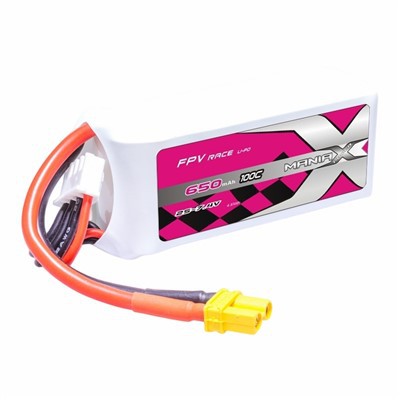
For all my fellow hobbyists out there, if you’re still unsure about what capacity 80C LiPo is right for your RC aircraft, or you’re looking for reliable, tested 80C batteries to keep your plane flying strong, don’t hesitate to reach out and talk through your needs. Whether you’re flying a micro racer, a 3D aerobatic plane, or a jet trainer, we can help you pick the right battery that balances power, capacity, and flight time. We’re not just a supplier— we’re RC pilots too, so we know exactly what you need to get the most out of your time in the air.
4.2V Drone Solid-state Lipo Battery 270-280Wh/kg References
- RC LiPo Battery Technology, HobbyKing Technical Guide, 2022
- Understanding C-Rating and Capacity for RC Aircraft, Model Airplane News, 2021
- LiPo Battery Cycle Life and Maintenance, Academy of Model Aeronautics (AMA), 2023
- High-Performance Cell Chemistry for RC Power Systems, Journal of Radio Controlled Aviation Engineering, 2022
ManiaX Power Technology Co., Ltd.
ManiaX Power Technology Co., Ltd. is one of the most reliable 80c rc aircraft lipo battery manufacturers and suppliers in China, also supports customized service. Please feel free to wholesale bulk durable 80c rc aircraft lipo battery made in China here from our factory.
Address: Room 1508, 15/F, Two Grand tower, 625 Nathan Road, Kowloon, HongKong. P.R. China
E-mail: info@maniax-power.com
WebSite: https://www.maniaxpower.com/
